

Photo adjustments
Full source framing retained; proportionally resized and converted to WebP. No retouching or subject alteration. Card displays may crop the view.
Explore the region
About Ancient Kiln and Folk Customs Exposition Area
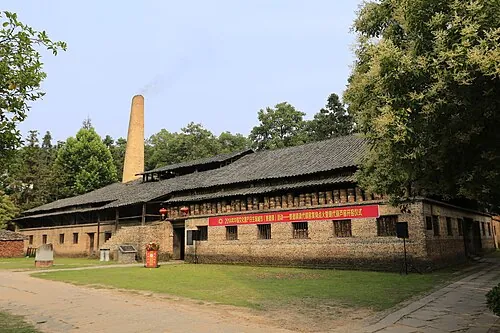
The municipal government classes the site as a national AAAAA-grade attraction, the only one in the country built around ceramic culture and the only one in Jiangxi that sits in a city centre; it is also a national cultural-industry demonstration base and a national demonstration base for the productive protection of intangible cultural heritage. Its best-known structure is the Qing-dynasty Zhen kiln, the only surviving egg-shaped kiln of that period in Jingdezhen. The furnace was repaired in 2009 and fired again in October of that year during the international ceramics fair, when it was recognised as the largest wood-fired porcelain kiln in the world. Working backwards through time, the site then rebuilt and refired further historic kiln types year by year from 2010 to 2012, covering a Ming gourd kiln, a Yuan mantou kiln and a Song dragon kiln, and in 2013 and 2014 added the six imperial kiln forms of Ming and Qing Jingdezhen.
The grounds are laid out in zones. The historic kiln display area gathers the ancient porcelain workshops and the succession of kilns, along with the Fenghuo Xianshi temple to the kiln-firing patron and a porcelain trading hall. A separate folk-custom area is built around twelve Ming and Qing timber buildings and holds a ceramic folk-custom display, a Tianhou temple, a founder's temple, a corridor of porcelain steles and a waterside stage used for music played on porcelain instruments. More than two hundred veteran craftspeople carry out traditional porcelain production in the Qing-period workshop group and in the shed around the Zhen kiln.
What to look for
- The Qing-dynasty Zhen kiln, described as the only surviving egg-shaped kiln of its period in Jingdezhen and repaired and refired in 2009.
- The sequence of rebuilt historic kilns: the Song dragon kiln, the Yuan mantou kiln, the Ming gourd kiln and the six Ming and Qing imperial kiln types.
- The Qing-period workshop group, where veteran craftspeople work through the stages of hand porcelain making.
- The twelve Ming and Qing timber buildings of the folk-custom zone, with the Tianhou temple and the porcelain-stele corridor.
- The Fenghuo Xianshi temple, dedicated to the patron of kiln firing, within the kiln display area.
Location & getting there
Getting to Ancient Kiln and Folk Customs Exposition Area
Confirm the venue or campus, reservation channel and exhibition calendar. A museum name may cover more than one building.
- Search for 古窑民俗博览区 with 景德镇市 and 昌江区.
Find Ancient Kiln and Folk Customs Exposition Area
古窑民俗博览区 · 昌江区
No reliable map pin yet: search by the Chinese name.
Sources & visit information
The linked sources support the identity and background described in this introduction. Opening hours, admission, activity availability and exact arrival arrangements have not been comprehensively checked. Confirm current visitor information with the venue; the original catalogue locality and editorial review flag are retained.