


Explore the region
About Dali Dong Village
The village was also placed on China's World Cultural Heritage Tentative List in December 2006, named a Guizhou provincial 'Charming Dong Village' in 2011, made part of the province's 'Hundred Villages Plan' protection project and a village cultural-landscape 'demonstration village' in June 2012, named in the sixth national batch of Famous Historical and Cultural Villages in March 2014, and approved as a national AAA tourist attraction in December 2017.
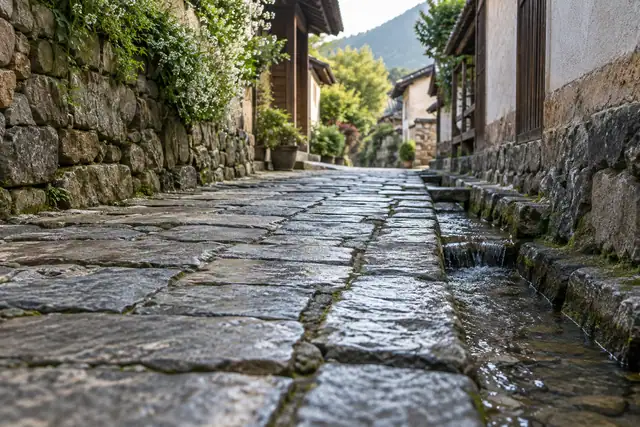
Dali is ringed by green hills, old forest and bamboo groves, with an old nanmu-tree wood outside the village. Besides the common Dong stilt wooden houses, it has distinctive quadrangle wooden houses, the best-preserved of which was built in 1781, and five wind-and-rain bridges of different sizes, unusually many for a Dong village, ranging from about 10 to more than 30 metres long and about 3 metres high, of wooden construction with blue-tile roofs, some more than a hundred years old. Its stone-slab road, built in the Qing Qianlong era, has been worn smooth as jade, and its pebble-paved lanes also serve to drain water and prevent slipping.
Villagers still practise intangible-cultural-heritage handicrafts, with women using the village's old spinning wheels, looms and dye vats for weaving, batik dyeing, embroidery and bean-paste dyeing. Distinctive local festivals include the second day of the second month, the third day of the third month, the eighth day of the fourth month, the sixth day of the sixth month, and the new-rice-tasting festival, and Dong Grand Song, a piece of world-level intangible cultural heritage, is practised here.
What to look for
- The best-preserved of the village's quadrangle wooden houses, built in 1781
- The five wind-and-rain bridges of varying size, an unusually large number for a Dong village
- The Qing Qianlong-era stone-slab road and the village's pebble-paved lanes
- Traditional weaving, batik dyeing, embroidery and bean-paste dyeing, still practised with old tools
Location & getting there
Getting to Dali Dong Village
Identify the main visitor approach and any separately managed houses, museums or performances. Ask before entering residential spaces or photographing residents.
- Search for 大利侗寨 with 黔东南苗族侗族自治州 and 榕江县.
Find Dali Dong Village
大利侗寨 · 榕江县
No reliable map pin yet: search by the Chinese name.
Sources & visit information
The linked sources support the identity and background described in this introduction. Opening hours, admission, activity availability and exact arrival arrangements have not been comprehensively checked. Confirm current visitor information with the venue; the original catalogue locality and editorial review flag are retained.