

Entry & permits for Tibet (Xizang)
Foreign tourists need Tibet entry approval, commonly called a Tibet Travel Permit, and an organised visit arranged through a specialist travel agency in China. Confirm your approved route before booking transport. Requirements differ for Taiwan residents and for travellers using mainland or Hong Kong/Macao Chinese resident documents; check the document guide before you book.
Check the travel-document requirements →Policy scope verified: 2026-09-06. UK FCDO: China regional travel advice ↗ State Council Taiwan Affairs Office: Tibet entry approval ↗ Xizang Department of Culture and Tourism: Medog border permit notice ↗
Explore the region
About Tunba Old Village
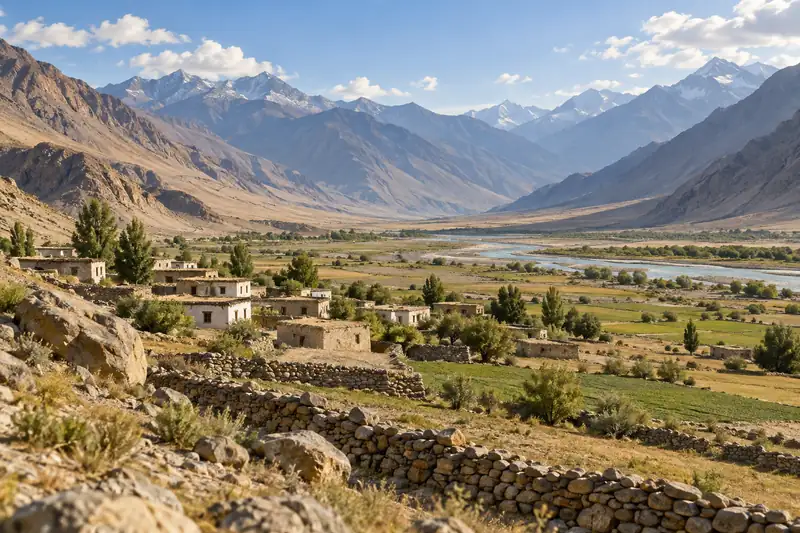
Tunba Old Village is Tunda village, Tunba township, Nyêmo County, Tibet — birthplace of Thonmi Sambhota, credited as the creator of Tibetan script and of Tibetan incense — where water-powered mills along the brooks that feed the Tunqu river grind incense ingredients, and where incense has been made for more than 1,300 years.
Nyêmo County's Tunba scenic area sits on the north bank of the middle Yarlung Tsangpo river; 'Nyêmo' means 'ear of wheat' in Tibetan, and the county is styled 'the hometown of the progenitor of Tibetan writing and the source of Tibetan incense culture'. In Tunda village, meltwater streams feed the Tunqu river, and 282 water mills along those brooks use water power to grind incense raw materials; incense-making has been practised there for more than 1,300 years. Incense recipes there use cypress trunk wood as the main ingredient combined with saffron, musk, sandalwood and other spices, totalling as many as 28 kinds; Nyêmo's incense-making technique was listed as national-level intangible cultural heritage in June 2008. The scenic area's named sub-sites include Tunba Manor, the Tibetan Script Museum, Thonmi Sambhota's former residence and the Water-Mill Corridor.
What to look for
- the 282 water mills along the brooks that feed the Tunqu river
- Thonmi Sambhota's former residence and the Tibetan Script Museum
- Tunba Manor
Location & getting there
Getting to Tunba Old Village
Identify the main visitor approach and any separately managed houses, museums or performances. Ask before entering residential spaces or photographing residents.
- Search for 吞巴古村 with 拉萨市 and 尼木县.
Find Tunba Old Village
吞巴古村 · 尼木县
No reliable map pin yet: search by the Chinese name.
Sources & visit information
The linked sources support the identity and background described in this introduction. Opening hours, admission, activity availability and exact arrival arrangements have not been comprehensively checked. Confirm current visitor information with the venue; the original catalogue locality and editorial review flag are retained.