

Entry & permits for Tibet (Xizang)
Foreign tourists need Tibet entry approval, commonly called a Tibet Travel Permit, and an organised visit arranged through a specialist travel agency in China. Confirm your approved route before booking transport. Requirements differ for Taiwan residents and for travellers using mainland or Hong Kong/Macao Chinese resident documents; check the document guide before you book.
Check the travel-document requirements →Policy scope verified: 2026-09-06. UK FCDO: China regional travel advice ↗ State Council Taiwan Affairs Office: Tibet entry approval ↗ Xizang Department of Culture and Tourism: Medog border permit notice ↗
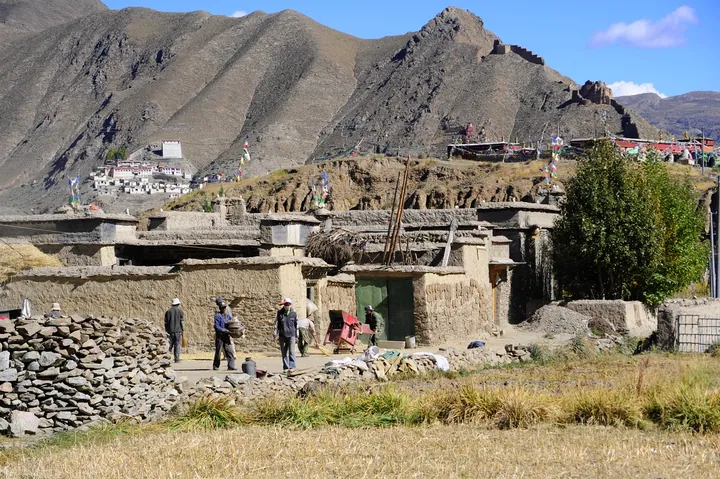
Photo adjustments
Full frame retained; proportionally resized and converted to WebP. No retouching or changes to the photographed subject. Card displays may crop the view.
Explore the region
About Tombs of the Tibetan Kings
Tombs of the Tibetan Kings (藏王墓) is the burial ground of Tubo (吐蕃) rulers, ministers and consorts of the 7th to 9th centuries, spread over Muru Mountain (木惹山) and the mouth of the Dongga valley (东嘎沟) in Qonggyai County (琼结县), Shannan (山南), Tibet. China Tibet Online calls it the largest royal cemetery preserved in Tibet.
The group lies south of the Yarlung Tsangpo (雅鲁藏布江) beside the Yarlung River (雅隆河), in the homeland of Songtsen Gampo (松赞干布). After the Tubo court made Lhasa its capital, the area was honoured as the dynasty’s founding base; Songtsen Gampo chose it for his own tomb, and many later btsanpo (赞普), as the Tubo rulers were titled, were buried here too. Tibetan chronicles such as the Xianzhe Xiyan (贤者喜宴, "Feast of the Wise") list tombs for 35 generations of rulers. Nine mounds can still be picked out on Muru Mountain across about 3 km². Each is a square, flat-topped platform of rammed earth in layers 10 to 20 cm deep, sometimes with thin stone slabs between; weather has rounded some of them, and most have never been dug into by robbers.
Only a few mounds are tied to named rulers through texts and inscriptions, among them those of Namri Songtsen (朗日松赞), Songtsen Gampo and Trisong Detsen (赤松德赞). Songtsen Gampo's is the large square mound on the flat ground facing Qonggyai town; its epitaph describes nine compartments, a main chamber that is a Buddha hall, and a door facing west. The shrine on its summit has been restored with figures of Songtsen Gampo, Princess Wencheng (文成公主), Princess Bhrikuti (墀尊公主), the minister Gar Tongtsen (禄东赞) and Thonmi Sambhota (吞米·桑布扎), deviser of the Tibetan script.
A stele cleared in September 1984 identified the tomb of Tride Songtsen (赤德松赞), ruler from 793 to 815. The monument stands 7.18 m high, with sun and moon carved above 59 lines of old Tibetan, two rising dragons on its sides and a tortoise base, and now has its own pavilion. The whole cemetery became a national key cultural relic site in 1961. In Qonggyai County the Shannan city government lists the Tibetan Kings' Mausoleum Museum (藏王陵博物馆), whose three halls cover Tubo history, the tombs and Tibetan burial customs.
What to look for
- Songtsen Gampo's tomb, the large square mound facing Qonggyai town, with a restored shrine on top
- The Tride Songtsen stele (赤德松赞墓碑), 7.18 m tall with 59 lines of old Tibetan script, under its own pavilion
- Four flying apsaras carved in relief under the corners of the stele's cap
- A second, badly weathered stele nearby, also said to belong to Tride Songtsen
- The tomb of Dusong Mangpoje (都松芒布结) on the lower slope of Muru Mountain, guarded by a pair of 1.55 m stone lions
- The Tibetan Kings' Mausoleum Museum (藏王陵博物馆) in Qonggyai, on Tubo history and burial customs
Location & getting there
Getting to Tombs of the Tibetan Kings
- Search for 藏王墓 with 山南市 and 琼结县.
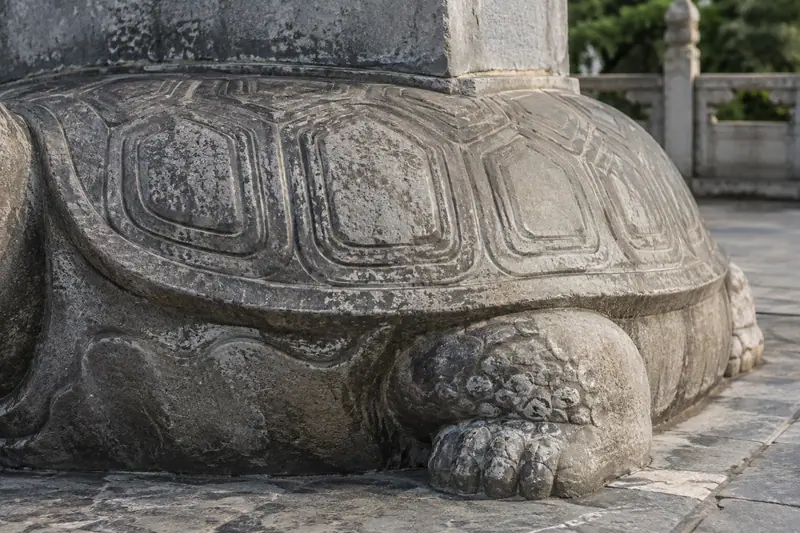
Find Tombs of the Tibetan Kings
藏王墓 · 琼结县
No reliable map pin yet: search by the Chinese name.
Sources & visit information
Written from the linked sources and checked sentence by sentence against quoted extracts by a separate reviewer on 2026-09-23. Opening hours, admission and access arrangements are not covered; confirm current visitor information with the site.
Some facts checked against Wikipedia contributors, "藏王墓" · CC BY-SA 4.0.