

Photo adjustments
Full frame retained; EXIF orientation normalized, proportionally resized to at most 800 pixels and converted to WebP. No generated pixels or subject changes. Cards may crop the display.
Explore the region
About Chi Lin Nunnery and Nan Lian Garden
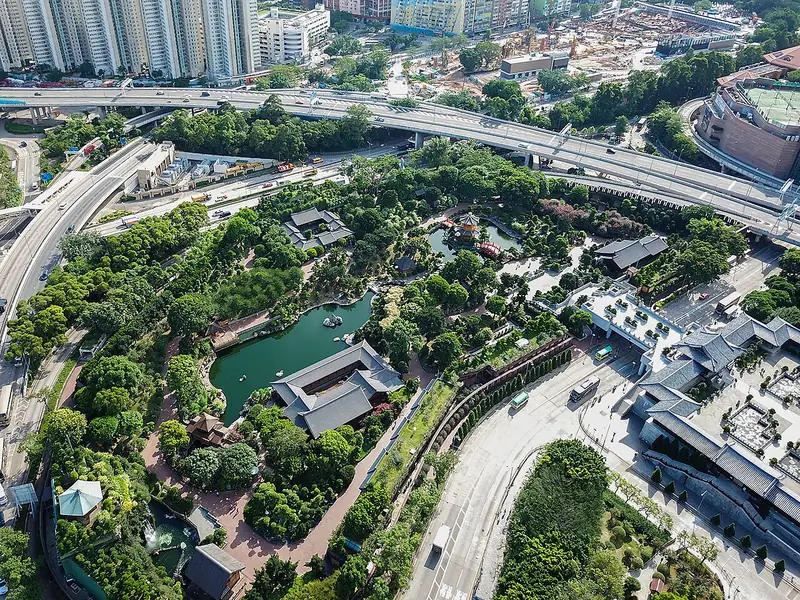
Chi Lin Nunnery and Nan Lian Garden form a linked Buddhist and garden setting in Diamond Hill. Timber architecture, ponds, rocks and carefully arranged planting offer a close study of traditional design within modern Kowloon. Their Tang-style appearance describes an architectural influence, not a claim that the present buildings survive from the Tang dynasty.
The nunnery was established in 1934 and substantially redeveloped in the 1990s. Its public areas include the Lotus Pond Garden and religious halls, while other parts serve continuing community and institutional functions. Nan Lian Garden develops the landscape theme with winding paths, water, ornamental rocks and the golden Pavilion of Absolute Perfection, approached visually through red bridges.
Begin with the way buildings are framed by trees, water and changes in the path. In the nunnery, compare the rhythm of timber elements with the more varied textures of the garden. These are places for quiet observation as well as photography, and active worship takes priority over sightseeing. Follow signs distinguishing public areas from spaces used by the institution.
What to look for
- Study Tang-style timber forms and the pond-garden composition.
- Notice how paths reveal the golden pavilion and surrounding rocks.
Location & getting there
Getting to Chi Lin Nunnery and Nan Lian Garden
Use 志蓮淨苑 and 南蓮園池 at Diamond Hill. Check each site’s visitor rules and current access; avoid photographing worship where it is restricted.
- Use 志莲净苑与南莲园池 with Hong Kong when searching for the visitor entrance.

Find Chi Lin Nunnery and Nan Lian Garden
志莲净苑与南莲园池 · 黄大仙区
No reliable map pin yet: search by the Chinese name.
Sources & visit information
Place identity, setting and described features checked against the linked institutional sources on 9 September 2026. Suggested observation and visiting sequences are editorial guidance. Current opening arrangements and access to individual interiors must be checked with the venue; this review adds no inferred map coordinates.