

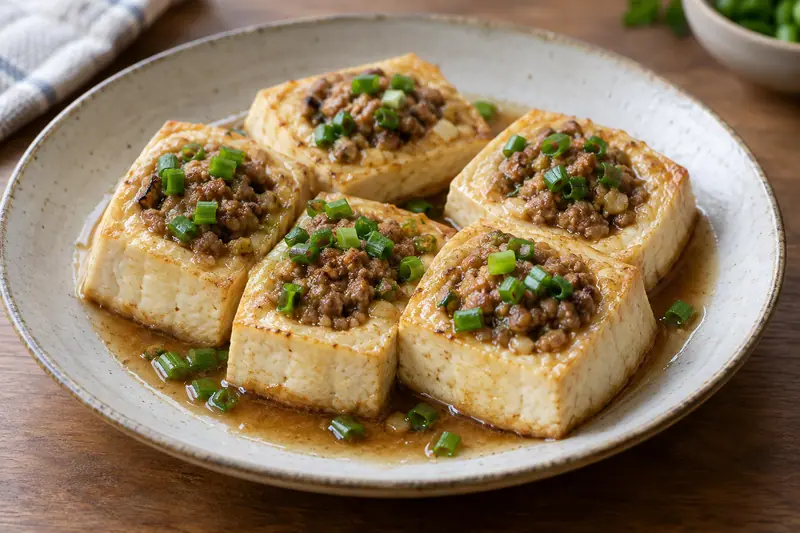
East River Stuffed Tofu 东江酿豆腐
East River Stuffed Tofu is featured among the local specialties of Guangdong.


Photo adjustments
Full frame retained; EXIF orientation normalized, proportionally resized to at most 800 pixels and converted to WebP. No generated pixels or subject changes. Cards may crop the display.
East River Stuffed Tofu (东江酿豆腐) is the Huizhou (惠州) form of Hakka stuffed tofu (客家酿豆腐): blocks of tofu filled with a meat stuffing and then cooked. Huizhou Daily (惠州日报) calls it a traditional dish of the East River (东江) region. The Hakka stuffed tofu cooking technique put forward by Huiyang District (惠阳区) of Huizhou entered Guangdong's provincial intangible heritage list in 2015.
How it is made
In Hakka speech 'niang' (酿) means to stuff or set a filling into something. The Huiyang method starts with making the tofu itself and runs through 11 traditional steps: choosing the ingredients, soaking the beans, grinding, boiling the soy milk, setting it, straining, shaping, cutting the tofu, chopping the filling, stuffing and cooking. Huizhou Daily notes that soaking times differ between winter and summer and between cold and warm water, and that the brine is best added slowly, with stirring, once a skin forms on the soy milk; too much makes the tofu tough, too little leaves it too soft. The filling must be fresh pork of half fat and half lean, or fish, and dried shrimp can go in as well. The tofu is cut into blocks and a hole is opened in the middle with chopsticks to take the stuffing.
Flavour and texture
Huizhou Daily describes the finished dish as fresh and tender, mellow in flavour and good in colour, and says the tofu takes in the other flavours, 'holding other tastes in its belly' (孕他味于腹中). The meat and dried shrimp inside give it more to chew on than plain tofu.
Where it comes from
A local legend traces the dish to northern dumplings: Hakka settlers from the Central Plains found little wheat in Lingnan, so tofu took the place of the flour wrapper around chopped pork. From the mid-19th century the Ye (叶) family of Chayuan Shunju village (茶园顺居村) in Qiuchang (秋长), Huiyang, made and sold tofu and handed down the stuffed dish; Ye Yongbiao (叶永标), the area's leading bearer of the technique, began learning at eight. Huishui Lou (会水楼) in Zhoutian village (周田村), Qiuchang, keeps the full traditional process. Until the 1990s most Qiuchang villages had shared stone mills, and at New Year and the Dragon Boat Festival several households would grind beans together to make it. In Huiyang it is expected at festival and wedding banquets.
Sources & reading
Written from the linked sources and checked sentence by sentence against quoted extracts by a separate reviewer on 2026-09-23. Recipes and servings vary between kitchens.