

Qisha Fishing Port Seafood 企沙海鲜
Qisha Fishing Port Seafood is featured among the local specialties of Guangxi.
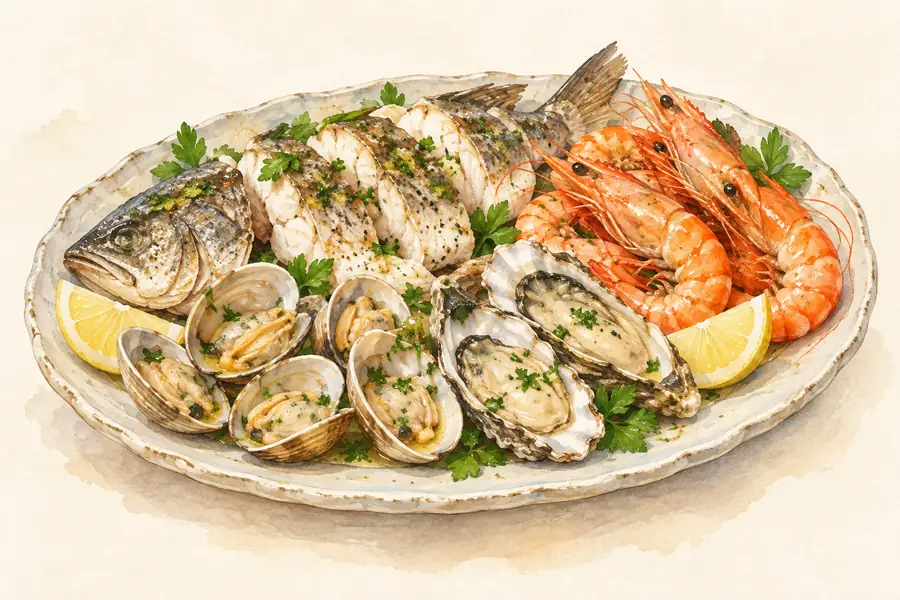
Qisha Fishing Port Seafood (企沙海鲜) is the fresh catch landed and eaten at Qisha fishing port (企沙渔港) in Qisha town (企沙镇), Gangkou District (港口区), Fangchenggang (防城港), Guangxi. China Radio International describes the port as Guangxi's second-largest fishing port and the most important fishery base of Fangchenggang.
How it is eaten
The Qisha No. 1 Wharf seafood market (企沙渔港1号码头暨海鲜市场) opened in mid-April 2023. The Fangchenggang culture and tourism bureau notes that it stands right beside the fishing-boat berths: the catch is unloaded from the boats straight into the market and can be cooked as soon as it is bought. At the Qisha harbour market (企沙海港市场) on Chaoyang Road (朝阳路) in Qisha town, the bureau says, restaurants nearby will cook what you buy.
Where it comes from
Qisha fishing port hosted the Beibu Gulf fishing-season festival (北部湾开海节) in 2018 and again in 2023, when it marked the end of the three-and-a-half-month summer fishing ban in the South China Sea. At the 2018 opening, fishermen and a Tanka (疍家) heritage troupe paraded, a sea-sacrifice ceremony followed, and hundreds of boats set out. Afterwards cooks tipped buckets of boiled seafood into a platter 6 metres across for the crowd to share.
The Tanka are boat-dwelling fishing people whose way of life shaped their own food, dress and wedding customs. On the Qisha peninsula, Huaqiao village (华侨村) was settled by Chinese returnees from Vietnam and keeps Tanka culture, and Fangchenggang has built a Tanka culture museum in Qisha.
Sources & reading
Written from the linked sources and checked sentence by sentence against quoted extracts by a separate reviewer on 2026-09-26. Recipes and servings vary between kitchens.