

Hei Family Dumplings 黑家饺子
Hei Family Dumplings is featured among the local specialties of Hebei.
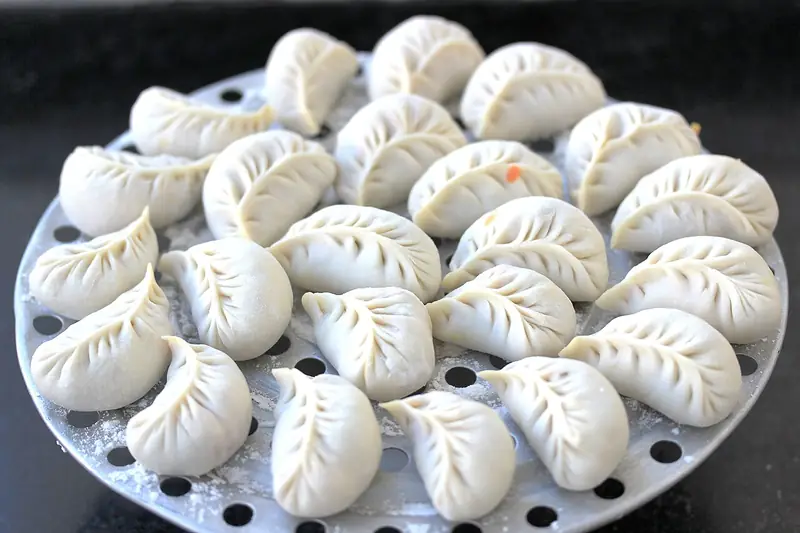

Photo adjustments
Full frame retained; EXIF orientation normalized, proportionally resized to at most 800 pixels and converted to WebP. No generated pixels or subject changes. Cards may crop the display.
Hei Family Dumplings (黑家饺子) are boiled mutton dumplings folded into the shape of an ingot (元宝), a traditional speciality of Xingtai (邢台) in Hebei with a history of nearly a hundred years.
How it is made
The Xingtai Municipal Bureau of Culture, Radio, Television and Tourism sets out the house method step by step. The meat must come from sheep one to three years old, for an even mix of fat and lean. It is cut into narrow strips 2 to 4 centimetres wide and 10 to 12 centimetres long, put once through the mincer, then salted and worked until the strands bind together. The vegetable follows the season: chives in spring, squash in summer, cabbage in winter.
The standard batch is 5 jin (2.5 kg) of fresh mutton, 1 jin each of sesame oil, soy sauce and scallion, 10 jin of cabbage, fresh ginger, fine salt, a little MSG and water boiled with Sichuan pepper, with 10 jin of flour, making 600 dumplings. In summer the cabbage gives way to chives and courgette (西葫芦), with less soy sauce and salt.
The dough takes 4 to 5 liang of water per jin of flour and is kneaded until the dough is smooth and the hands and the bowl are clean. Wrappers are rolled round, thin at the edges and thicker in the middle, and each dumpling is sealed tight into an ingot shape that must not split. The dumplings go into water at a full boil and are pushed round so they do not stick to the bottom; once they float the heat is lowered but the water kept boiling for another 3 to 5 minutes before they are lifted out.
Where it comes from
In 1932 two Hui Muslims (回民) from Linxi County (临西县), Hei Zhenbin (黑振斌) and Ma Yulin (马玉林), put up a four-room mat shed at Nanxiaohezi (南小河子) on Malu Street (马路街), in Xingtai's southern quarter, and opened a dumpling shop that was also their home. The bureau puts its lasting appeal down to two things: a filling that is fragrant but not greasy, and the ingot shape, which it links to family reunion and celebration. Hei Family Dumplings entered the sixth batch of Xingtai's municipal intangible cultural heritage list in 2019, and the bureau calls them a name card of the city that Xingtai people are proud of.
More dishes to compare
Explore related local specialties and compare their names, preparation notes and ordering guidance.
Changli Zhaojiaguan Dumplings 昌黎赵家馆饺子 →
Changli's Zhao family restaurant dumplings are another Hebei dumpling known by a family house name; the Xingtai Hei dumplings are mutton-filled and folded as ingots.
Questions before you order
What meat is in Hei Family Dumplings?
Mutton. The Xingtai bureau's method requires meat from sheep one to three years old, mixed with a seasonal vegetable: chives, squash or cabbage.
Sources & reading
Written from the linked sources and checked sentence by sentence against quoted extracts by a separate reviewer on 2026-09-24. Recipes and servings vary between kitchens.