

Braised Deer Tail 烧鹿尾
Braised Deer Tail is featured among the local specialties of Jilin.
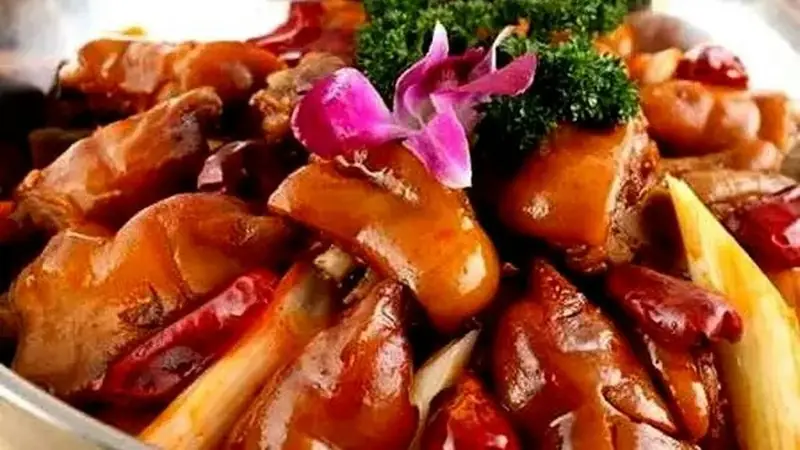
Photo adjustments
EXIF orientation normalized; resized without changing aspect ratio; converted to WebP. No subject edits.
Braised Deer Tail (烧鹿尾) is a braised specialty listed for Changchun, in Jilin, and the name states the cut plainly: 鹿尾 means deer tail, a piece built almost entirely of skin, fat and connective tissue.
A cut that needs time
Cuts made of connective tissue cannot be cooked quickly. The usual approach is to blanch the piece first to clean it, then braise it slowly in a seasoned liquid until the collagen breaks down and the texture turns soft and gelatinous. 烧 in this context means the piece is finished in a sauce rather than simply boiled, so the liquid is reduced at the end until it clings. Rushing the braise leaves the cut tough no matter how strong the seasoning is, which is why this is a dish that takes hours rather than minutes.
Rich, soft and mostly texture
There is very little lean meat in a cut like this. What you eat is soft, slightly sticky tissue with a rich, faintly gamey flavour, and the sauce does most of the seasoning work. Because the texture is the point, a properly braised piece should give way under a spoon rather than resist it. The dish is heavy and usually served in small portions at a shared table rather than as a main course for one person.
Northeast China and game cuts
长春 is the capital of Jilin, and the province's traditional cooking includes game and mountain ingredients alongside the pickled cabbage and river fish that dominate everyday meals. 烧鹿尾 belongs to the banquet side of that repertoire, where unusual cuts are braised slowly and served as a mark of a special meal. This guide describes the dish as it is recorded and makes no claim about how widely it is offered today or where any ingredient comes from.
Ingredients and dietary checks
The dish is built around the braised cut with a soy-based sauce, aromatics, wine and often sugar. Because the ingredient is unusual and its availability varies, ask 有吗 (do you have it) and 什么做的 (what is it made from) before ordering rather than after the plate arrives. Soy sauce and wine may contain wheat or sulphites, so ask 有酱油吗 (is soy sauce used) if either matters. If you prefer not to eat game, choose another dish from the menu instead.
How to order
Show the characters 烧鹿尾 and confirm two things first: 有吗 (is it available) and 一份多少 (how large a portion). Ask 辣不辣 (how spicy) and 有汤吗 (does it come with liquid), since the sauce may be thick or broth-like. Because the dish is rich and usually shared, order one portion for the table and add plain rice and a light vegetable rather than ordering a second heavy braise.
Eating it and building a meal
Serve it hot, in small pieces, and let each mouthful be mostly sauce and soft tissue. Plain rice is the natural partner, and a plainly cooked green vegetable or a light soup resets the palate between bites. If you are not used to gelatinous textures, try a small piece first; the flavour is mild but the mouthfeel is what people either enjoy or do not.
More dishes to compare
Explore related local specialties and compare their names, preparation notes and ordering guidance.
Guobaorou sweet-and-sour pork 锅包肉 →
Guobaorou sweet-and-sour pork (锅包肉) is the neighbouring entry and the opposite of 烧鹿尾 in almost every way: thin slices of pork, quick frying, a crisp coating and a bright sweet-and-sour sauce. One is fast and familiar, the other slow, rich and built on an unusual cut, and together they show the range of a northeastern table.
Questions before you order
Why does the dish take so long to cook?
The cut is mostly connective tissue, which only turns soft after a long braise. Short cooking leaves it tough regardless of the seasoning.
Is it available everywhere?
No. It is a specialty rather than a staple, so ask 有吗 (do you have it) before planning a meal around it. This guide makes no claim about sourcing.
Sources & reading
The supplied food list supports this name and regional association. The culinary terms below are explained as menu vocabulary; a local recipe, origin story and venue availability have not been independently verified.