

Photo adjustments
EXIF orientation normalized; resized without changing aspect ratio; converted to WebP. No subject edits.
Explore the region
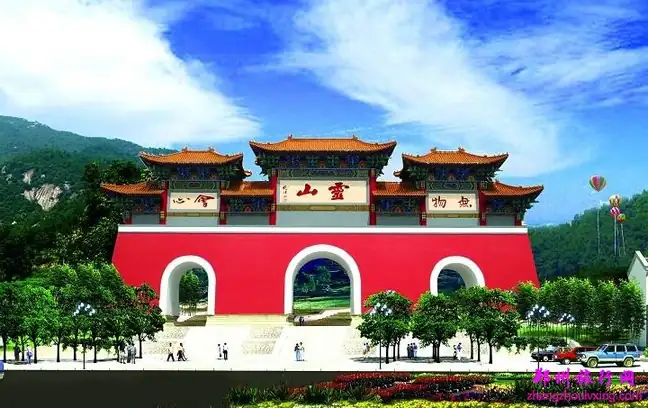
About Lingshan Temple
Dadian was a third-generation disciple in the direct line from Huineng, and he gave the place its name by comparing the site to Vulture Peak in India. The setting carries the traditional local epithet of nine dragons and eight heads with a lion and an elephant facing one another. The temple's wider fame rests on an encounter recorded in 819: Han Yu, then vice minister of justice, was demoted to prefect of Chaozhou after objecting to the imperial reception of a Buddha relic, and during his eight months there he and Dadian visited one another twice. In the tenth month, about to leave for Yuanzhou, Han Yu came to take his leave; Dadian, then 88 to Han Yu's 51, walked him out to the small bridge beyond the gate, and Han Yu took off his official robe and gave it to the monk.
The site preserves a set of monuments known collectively as the Eight Scenes of Lingshan: the Tongue-Mirror Pagoda, the Robe-Leaving Pavilion, Bamu Wu, the sutra-writing terrace, the Zhusheng stele, the Kaishan repository, the white stone trough and the Qianye fruit tree. The Robe-Leaving Pavilion was built by later generations at the place where the two men parted. The Tongue-Mirror Pagoda is Dadian's own tomb; he died at the temple in 824 at the age of 93 and was buried beside it, and the pagoda is described as the oldest and most complete surviving ancient tomb in the Chaoshan region. A thousand-Buddha pagoda was added behind the temple in 1991. Lingshan is designated a national key Buddhist temple of the Han Chinese region and was among the first group of key temples reopened in 1983.
What to look for
- The Tongue-Mirror Pagoda, the tomb of the founder Dadian, who died in 824 at the age of 93
- The Robe-Leaving Pavilion, built where Han Yu is said to have given his official robe to Dadian in 819
- The other monuments of the Eight Scenes of Lingshan, including the sutra-writing terrace, the Zhusheng stele and the white stone trough
- The thousand-Buddha pagoda raised behind the temple in 1991
- The hill setting that gave rise to the epithet of nine dragons and eight heads with lion and elephant facing each other
Location & getting there
Getting to Lingshan Temple
Check which interiors and courtyards are accessible. Active places of worship and protected monuments may have different visitor rules.
- Search for 灵山寺 with 汕头市 and 潮阳区.
Find Lingshan Temple
灵山寺 · 潮阳区
No reliable map pin yet: search by the Chinese name.
Sources & visit information
The linked sources support the identity and background described in this introduction. Opening hours, admission, activity availability and exact arrival arrangements have not been comprehensively checked. Confirm current visitor information with the venue; the original catalogue locality and editorial review flag are retained.