

Photo adjustments
Full frame retained; proportionally resized and converted to WebP. No retouching or changes to the photographed subject. Card displays may crop the view.
Explore the region
About Beiyue Temple
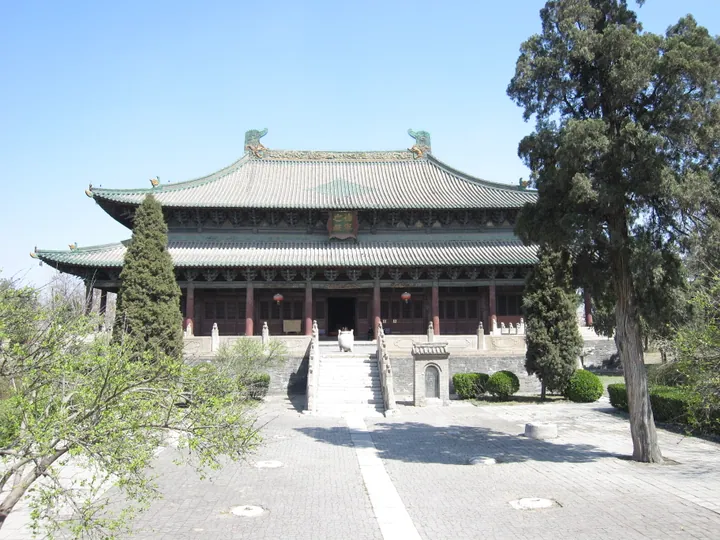
Beiyue Temple in Quyang is a historic complex associated with state worship of the Northern Sacred Mountain. Its principal building, Dening Hall, is a major surviving Yuan-period timber hall. The site brings together monumental architecture, murals and inscriptions within the town rather than on a mountain summit.
The sequence of gates and courtyards leads towards Dening Hall, whose broad roof and timber structure are central to the temple’s architectural interest. The interior is celebrated for large Daoist murals, while stone inscriptions record successive periods of worship, repair and patronage. Accounts differ over some dates and artistic attributions, so those disputed details should not be treated as settled facts.
The museum setting also connects the temple with Quyang’s long stone-carving tradition. A visit can focus on the relationship between ritual space, carved stone and surviving painted decoration. Interior access is a material part of planning: a museum notice from January 2025 announced maintenance closure of Dening Hall, and this review did not confirm a reopening.
What to look for
- Read the gate-and-courtyard sequence leading to Dening Hall.
- Observe the hall’s roof and timber architecture from the permitted area.
- Use the inscriptions and museum interpretation to follow worship and repair history.
Location & getting there
Getting to Beiyue Temple
Confirm Dening Hall’s current interior access directly with Beiyue Temple before making a special journey for its murals. The published maintenance notice concerns that hall, not an established closure of the whole complex. Use 北岳庙 in Quyang for navigation and select the open courtyards or museum displays available on the day.
- Use 北岳庙 with Hebei when searching for the visitor entrance.
Find Beiyue Temple
北岳庙 · 曲阳县
No reliable map pin yet: search by the Chinese name.
Sources & visit information
Place identity, setting and the described features checked against the linked institutional sources on 9 September 2026. Suggested visiting sequences are editorial guidance. Current opening hours, fees, events and access to individual interiors must be checked with the venue; no new map coordinates are inferred from this review.