


Photo adjustments
Full frame retained; EXIF orientation normalized, proportionally resized to at most 800 pixels and converted to WebP. No generated pixels or subject changes. Cards may crop the display.
Explore the region
About Gongyi Grotto Temple
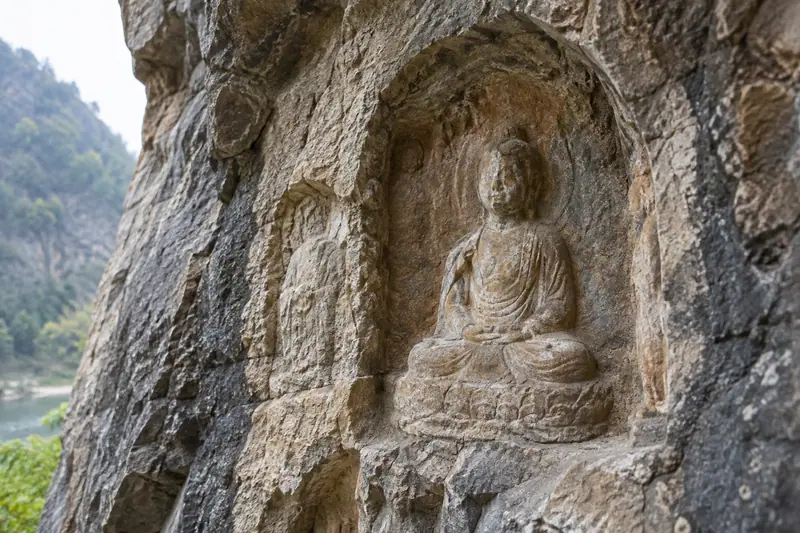
Carving began under the Northern Wei, when Emperor Xuanwu ordered craftsmen to cut caves and carve Buddha images here, and it was taken up again under the Eastern Wei, Western Wei, Northern Qi, Sui, Tang and Song, so the cliff records some six centuries of Buddhist sculpture. The temple that grew up in front of the caves changed name with the dynasties: Xixuan Si at first, Jingtu Si in the Tang, and Shikusi from the Qing. Almost none of its buildings survive; a Qing main hall and the east and west wings are all that is left of the monastery itself. The caves face south, and what remains of the carving is five caves, one thousand-Buddha niche, three statues cut into the open cliff, 328 cliff niches, 186 stele inscriptions and 7,743 Buddha figures.
The site is best known for its relief panels showing an emperor and an empress leading processions of attendants to worship the Buddha. The Zhengzhou heritage bureau describes these as complete and as rare among China's cave temples, alongside the carvings of court musicians, god-king figures and flying apsaras in the same caves. The grottoes are listed in the second batch of Major Historical and Cultural Sites Protected at the National Level, with their period recorded as Northern Wei to Song.
What to look for
- The imperial procession reliefs, showing an emperor and an empress with their attendants going to worship the Buddha, preserved here in complete form.
- The carved musicians, god-king figures and flying apsaras that accompany the procession panels inside the caves.
- The five surviving caves and the single thousand-Buddha niche, all facing south into the cliff at the foot of Dali Mountain.
- The 328 niches and three free-standing statues cut into the open rock face outside the caves.
- The 186 stele inscriptions recording the donors and dates of the carving campaigns.
- The Qing-dynasty main hall and its east and west wings, the only buildings left of the monastery that once stood in front of the caves.
Location & getting there
Getting to Gongyi Grotto Temple
Check which interiors and courtyards are accessible. Active places of worship and protected monuments may have different visitor rules.
- Search for 巩义石窟寺 with 郑州市 and 巩义市.
Find Gongyi Grotto Temple
巩义石窟寺 · 巩义市
No reliable map pin yet: search by the Chinese name.
Sources & visit information
The linked sources support the identity and background described in this introduction. Opening hours, admission, activity availability and exact arrival arrangements have not been comprehensively checked. Confirm current visitor information with the venue; the original catalogue locality and editorial review flag are retained.