

Photo adjustments
EXIF orientation normalized; resized without changing aspect ratio; converted to WebP. No subject edits.
Explore the region
About Qingliangsi Ru Official Kiln Site
Qingliangsi Ru Official Kiln Site (清凉寺汝官窑遗址) is the excavated production site of the Northern Song court's Ru ware (汝瓷), in Qingliangsi village (清凉寺村), Dayingzhen (大营镇), Baofeng County (宝丰县), Pingdingshan (平顶山), Henan. An exhibition hall at the site opened in 2017.
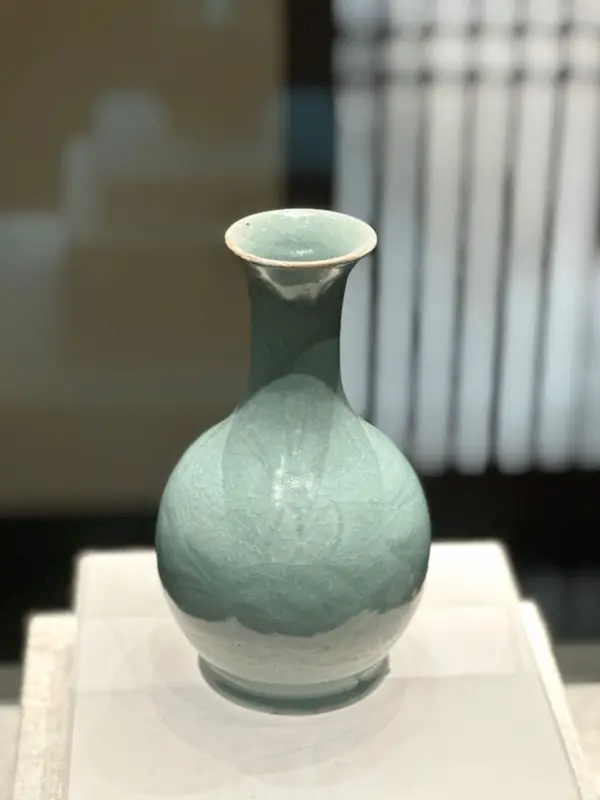
Ru ware was made for the imperial court for a short time around 1100, and most pieces carry a pale "duck-egg" blue glaze; fewer than a hundred complete pieces survive. Court production lasted about twenty years, from 1086 to 1106. Of the kilns making Ru-type wares, only Qingliangsi served the court; the others turned out everyday pieces. The Song writer Zhou Hui recorded agate in the glaze, and the kilns proved to lie very close to an agate-mining site, though specialists now doubt that agate affected the colour.
For centuries little was known about where the ware was made. Ceramic experts Chen Wanli (陈万里), Ye Zhemin (叶喆民) and Feng Xianming (冯先铭) searched Baofeng in the 1950s and 1960s and found nothing. In 1986 lab tests on sherds from the village matched Ru pieces held by the National Palace Museum in Taipei, and in 1987 the Shanghai Museum (上海博物馆) placed the kiln in Baofeng, using sherds picked up in Qingliangsi and a Ru brush washer given by Wang Liuxian (王留现). Four large excavations took place between 1987 and 1998. The sixth season, in June 2000, uncovered 15 kilns, glazing workshops, filtering and settling ponds, drainage channels, rows of storage vats and a well, which confirmed the site as the official Ru kiln. That result was ranked among China's ten major new archaeological finds of 2000, and by December 2014 eleven seasons had been completed.
Henan listed the site for provincial protection in September 2000, and in June 2001 it entered the fifth batch of national key protected heritage sites (全国重点文物保护单位). Baofeng County and the national heritage authority then paid for a protective shed over the remains, and in 2005 it joined a national programme for 100 major large sites. Work on an exhibition hall began in July 2014 and it opened on 16 January 2017. In December 2022 the National Cultural Heritage Administration (国家文物局) put a Qingliangsi Ru kiln archaeological park on its fourth list of approved projects for national archaeological parks. Sherds from the site include bowls, dishes, vases, brush washers, cups, narcissus basins and lids, thrown on the wheel.
What to look for
- The protective shed built over the excavated kiln remains after the 2001 national listing
- Baofeng Qingliangsi Ru Official Kiln Site Exhibition Hall (宝丰清凉寺汝官窑遗址展示馆), opened on 16 January 2017
- Qingliangsi village (清凉寺村), whose surface sherds led to the kiln's identification in 1987
- Away from the site: the sky-blue goose-neck vase carved with lotus sprays (汝窑天蓝釉刻花鹅颈瓶), 19.6 cm tall and the only complete Ru vessel excavated here, in the Henan Museum (河南博物院)
Location & getting there
Getting to Qingliangsi Ru Official Kiln Site
- Search for 清凉寺汝官窑遗址 with 平顶山市 and 宝丰县.
Find Qingliangsi Ru Official Kiln Site
清凉寺汝官窑遗址 · 宝丰县
No reliable map pin yet: search by the Chinese name.
Sources & visit information
Written from the linked sources and checked sentence by sentence against quoted extracts by a separate reviewer on 2026-09-23. Opening hours, admission and access arrangements are not covered; confirm current visitor information with the site.
- 宝丰清凉寺汝官窑遗址博物馆 - 维基百科,自由的百科全书 ↗
- Ru ware - Wikipedia ↗
- 汝窯 - 维基百科,自由的百科全书 ↗
- 国家文物局关于公布第四批国家考古遗址公园名单和立项名单的通知 ↗
Some facts checked against Wikipedia contributors, "宝丰清凉寺汝官窑遗址博物馆" · CC BY-SA 4.0.
Some facts checked against Wikipedia contributors, "Ru ware" · CC BY-SA 4.0.
Some facts checked against Wikipedia contributors, "汝窯" · CC BY-SA 4.0.