

Explore the region
About Zhenjiang Pavilion Riverside
The pavilion was first built in 1699 and carries the traditional epithet 'fourth tower under heaven'. The original building was small and of brick construction; it was later renamed Yangsi Temple and no longer exists, and the provincial portal adds that the pavilion was raised with money subscribed by merchants in the city and served in Yichang's past as a place used for grain trading. What stands now is an antique-style reconstruction on a different site: to restore the city's historic scenery the municipal government chose the present location and rebuilt the pavilion in January 1987, and a full restoration was carried out on 20 December 2006. The reconstructed pavilion occupies 536 square metres, has a floor area of 1,336 square metres and rises 26.29 metres in four storeys, each stage carrying bracket sets and upswept eaves. It rests on a blue-stone sumeru base carved with dragons, is edged with white marble balustrades and has 34 coiled-dragon columns in all.
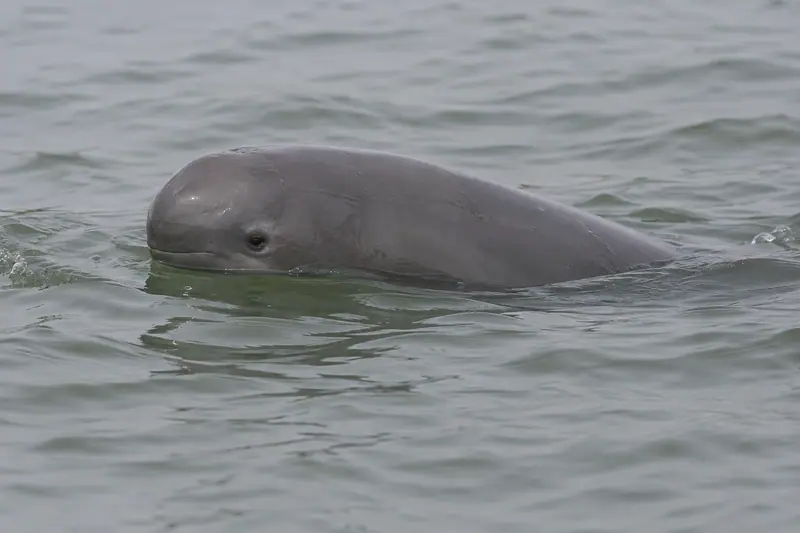
The riverside named in the catalogue entry forms part of Binjiang Park, the shoreline park along Yichang's Yangtze frontage. The municipal landscaping centre records that the park took shape from the 1970s, when spoil from the Gezhouba works was used to extend the river flats, and that by 2016 it ran 11.3 kilometres from Xiling Road 1 to Baisha Road; in 2021 work began on linking up and upgrading the whole main-city section between those two points, given there as 10.5 kilometres. Its walking route strings together Yanzhi Garden, the Tianran Pagoda, Peace Park and Zhenjiang Pavilion as far as Gezhouba, and runs on past the Wujiagang Yangtze bridge and Lighthouse Square to the Xiaoting ancient battlefield, 25 kilometres in all. The same account records that 216 illegal wharves and 134 sand-extraction yards along this shoreline have been closed and 42.7 kilometres of bank vacated, and that a former oil-depot wharf at Wangjiahe has been rebuilt as an observation platform for the Yangtze finless porpoise, in a reach described as important habitat for the animal and lying inside the core protection area for the Chinese sturgeon.
What to look for
- The four-storey pavilion itself, 26.29 metres high with a floor area of 1,336 square metres and bracket sets and upswept eaves at every stage.
- The blue-stone sumeru base carved with dragons and the white marble balustrades at the foot of the building.
- The 34 coiled-dragon columns counted through the pavilion.
- The Binjiang Park riverside route, which strings the pavilion together with Yanzhi Garden, the Tianran Pagoda, Peace Park and Gezhouba.
- The finless porpoise observation platform at Wangjiahe, further along the same shoreline, converted from a former oil-depot wharf.
Location & getting there
Getting to Zhenjiang Pavilion Riverside
Choose a precise starting address and return transport stop. Access to individual buildings, performances or viewing platforms is separate from access to public streets.
- Search for 镇江阁江畔 with 宜昌市 and 西陵区.
Find Zhenjiang Pavilion Riverside
镇江阁江畔 · 西陵区
No reliable map pin yet: search by the Chinese name.
Sources & visit information
The linked sources support the identity and background described in this introduction. Opening hours, admission, activity availability and exact arrival arrangements have not been comprehensively checked. Confirm current visitor information with the venue; the original catalogue locality and editorial review flag are retained.