

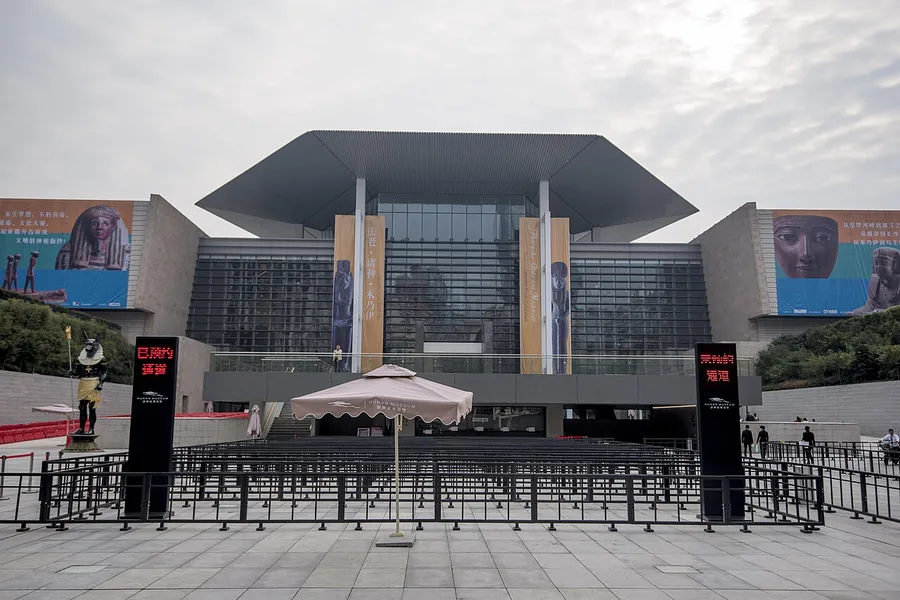
Photo adjustments
Proportionally resized and converted to WebP without cropping, retouching or changing the photographed subject.
Explore the region
About Hunan Museum
The story of Xin Zhui and her household anchors this collection, while the broader Hunan history exhibition places it within a longer regional sequence. This is the provincial museum on Dongfeng Road, not the archaeological tomb location itself. Choose time for the Mawangdui displays before adding other galleries, and check which special exhibitions require separate admission.
The museum was first established in March 1951 and formally founded in July 1956; the exhibition hall for objects excavated from the Mawangdui Han tombs (马王堆汉墓) opened in July 1974, and a new exhibition building opened on 13 January 2003. On 18 May 2008 it was named one of China's first National First-Grade Museums (国家一级博物馆) by China's Bureau of Cultural Relics (中国文物局). The museum closed for expansion and reconstruction on 18 June 2012 and reopened on 29 November 2017. It was renamed Hunan Museum (湖南博物院) on 30 July 2022, then renamed back to the Hunan Provincial Museum (湖南省博物馆) on 12 October 2025, when its administrative rank was raised.
The museum holds more than 180,000 items. Among the Mawangdui finds are the silk painting (帛画) from Tomb One, a plain unlined gauze robe (直裾素纱襌衣), and silk manuscripts covering politics, economics, philosophy, history, astronomy, geography and medicine. Hunan has long been a major source of excavated Shang- and Zhou-dynasty bronzes, including the Si Yang Fang Zun (四羊方尊); the museum's own bronze holdings include the uniquely shaped Da He Fang Ding (大禾方鼎), the finely decorated Min Tian Quan Fang Lei (皿天全方罍), and various Western Zhou to Warring States bronze weapons such as arrowheads, dagger-axes and swords.
What to look for
- The Mawangdui textiles, lacquerwork and burial assemblages.
- The broader Hunan history exhibition connecting different periods and communities.
Location & getting there
Getting to Hunan Museum
Use No 50 Dongfeng Road in Changsha. Make any required timed reservation through the museum’s own channels and bring the matching identification; follow the current entrance guidance rather than travelling to Mawangdui’s excavation site.
Combine your visit
A suggested order for exploring this place and its immediate setting.
-
Mawangdui historical introduction马王堆汉墓历史背景
Begin with the family and burial context.
-
Objects from the Han tombs马王堆出土文物
Study textiles and lacquerwork as parts of an assembled burial world.
-
Hunan regional history湖南人——三湘历史文化陈列
Extend the visit into the wider provincial story.
Check access to the individual stops. A suggested sequence does not imply a combined ticket or guaranteed transfer.
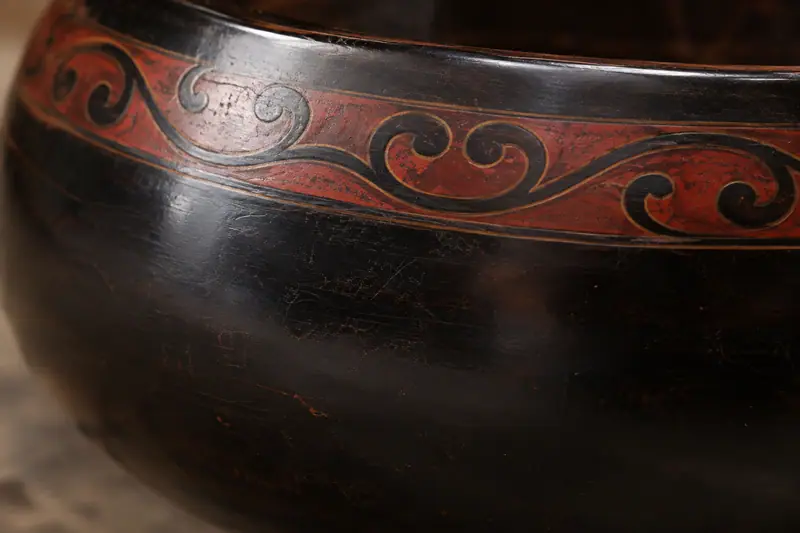
Find Hunan Museum
湖南博物院 · 长沙市
The pin marks the area, not the entrance.
More places nearby
Approximate straight-line distances between map pins, not travel distances.
Hunan Embroidery Museum 湖南湘绣博物馆
2 km awayHunan Embroidery Museum introduces Xiang embroidery through stitches, thread, pictorial design and surviving textile objects. Close viewing reveals how shading and fine detail can be built with thread rather than paint, while…
View guide →Tianxin Pavilion 天心阁
3 km awayTianxin Pavilion stands on a surviving section of Changsha’s old city defences, with a central tower and connected side pavilions overlooking the modern streets. The present pavilion was rebuilt in the 1980s after the earlier…
View guide →Changsha Bamboo Slips Museum 长沙简牍博物馆
3 km awayChangsha Bamboo Slips Museum turns ancient administration into something unusually tangible. The Zoumalou discoveries include wooden and bamboo documents recording land, people and official business in the Three Kingdoms period…
View guide →Sources & visit information
The sources below support the place-specific description and arrival information. Suggested combinations are editorial planning ideas; confirm current opening, entry arrangements and transport services for your date.
- Hunan Museum ↗
- Hunan Museum — admission and exhibitions ↗
- Chinese Wikipedia: 湖南省博物馆 (revision 94020405, 2026-08-24) ↗
Visitor information adapted and edited from Wikipedia contributors: Hunan Museum · CC BY-SA 4.0. Source revision 1344779832.
Background paragraphs translated and condensed from Wikipedia contributors, "湖南省博物馆", Chinese Wikipedia · CC BY-SA 4.0. Source revision 94020405.