


Photo adjustments
Full frame retained; EXIF orientation normalized, proportionally resized to at most 800 pixels and converted to WebP. No generated pixels or subject changes. Cards may crop the display.
Explore the region
About Meibei Old Village
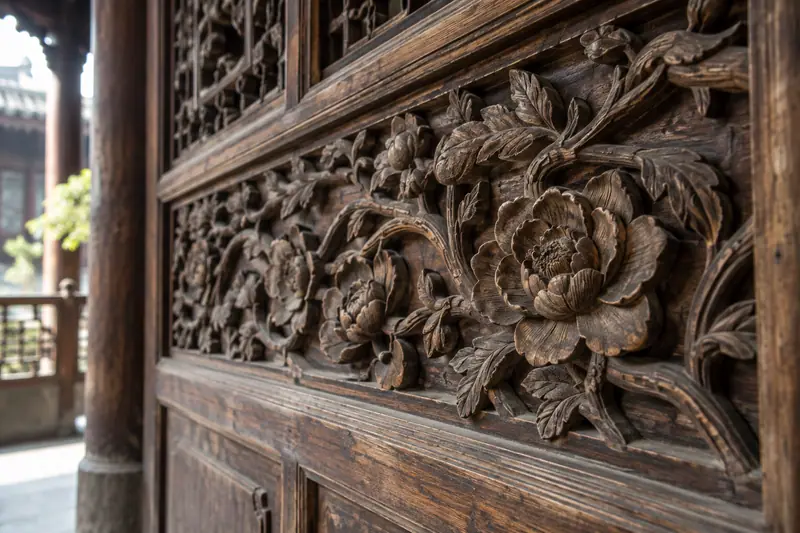
The village is roughly a thousand years old: founded in the early Southern Song, it grew wealthy under the Ming and Qing, and 367 complete Ming and Qing buildings still stand. They are of many kinds, including dwellings, lineage ancestral halls, academies, memorial archways, pavilions, a landing quay, a church and the former homes of notable residents, with stone and wood carving worked into the arcades along the old street. Commercial life began when Liang families opened shops on Pitou Street at the north end of the village in the mid-to-late Ming; by the Qing the Liang-led regional trading business was substantial, and merchant money supported the academies and village schools, so that a commercial quarter and a scholarly one grew up side by side. The combination of academy, lineage-hall and religious traditions with Ming and Qing carving has earned the village the nickname 'first village of Luling culture', and it has been designated a Chinese historic and cultural village.
Meibei is also a site of the Chinese revolution. It served as the seat of the Jiangxi provincial Soviet government and was where the Communist Party's 'February 7' conference was held and a land law promulgated; the former headquarters of the Red Fourth Army and residences used by Mao Zedong and Zhu De are still standing, and the village is a Jiangxi provincial patriotic-education base. Three founding generals of the People's Republic, Liang Xingchu, Liang Biye and Liang Renjie, were born here. Living traditions recorded in the village include caiqing, a national-level item of intangible cultural heritage, the provincial-level firework-puppet performance, and municipal-level crafts of traditional soy-sauce brewing and Xizhu suona making.
What to look for
- The 367 surviving Ming and Qing buildings, among them ancestral halls, academies, archways and dwellings
- The stone and wood carving worked into the arcades of the old street
- Pitou Street at the north end of the village, where the Liang lineage's shops opened in the mid-to-late Ming
- The former headquarters of the Red Fourth Army and the former residences used by Mao Zedong and Zhu De
- The village's ponds and watercourses, including the Fushui and Meishui and 28 ponds inside the settlement
Location & getting there
Getting to Meibei Old Village
Identify the main visitor approach and any separately managed houses, museums or performances. Ask before entering residential spaces or photographing residents.
- Search for 渼陂古村 with 吉安市 and 青原区.
Find Meibei Old Village
渼陂古村 · 青原区
No reliable map pin yet: search by the Chinese name.
Sources & visit information
The linked sources support the identity and background described in this introduction. Opening hours, admission, activity availability and exact arrival arrangements have not been comprehensively checked. Confirm current visitor information with the venue; the original catalogue locality and editorial review flag are retained.