


Photo adjustments
Full frame retained; EXIF orientation normalized, proportionally resized to at most 800 pixels and converted to WebP. No generated pixels or subject changes. Cards may crop the display.
Explore the region
About Xunliao Bay
Xunliao Bay (巽寮湾) is a seaside resort area on Daya Bay (大亚湾) in Huidong County (惠东县), Huizhou (惠州), in the eastern Pearl River Delta in Guangdong.
The resort area covers 105 km² and has a humid subtropical climate, averaging 21.7 °C over the year. More than 20 km of shoreline take in eight bays. Hills, sand beaches and big boulders on the islands are found all around, over 30 inscriptions are carved into the rock faces along the bay, and several dozen islets lie offshore. Known for its oddly shaped rocks, clear water and white sand, it goes by the nicknames "Green Jade" (绿色翡翠) and "Godsend Platinum Bank" (天赐白金堤).
Two folk stories explain the name. In one, the Northern Song writer Su Shi (苏轼), exiled to Huiyang (惠阳), came here to escape the summer heat. The place was then called Yaliao (鴨寮, "duck shed"), but he saw Daya Bay as a Bagua (八卦) diagram with this spot lying in the direction of the trigram Xun (巽), which stands for wind, and renamed it. In the other, the settlement was called Shunliao (順寮) in 1447 and took the character Xun after a fire made the old name seem unlucky.
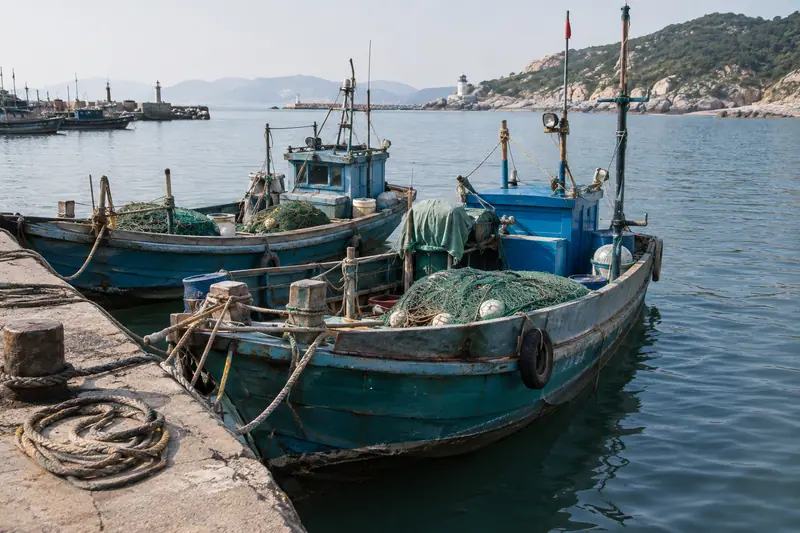
Families arriving by sea from southern Fujian (闽南) in the late Ming and early Qing levelled the dunes by hand, built walls against wind and seawater, and put up thatched and timber huts, which became a permanent village of farmers and fishermen. Local customs include fishing songs, Tanka boat-people (疍家) and Mazu (妈祖) traditions, dragon boat races at the Duanwu festival and pounded tea with fried rice (炒米擂茶). Tourism grew from the 1990s: the bay became a municipal tourist resort in 1993, and in 2002 the Huizhou government approved a management committee to plan and protect the area as a whole.
What to look for
- The eight small bays strung along more than 20 km of shoreline
- Coastal rock formations worn by wind and waves and named after animals, such as "a seal turning the mill" (海狗推磨), "a sheep playing in the sea" (绵羊戏海) and "a steed exploring the sea" (骏马探海)
- More than 30 cliff inscriptions (摩崖石刻) carved into the rocks around the bay
- Tianhou Palace (天后宫), a Lingnan-style complex with a 5.3 m statue of Mazu and bronze reliefs mapping the migration of the Hakka (客家) people
- The commercial street at the Tianhou Palace, entered through a 9.9 m ceremonial arch
- Dozens of islets scattered across the water offshore
Location & getting there
Getting to Xunliao Bay
- Search for 巽寮湾 with 惠州市 and 惠东县.
Find Xunliao Bay
巽寮湾 · 惠东县
No reliable map pin yet: search by the Chinese name.
Sources & visit information
Written from the linked sources and checked sentence by sentence against quoted extracts by a separate reviewer on 2026-09-23. Opening hours, admission and access arrangements are not covered; confirm current visitor information with the site.
Some facts checked against Wikipedia contributors, "巽寮湾" · CC BY-SA 4.0.
Some facts checked against Wikipedia contributors, "Xunliao Bay" · CC BY-SA 4.0.