


Photo adjustments
Full frame retained; EXIF orientation normalized, proportionally resized to at most 800 pixels and converted to WebP. No generated pixels or subject changes. Cards may crop the display.
Explore the region
About Foshan Ancestral Temple
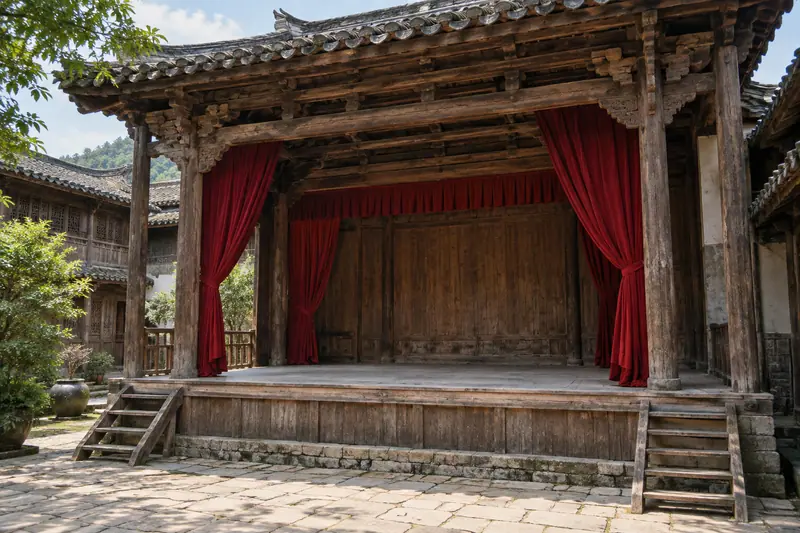
Tradition places the temple's foundation in the Yuanfeng era of the Northern Song, between 1078 and 1085, after which it was rebuilt and enlarged more than twenty times; the surviving main buildings occupy some 3,600 square metres. Beidi was worshipped as a water deity, which suited a town set among the river channels of the delta. The buildings stand in sequence on a north-south axis, beginning with the Wanfu Stage and running through the Lingying Archway, the Jinxiang Pool, the bell and drum towers, the Three Gates, the front hall, the main hall and the Qingzhen Tower. In 1996 the complex was listed as a national key cultural relics protection unit, and it is grouped with the Longmu Temple at Yuecheng in Zhaoqing and the Chen Clan Ancestral Hall in Guangzhou as the three treasures of Lingnan historic architecture.
The temple was never only a religious building. Through the Ming and Qing it was where Foshan's gentry met and settled town business, housing the Jiahui Hall under the Ming and the Dakui Hall under the Qing. The present museum compound, on Zumiao Road in Chancheng, sets the protected building group alongside a Confucius temple, the Huang Feihong Memorial Hall and the Ip Man Hall, and builds its displays around Foshan history, martial-arts culture and local folk art. Lion dance, martial arts and Cantonese opera are part of the customary programme, with opera companies performing on the Wanfu Stage.
What to look for
- The Wanfu Stage, described as the best-known surviving old opera stage in South China, at the head of the north-south axis
- The bronze image of Beidi, the largest surviving Ming-dynasty bronze statue of the deity in China, together with an old bronze mirror
- The rare Song-style bracket sets in the temple's timber frame
- The 'three carvings and two sculptures' decoration: wood, brick and stone carving with ceramic and plaster relief
- The Huang Feihong Memorial Hall and the Ip Man Hall, the martial-arts memorials inside the museum compound
Location & getting there
Getting to Foshan Ancestral Temple
Check which interiors and courtyards are accessible. Active places of worship and protected monuments may have different visitor rules.
- Search for 祖庙 with 佛山市 and 禅城区.
Find Foshan Ancestral Temple
祖庙 · 禅城区
No reliable map pin yet: search by the Chinese name.
Sources & visit information
The linked sources support the identity and background described in this introduction. Opening hours, admission, activity availability and exact arrival arrangements have not been comprehensively checked. Confirm current visitor information with the venue; the original catalogue locality and editorial review flag are retained.