

Photo adjustments
EXIF orientation normalized; resized without changing aspect ratio; converted to WebP. No subject edits.
Explore the region
About Bainiaoyan Cave
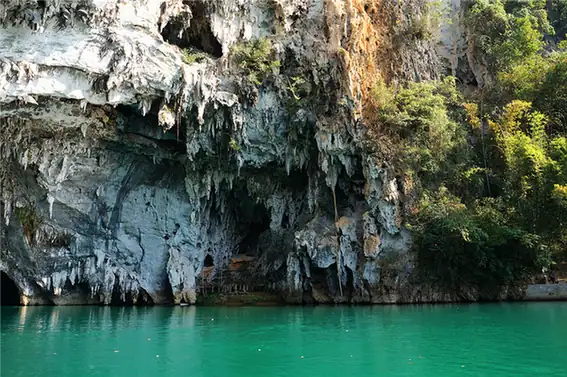
The Panyang River sinks underground at Baixiong Cave at Ji hamlet and comes out again here, at what the county bureau calls the last resurgence before the river joins the Hongshui. The mouth is 50 metres wide and split by a rock wall into two roughly triangular openings, the left of them 40 metres wide and 15 metres high, connected to the other inside. The cave runs 500 metres, winding through to a side opening below the Lalei saddle, one ridge away from Baixiong Cave. The water is smooth and of unknown depth, about 40 metres across at the widest point and 10 metres at the narrowest.
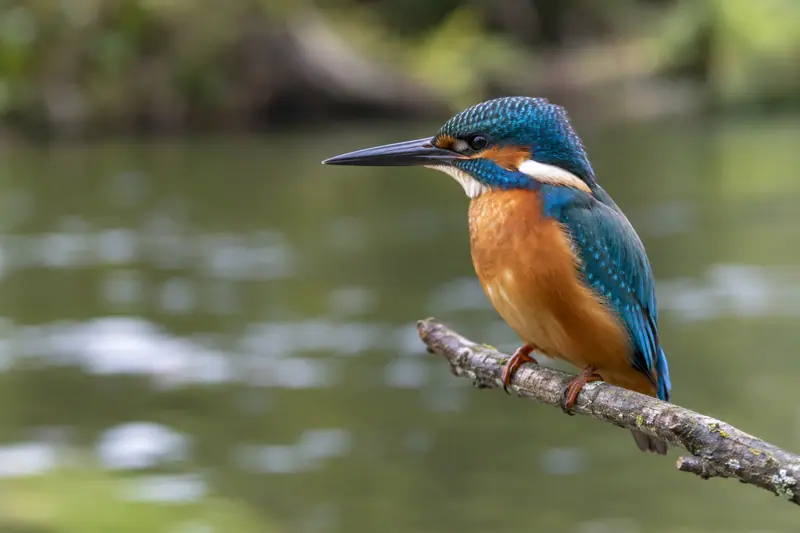
About 300 metres in, at a bend, a circular skylight opens 30 metres above the water and drops daylight onto the surface; the site's other name, Shuibo Tianchuang, means the skylight over rippling water. Near the right-hand entrance a sandbank allows boats to moor, with a pitted stone platform of more than 30 square metres beside it, and the walls carry formations the bureau describes as stone eagles, stone columns, stone drapery and a stone Guanyin. At the far end a large rock is cracked in a pattern read as the three characters ren, ren, shou. In the chamber near the exit rock swifts, rock hawks, kingfishers and bats roost, and at sunrise and sunset large numbers of swifts pour out of the mouth low over the water; the county bureau gives this as the origin of the name Bainiaoyan, the hundred-bird cave. Jiazhuan village, 18 kilometres north-west of the Bama county town, lies about two kilometres from the cave.
What to look for
- The circular skylight about 300 metres in, which opens 30 metres above the water
- The twin triangular entrances, divided by a rock wall across a 50-metre mouth
- The rock swifts, rock hawks, kingfishers and bats that roost in the chamber near the exit
- The cracked rock at the far end of the cave, read as the characters ren, ren, shou
- The stone platform and sandbank near the right-hand entrance, and the wall formations named as stone eagles, columns, drapery and a stone Guanyin
Location & getting there
Getting to Bainiaoyan Cave
Use an authorised visitor route. Cave sections, geological sites and access roads can close independently, so confirm the area that your ticket covers.
- Search for 百鸟岩 with 河池市 and 巴马瑶族自治县.
Find Bainiaoyan Cave
百鸟岩 · 巴马瑶族自治县
No reliable map pin yet: search by the Chinese name.
Sources & visit information
The linked sources support the identity and background described in this introduction. Opening hours, admission, activity availability and exact arrival arrangements have not been comprehensively checked. Confirm current visitor information with the venue; the original catalogue locality and editorial review flag are retained.