

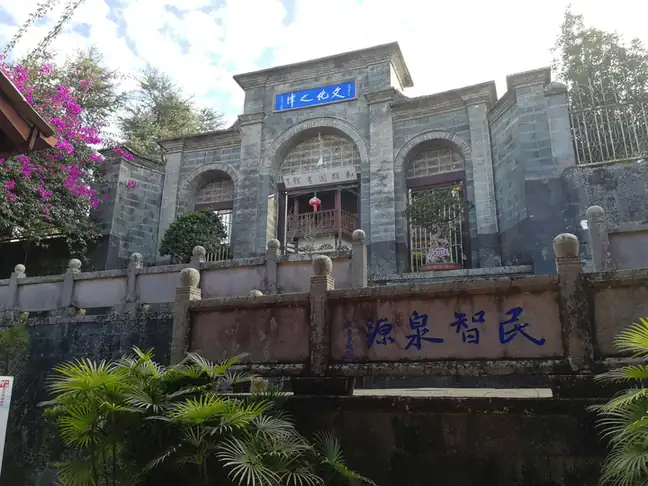
Photo adjustments
EXIF orientation normalized; resized without changing aspect ratio; converted to WebP. No subject edits.
Explore the region
About Tucheng Ancient Town
The town has been an important wharf and collecting point for the salt trade out of Sichuan since early times. In 2005 the Ministry of Construction and the State Administration of Cultural Heritage announced 34 towns as the second batch of Chinese historic and cultural towns, selected on local nomination, expert assessment and the evaluation index system for such places; Tucheng was the thirty-first on that list, immediately after Qingyan in Huaxi District of Guiyang.
Tucheng was an important crossing during the four crossings of the Chishui, and Xinhua names the Qinggangpo battle site and the Tucheng ferry among the Long March heritage sites there. Xishui County has built subject museums in the town on the basis of that heritage. The Four Crossings of the Chishui Memorial Museum was built with the approval of the General Office of the CPC Central Committee, opened in July 2007 and has admitted visitors free since 2009; it is a national patriotic education demonstration base, a national defence education demonstration base, a national youth education base and a first-grade national museum. The museum occupies 7,710 square metres in the northern Guizhou vernacular style and forms one group with Tucheng old street and the first crossing point, its exhibition halls covering 2,785 square metres along a display route of 906 m. Its displays combine sculpture, oil painting, photographs, text and objects with sound, light and electrical techniques to set out how, after the Zunyi conference, Mao Zedong and his colleagues led more than 30,000 men of the Central Red Army four times across the Chishui and escaped an encirclement of 400,000 Nationalist troops.
The memorial museum is not the only one. Xinhua counts more than ten red museums in Tucheng forming a cluster, among them the Women Red Army Museum, which tells the story of 731 women of the Red Army, and the Red Army Hospital Museum on the development of the Red Army's medical work; the town also has three comprehensive cultural parks, one of them the Four Crossings of the Chishui Memorial Park.
What to look for
- The Four Crossings of the Chishui Memorial Museum, a first-grade national museum built in the northern Guizhou vernacular style and joined to the old street and the first crossing point.
- The Tucheng ferry, the crossing point itself, which Xinhua names among the town's Long March heritage sites.
- The Qinggangpo battle site, which Xinhua also names among the town's Long March heritage sites.
- The Women Red Army Museum, which sets out the story of 731 women of the Red Army.
- The Red Army Hospital Museum, on the development of the Red Army's medical work.
Location & getting there
Getting to Tucheng Ancient Town
Identify the main visitor approach and any separately managed houses, museums or performances. Ask before entering residential spaces or photographing residents.
- Search for 土城古镇 with 遵义市 and 习水县.
Find Tucheng Ancient Town
土城古镇 · 习水县
No reliable map pin yet: search by the Chinese name.
Sources & visit information
The linked sources support the identity and background described in this introduction. Opening hours, admission, activity availability and exact arrival arrangements have not been comprehensively checked. Confirm current visitor information with the venue; the original catalogue locality and editorial review flag are retained.