

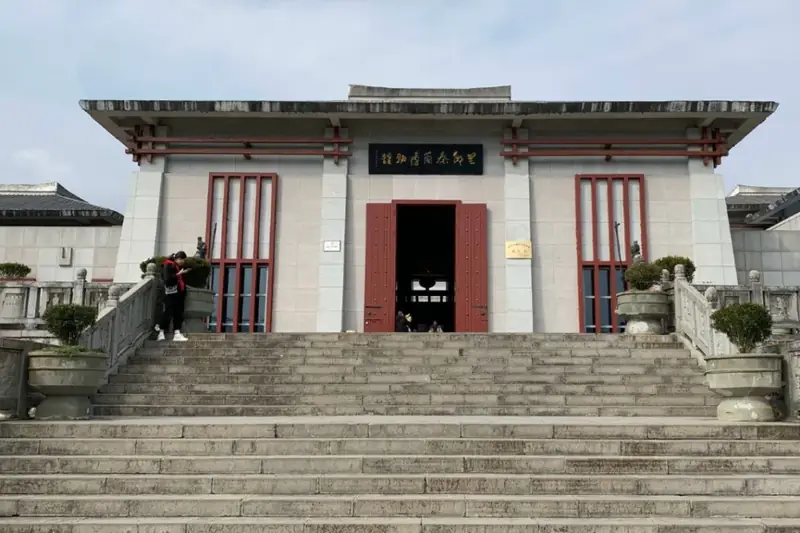
Photo adjustments
EXIF orientation normalized; resized without changing aspect ratio; converted to WebP. No subject edits.
Explore the region
About Liye Ancient City and Qin Bamboo Slips Museum
The town at Liye was founded by the state of Chu during the Warring States period and was later taken by Qin, after which it served as a regional administrative and military centre. The excavated site covers more than 10,000 square metres immediately beside the river and includes rammed-earth walls, a moat, building foundations, drainage works and a set of wells laid out inside and outside the walls. In June 2002 more than 37,000 inscribed bamboo and wooden slips were lifted from Well No. 1, another major discovery in Qin archaeology after the terracotta army. The site is a national key cultural heritage protection unit and the town around it is a designated Chinese historic and cultural town.
The slips are not literature but working paperwork: day-book records kept by the Qin officials posted here, covering the years from 222 BC to 208 BC. Three of them are singled out in the museum's own account. One names Qianling within a Dongting Commandery, an administrative unit the transmitted histories do not list, so the slip revised what was known about how Qin divided its territory. Another carries the earliest complete multiplication table yet found. A third is addressed for dispatch by post from Qianling to Dongting and is treated as the earliest surviving physical evidence of the Chinese postal system. The museum's registered holdings run to 8,055 items and sets in total.
Liye sits at the southern tip of Longshan County, roughly 120 kilometres from the prefectural seat at Jishou, where Longshan, Baojing and Xiushan counties meet. It was a collecting and forwarding point for river traffic on the You, and is counted with Wangcun, Pushi and Chadong as one of the four historic towns of Xiangxi. Besides the site and the museum, a Ming and Qing period street and the back street along the river embankment are listed among the features of the town.
What to look for
- The excavated city site beside the You River, with rammed-earth walls, moat, building foundations and drainage works
- Well No. 1, the shaft from which more than 37,000 Qin slips were recovered in 2002
- The slip naming Qianling in Dongting Commandery, evidence for a commandery absent from the transmitted histories
- The earliest complete multiplication table known, written out on a Qin slip
- The Ming and Qing period street and the riverside back street in Liye town
Location & getting there
Getting to Liye Ancient City and Qin Bamboo Slips Museum
Confirm the venue or campus, reservation channel and exhibition calendar. A museum name may cover more than one building.
- Search for 里耶古城与秦简博物馆 with 湘西土家族苗族自治州 and 龙山县.

Find Liye Ancient City and Qin Bamboo Slips Museum
里耶古城与秦简博物馆 · 龙山县
No reliable map pin yet: search by the Chinese name.
Sources & visit information
The linked sources support the identity and background described in this introduction. Opening hours, admission, activity availability and exact arrival arrangements have not been comprehensively checked. Confirm current visitor information with the venue; the original catalogue locality and editorial review flag are retained.