

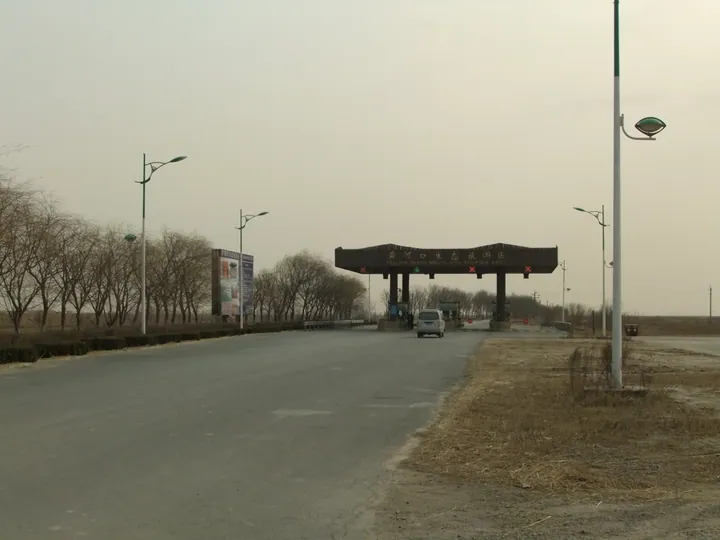
Photo adjustments
Full frame retained; proportionally resized and converted to WebP. No retouching or changes to the photographed subject. Card displays may crop the view.
Explore the region
About Yellow River Estuary Eco-Tourism Area
The nature reserve on which the tourism area is built was approved by the State Council in October 1992 and covers 1,530 square kilometres; it was Shandong's first Wetland of International Importance and holds what is described as the youngest, broadest and best-preserved wetland ecosystem in China's warm temperate zone. The tourism area itself opened to visitors on 1 October 2005. Dongying launched a bid for national 5A status in October 2015, and on 7 January 2020 the Ministry of Culture and Tourism included the area among 22 new 5A scenic areas, the only Shandong site in that batch and the 29th in the Yellow River basin. The area also carries national forest park and national geopark designations.
Its defining scene is the river-sea confluence, where the silt-laden Yellow River pushes into the blue water of the Bohai Sea and continues to build new land. The area is described as China's largest coastal tract of newly formed natural wetland vegetation, with 685 plant species; tracts of Suaeda salsa turn the flats into a red 'carpet' over more than 10,000 mu, and there is the largest planted black locust forest on the North China Plain, alongside willows and reed beds. It is a stopover, wintering and breeding site on the north-east Asian and west Pacific flyways: 368 bird species are recorded, including 12 under national first-class protection such as the red-crowned crane and the oriental stork, and 51 under second-class protection such as the common crane and the whooper swan. Local branding calls it the home of the oriental stork and of Saunders's gull.
What to look for
- The river-sea confluence at the current mouth of the Yellow River, where muddy river water meets the Bohai Sea.
- The red 'carpet' of Suaeda salsa spreading over more than 10,000 mu of tidal flats.
- Birdlife on the East Asian flyways: 368 recorded species, including red-crowned crane, oriental stork, common crane, whooper swan and Saunders's gull.
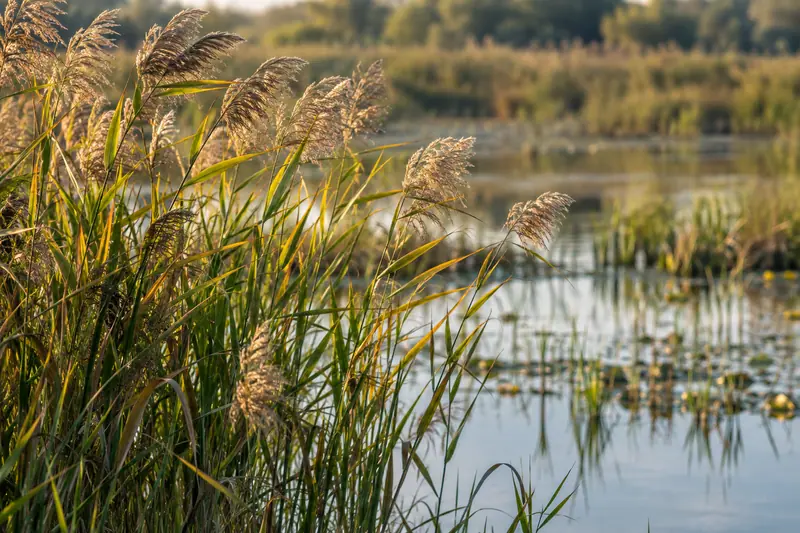
- The planted black locust forest, the largest on the North China Plain, with willows and reed beds.
- Newly formed delta land, the youngest wetland ecosystem in China's warm temperate zone.
Location & getting there
Getting to Yellow River Estuary Eco-Tourism Area
Check the open visitor route and follow the site’s rules on distance, food and photography. Conservation areas may limit access beyond designated paths.
- Search for 黄河口生态旅游区 with 东营市 and 垦利区.
Find Yellow River Estuary Eco-Tourism Area
黄河口生态旅游区 · 垦利区
No reliable map pin yet: search by the Chinese name.
Sources & visit information
The linked sources support the identity and background described in this introduction. Opening hours, admission, activity availability and exact arrival arrangements have not been comprehensively checked. Confirm current visitor information with the venue; the original catalogue locality and editorial review flag are retained.