

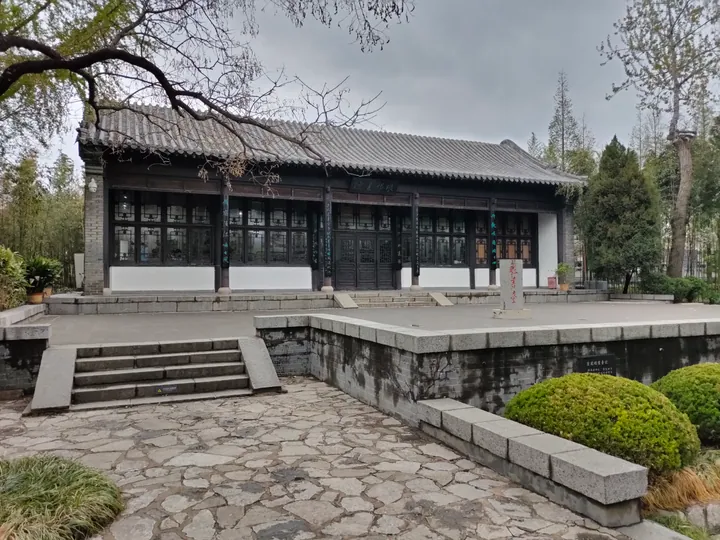
Photo adjustments
Full frame retained; proportionally resized and converted to WebP. No retouching or changes to the photographed subject. Card displays may crop the view.
Explore the region
About Wang Xizhi Former Residence
Wang Xizhi was born at Langya Linyi, the present Lanshan District, in 303, and left as a child when his family moved south to Jiankang; the house they gave up became a Buddhist temple that was ruined and rebuilt repeatedly before settling under the name Puzhao Temple. A garden commemorating the calligrapher was restored on the old site in 1989, and for the 1700th anniversary of his birth the city enlarged it from 28 mu to about 80 mu, finishing the work on 17 October 2003. The enlargement kept the older features, the inkstone-washing pool, the book-drying terrace, the Langya Academy and the calligraphy stele corridor, and added the restored Puzhao Temple, the Wang Youjun Shrine and the Wuxian Shrine.
The second phase of that construction turned up a group of Jin-dynasty tombs beneath the grounds in 2003. More than 270 pieces and sets of grave goods were recovered and 59 of them were classed as national precious relics; Linyi conserved the tombs where they lay in 2005 and built the Xiyanchi Jin Tomb Museum over them. The State Council listed the Xiyanchi tomb group, dated to the Jin, in the sixth batch of national key cultural heritage protection units. The Wang Xizhi Former Residence Protection Centre, which looks after the site, has published more than ten volumes on the residence, the tombs and Wang Xizhi’s calligraphy.
What to look for
- Xiyanchi, the pool where Wang Xizhi is said to have rinsed his inkstones, with a stele pavilion on its north bank holding two stones cut with the words “the place where Wang Youjun of the Jin washed his inkstone” and “Xiyanchi”
- Jinmo Zhai, the hall east of the stele pavilion, which displays writing implements together with calligraphy and painting
- The covered corridor west of the pool, over a hundred metres of wall set with more than fifty inscribed marble stones contributed by calligraphers when the residence was rebuilt
- The Jiliu stele in Puzhao Temple, a record of the temple’s building at Yizhou whose characters the monk Juehai assembled from the writing of Liu Gongquan
- The Xiyanchi Jin Tomb Museum inside the grounds, where the tombs found during the 2003 works are kept in place
Location & getting there
Getting to Wang Xizhi Former Residence
Check which interiors and courtyards are accessible. Active places of worship and protected monuments may have different visitor rules.
- Search for 王羲之故居 with 临沂市 and 兰山区.
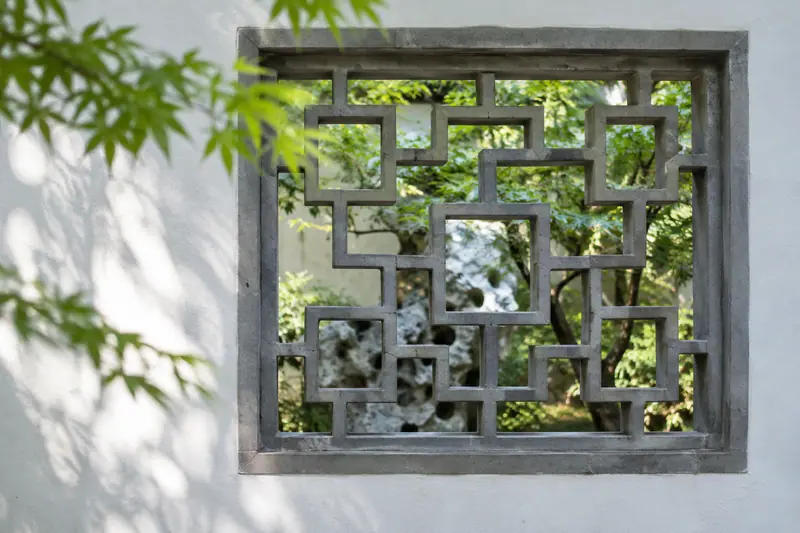
Find Wang Xizhi Former Residence
王羲之故居 · 兰山区
No reliable map pin yet: search by the Chinese name.
Sources & visit information
The linked sources support the identity and background described in this introduction. Opening hours, admission, activity availability and exact arrival arrangements have not been comprehensively checked. Confirm current visitor information with the venue; the original catalogue locality and editorial review flag are retained.