

Photo adjustments
EXIF orientation normalized; resized without changing aspect ratio; converted to WebP. No subject edits.
About Guanyin Temple Murals
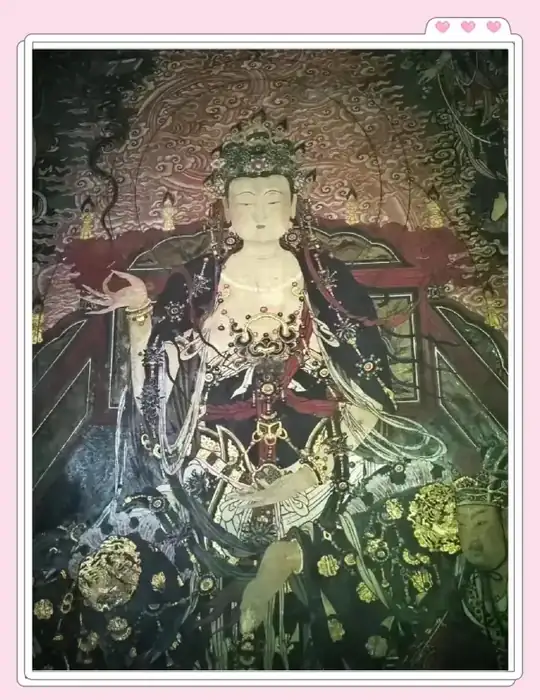
Records describe the temple as having once had 108 ranks of halls. What the district gazetteer sets down as surviving is much less, including the Piluo Hall and the Guanyin Hall, both of the Ming dynasty, together with a Qing-dynasty mountain gate. The gazetteer treats those old buildings, the murals on the walls of the Piluo Hall and the sculpture in the Guanyin Hall as important material for the study of early southern Chinese timber-frame architecture and of Buddhist mural and statue art, and records that the historian Gu Jiegang called them the temple's three marvels. Under the Qing the site was the setting of Lianhua jiecui, one of the twelve named views of Xinjin, and in 2001 the temple was listed as a national key cultural relics protection unit.
What to look for
- The Piluo Hall, a Ming-dynasty building, and the wall paintings inside it.
- The Guanyin Hall, also of the Ming, and its sculpture.
- The Qing-dynasty mountain gate, one of the surviving structures the gazetteer names.
- The setting the Qing knew as Lianhua jiecui, one of the twelve views of Xinjin.
Location & getting there
Getting to Guanyin Temple Murals
Check which interiors and courtyards are accessible. Active places of worship and protected monuments may have different visitor rules.
- Search for 观音寺壁画 with 成都市 and 新津区.
Find Guanyin Temple Murals
观音寺壁画 · 新津区
No reliable map pin yet: search by the Chinese name.
Sources & visit information
The linked sources support the identity and background described in this introduction. Opening hours, admission, activity availability and exact arrival arrangements have not been comprehensively checked. Confirm current visitor information with the venue; the original catalogue locality and editorial review flag are retained.