


Photo adjustments
EXIF orientation normalized; resized without changing aspect ratio; converted to WebP. No subject edits.
Explore the region
About Jieshi Mountain
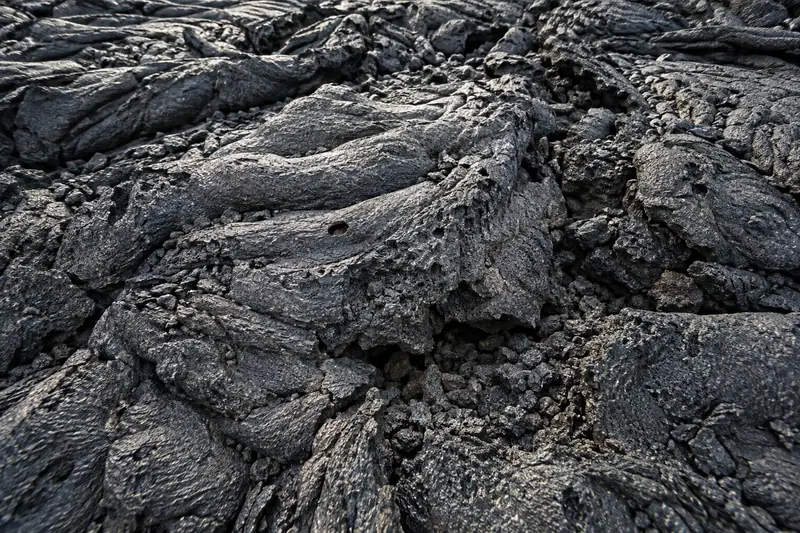
The hill is a conical composite volcanic cone, which Wudi County government attributes to an eruption about 730,000 years ago and calls the youngest volcano in Shandong and the only exposed volcano on the North China Plain. It covers roughly 0.39 square kilometres, its summit stands 63.4 metres above sea level, and the base measures 1,600 metres around. The rock is Pleistocene nephelinite: strongly alkaline basalt in the lower part, which still shows the ropy, flame-like and vesicular structures formed as the lava moved, with volcaniclastic rock above. The hill is in Shandong's eighth batch of provincial geoparks and was designated a provincial-level geological-relic nature reserve in March 1999.
The name has a long and much-argued history. The county records that the hill was called Jieshi under the Xia and Shang, Wudi in the Spring and Autumn period, Yanshan under the Wei and Jin, Magu under the Tang and Song and Dashan under the Yuan and Ming, and it identifies this hill with the Jieshi named in the Book of Documents and visited by early emperors. That identification is a local claim and other places, notably in Hebei, are also put forward, so it is best treated as tradition rather than settled fact. Built features on and around the hill include a sea-viewing pavilion, a mountain-god temple, a Jieshi hall, a platform associated with Cao Cao, a pavilion to Yu the Great, inscribed steles, a Qin stele pavilion and a small geological exhibition room.
What to look for
- The cone itself, 63.4 metres high and about 1,600 metres around the base, rising alone from flat ground
- The lower basalt, which preserves ropy, flame-like and vesicular structures from the flowing lava
- The volcaniclastic rock capping the upper part of the cone
- The geological exhibition room on the site
- The sea-viewing pavilion, mountain-god temple and Qin stele pavilion among the built features on the hill
Location & getting there
Getting to Jieshi Mountain
Use an authorised visitor route. Cave sections, geological sites and access roads can close independently, so confirm the area that your ticket covers.
- Search for 碣石山 with 滨州市 and 无棣县.
Find Jieshi Mountain
碣石山 · 无棣县
No reliable map pin yet: search by the Chinese name.
Sources & visit information
The linked sources support the identity and background described in this introduction. Opening hours, admission, activity availability and exact arrival arrangements have not been comprehensively checked. Confirm current visitor information with the venue; the original catalogue locality and editorial review flag are retained.