

Photo adjustments
Full frame retained; proportionally resized and converted to WebP. No retouching or changes to the photographed subject. Card displays may crop the view.
Explore the region
About Datong Ancient City Wall
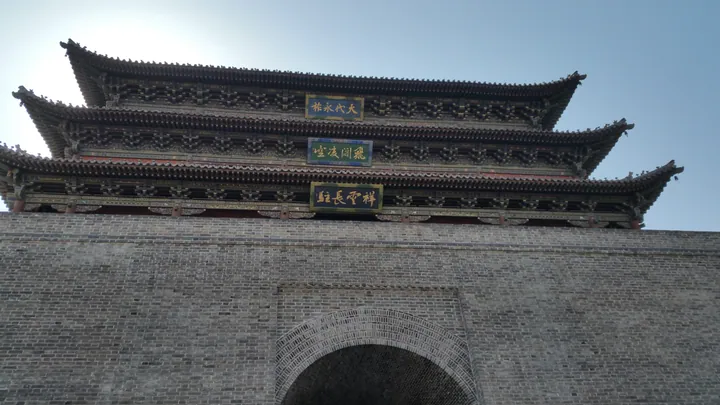
General Xu Da enlarged the walls in 1372 on foundations associated with earlier cities. The defensive system combined a rammed-earth core with brick facing, gate towers, projecting watchtowers, outer gate enclosures and a moat. Four principal gates organized the circuit: Heyang in the east, Yongtai in the south, Qingyuan in the west and Wuding in the north.
The present skyline owes much to the conservation and rebuilding program begun in 2008. The four sides were joined again in 2016, and the restored gates and towers reproduce the Ming arrangement. The wall is therefore best understood through both its frontier-city history and the scale of its modern reconstruction.
What to look for
- The four principal gates and their defensive enclosures
- Brick-faced ramparts, projecting watchtowers and corner towers
- The restored moat and park belt outside the walls
Location & getting there
Getting to Datong Ancient City Wall
Check which interiors and courtyards are accessible. Active places of worship and protected monuments may have different visitor rules.
- Search for 大同古城墙 with 大同市 and 平城区.

Find Datong Ancient City Wall
大同古城墙 · 平城区
No reliable map pin yet: search by the Chinese name.
Sources & visit information
The linked sources support the identity and background described in this introduction. Opening hours, admission, activity availability and exact arrival arrangements have not been comprehensively checked. Confirm current visitor information with the venue; the original catalogue locality and editorial review flag are retained.