


Explore the region
About Jin State Museum
The Jin State Museum in Quwo County explains the ancient state of Jin through archaeological finds and preserved burial remains at the Qu Village–Tianma site. It concerns the Zhou-period state, an important distinction from the much later Jin dynasties. The museum connects historical interpretation with the place where major discoveries were made.
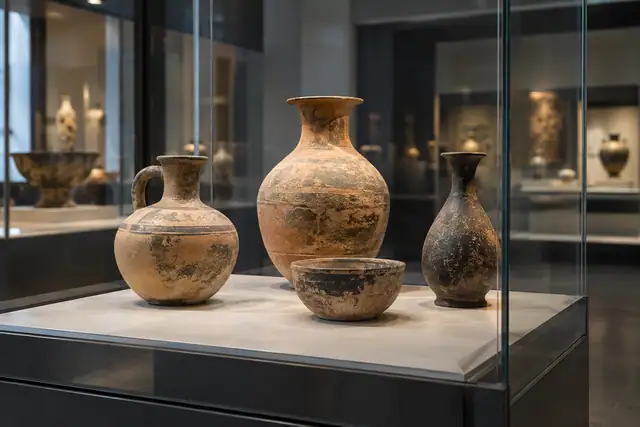
Its permanent presentation covers the history of the Jin state, the process of archaeological discovery and the tomb site itself. Bronze vessels, jade and pottery help explain status, ritual and material culture. Tombs and chariot-and-horse pits provide a different kind of evidence: their arrangement reveals relationships that a display case alone cannot show.
Follow the historical galleries before the site display so that names and burial groups have context. Look for the difference between an excavated object, the place where it was found and a reconstruction used to explain it. The museum’s excavation narrative is especially useful for understanding how scholars build interpretations from incomplete physical remains.
What to look for
- Connect bronze and jade objects with their burial context.
- Compare tomb layouts with the chariot-and-horse pits.
- Follow the story of the site’s excavation.
Location & getting there
Getting to Jin State Museum
Use 晋国博物馆 with 曲沃县曲村. Plan for both galleries and the archaeological display, and use the current official visitor entrance.
- Use 晋国博物馆 with Shanxi when searching for the visitor entrance.
Find Jin State Museum
晋国博物馆 · 曲沃县
No reliable map pin yet: search by the Chinese name.
Sources & visit information
Place identity, setting and described features checked against the linked institutional sources on 9 September 2026. Suggested observation and visiting sequences are editorial guidance. Current opening arrangements and access to individual interiors must be checked with the venue; this review adds no inferred map coordinates.