

Photo adjustments
EXIF orientation normalized; resized without changing aspect ratio; converted to WebP. No subject edits.
Explore the region
About Nayun Ancient Town
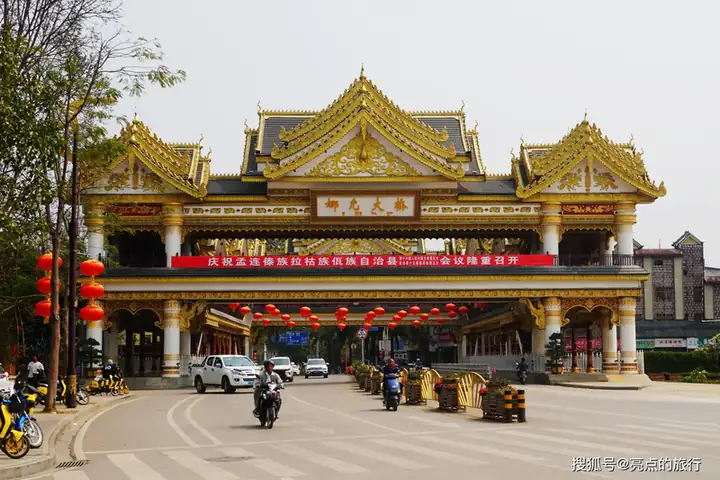
First built in 1406, the Xuanfusi represented a hereditary Dai tusi (native chieftain) system that continued through the Ming and Qing dynasties into the Republican era, spanning more than 600 years across 28 generations of the Dao family. The complex covers 6,738 square metres on three ascending tiers running north-south, comprising a main hall, council hall, rear hall, side chambers and gate hall; its main building is a triple-eaved, xieshan-roofed, stilt-style structure combining Dai bamboo-house features with Han architectural style, described by Yunnan's provincial political-legal affairs news site as the only well-preserved Dai-Han hybrid historic building complex in the province.
Inside, carved lattice windows and painted beams and pillars surround a collection of tusi ceremonial robes, seals, flags, processional regalia, official documents and Dai-script classical texts. The Xuanfusi was listed a provincial cultural relic protection unit in 1965 and a national key cultural relic protection unit in 2006. The surrounding old town, over 700 years old, is described by a National Ethnic Affairs Commission-hosted feature as home to one of Yunnan's more completely preserved tusi yamen complexes.
What to look for
- The Menglian Xuanfusi's main hall complex, a triple-eaved, stilt-style building combining Dai and Han architectural styles
- The Xuanfusi's collection of tusi ceremonial robes, seals, flags, official documents and Dai-script classical texts
Location & getting there
Getting to Nayun Ancient Town
Identify the main visitor approach and any separately managed houses, museums or performances. Ask before entering residential spaces or photographing residents.
- Search for 娜允古镇 with 普洱市 and 孟连傣族拉祜族佤族自治县.
Find Nayun Ancient Town
娜允古镇 · 孟连傣族拉祜族佤族自治县
No reliable map pin yet: search by the Chinese name.
Sources & visit information
The linked sources support the identity and background described in this introduction. Opening hours, admission, activity availability and exact arrival arrangements have not been comprehensively checked. Confirm current visitor information with the venue; the original catalogue locality and editorial review flag are retained.