

Photo adjustments
EXIF orientation normalized; resized without changing aspect ratio; converted to WebP. No subject edits.
Explore the region
About Fuzhi Mountain
Fuzhi Mountain (覆卮山) is the highest peak in Shangyu District (上虞区), Shaoxing (绍兴), rising to 861.3 m in Lingnan township (岭南乡), where Shangyu meets Shengzhou (嵊州) and Yuyao (余姚). It is known for its boulder 'stone rivers' and hillside terraces.
The mountain is a spur of the Siming Mountains (四明山) at the southern tip of Shangyu. Its name comes from the Eastern Jin landscape poet Xie Lingyun (谢灵运): the Shangyu Scenic and Tourism Bureau quotes the story that he climbed it to drink and write poems, and turned his wine cup (卮) upside down when he had finished. The scenic area became a national 4A tourist attraction at the end of 2017.
Its best-known feature is the stone waves (石浪), also called stone rivers: heaps of boulders of different shapes spread over the slopes, named because they look like a river in flood. The scenic operator says Professor Han Tonglin (韩同林) surveyed them in 2007 and judged them relics of the Quaternary glaciation, about 2.9 to 3.5 million years old. More than ten remain, of different lengths and sizes; the longest runs over 1,000 m, the widest point is over 50 m and the vertical drop reaches 300 m. Named ones include Dalang (大浪), Xiaolang (小浪), Meilang (梅浪) and Wulang (乌浪), and the mountain holds an annual wave-climbing festival (攀浪节).
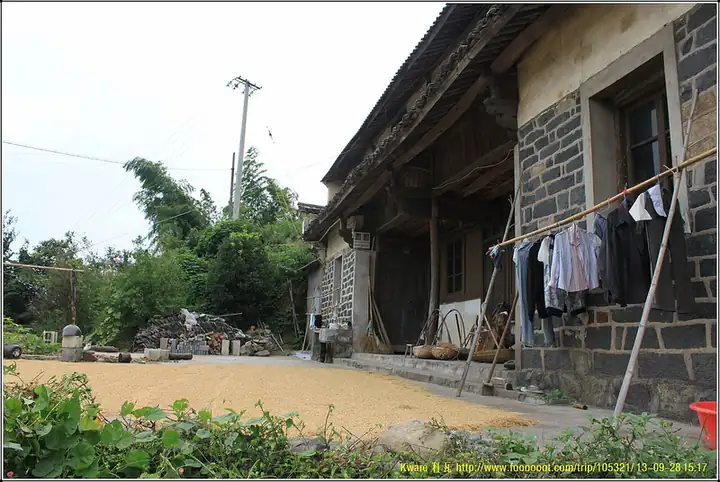
At about 500 m up the slopes, earlier generations of mountain farmers cut some 23,000 terraced plots covering more than 2,300 mu, known as the Thousand-Year Terraces (千年梯田); the operator says they are now all sown with rapeseed, which turns the valley gold in spring. The mountain people built their houses from materials at hand among the rocks, and Dongcheng (东澄), Liangzhai (梁宅), Pingshan (平山) and Dingshan (丁山) survive as old upland villages; the Dongcheng estate (东澄山庄) is one of the district's cherry-growing bases. The Qing-dynasty Shangyu county gazetteer records a tea called Baimaojian (白毛尖), 'white hair tips', grown around Bogu Rock (鹁鸪岩).
Taiyue Temple (泰岳寺), in the scenic area, existed by the Eastern Jin at the latest, and Chunhui Middle School (春晖中学) moved there during the war against Japan. At Xu'ao village (许岙村) a memorial hall and martyrs' tomb mark the site of the New Fourth Army eastern Zhejiang guerrillas' battle against Tian Xiushan (田岫山).
What to look for
- The stone waves (冰川石浪), more than ten boulder rivers, the longest over 1,000 m, with vertical drops of up to 300 m
- The Thousand-Year Terraces (千年梯田), about 23,000 plots at around 500 m, planted with rapeseed
- The main summit, 861.3 m, the highest point in Shangyu
- Four old upland villages: Dongcheng (东澄), Liangzhai (梁宅), Pingshan (平山) and Dingshan (丁山)
- Cherry orchards at the Dongcheng estate (东澄山庄)
- Xu'ao village (许岙村), a New Fourth Army battle site with a memorial hall and martyrs' tomb
Location & getting there
Getting to Fuzhi Mountain
- Search for 覆卮山 with 绍兴市 and 上虞区.

Find Fuzhi Mountain
覆卮山 · 上虞区
No reliable map pin yet: search by the Chinese name.
Sources & visit information
Written from the linked sources and checked sentence by sentence against quoted extracts by a separate reviewer on 2026-09-23. Opening hours, admission and access arrangements are not covered; confirm current visitor information with the site.
- 覆卮山景区 (Shangyu District People's Government, archived 10 June 2021) ↗
- 绍兴覆卮山景区 - 走进覆卮山 (archived 24 July 2021) ↗
- 绍兴覆卮山景区 (home page, archived 10 June 2021) ↗
- 覆卮山 - 维基百科,自由的百科全书 ↗
Some facts checked against Wikipedia contributors, "覆卮山" · CC BY-SA 4.0.