

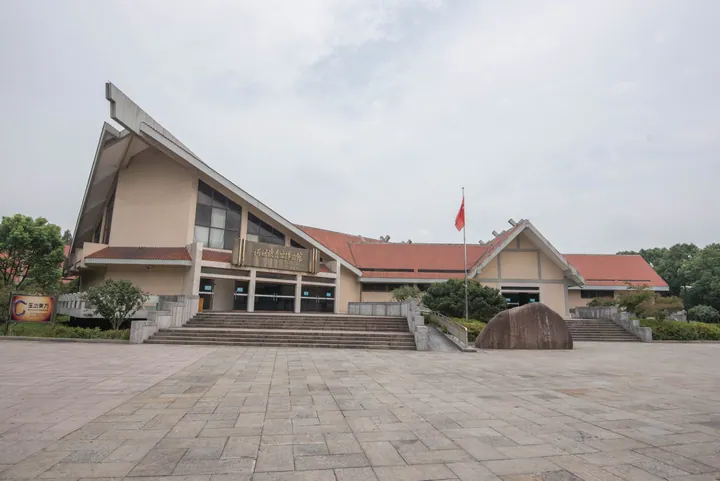
Photo adjustments
Full frame retained; proportionally resized and converted to WebP. No retouching or changes to the photographed subject. Card displays may crop the view.
Explore the region
About Hemudu Site Museum
Hemudu Site Museum stands beside the archaeological site in Yuyao, within the wider Ningbo area. It introduces a Neolithic community whose evidence includes rice cultivation, fishing and hunting, timber construction and decorative work. The museum and the site display area explain different parts of that story: objects reveal activities, while the archaeological setting reveals where those activities took place.
The museum architecture deliberately refers to raised timber buildings, with elevated floors and a roof structure inspired by the site's early woodworking. Exhibits described by the institutional introduction include agricultural tools, pottery, timber joints and objects made from materials such as bone, ivory and stone. These are evidence for a varied way of life, rather than proof that farming immediately replaced every other food source.
Use the introductory displays to connect an object with its function, then compare that explanation with the outdoor interpretation. A reconstructed house or excavation scene helps visualise the past but is not itself an original Neolithic building. Ask which materials are original finds, replicas or models, and follow the present visitor route around conserved archaeological remains.
What to look for
- Evidence for early rice farming alongside fishing, hunting and gathering.
- Timber-building techniques reflected in both exhibits and museum design.
- The relationship between excavated objects, reconstructions and the actual site.
Location & getting there
Getting to Hemudu Site Museum
Navigate to 河姆渡遗址博物馆 in 余姚市河姆渡镇芦山寺村. This is distinct from Yuyao Museum in the city centre and from the separate Tianluoshan archaeological site.
- Use 河姆渡遗址博物馆 with Zhejiang when searching for the visitor entrance.
Find Hemudu Site Museum
河姆渡遗址博物馆 · 余姚市
No reliable map pin yet: search by the Chinese name.
Sources & visit information
Place identity, setting and the described features checked against the linked institutional sources on 9 September 2026. Suggested visiting sequences are editorial guidance. Current opening hours, fees, events and access to individual interiors must be checked with the venue; no new map coordinates are inferred from this review.