

Photo adjustments
EXIF orientation normalized; resized without changing aspect ratio; converted to WebP. No subject edits.
Explore the region
About Xinshi Ancient Town
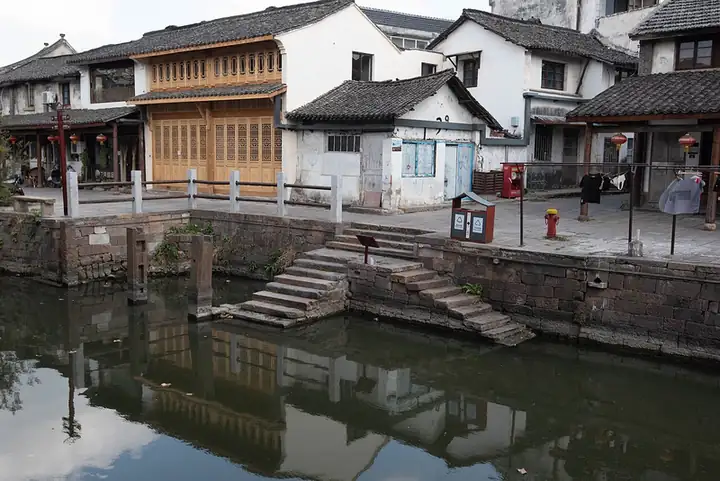
Xihekou is a useful place to read that relationship in the buildings. Stone-framed entrances, carved brickwork, fire walls and houses facing the water retain the character of the late Qing and early Republican periods. River landings and stone mooring rings mark the working edge of the old commercial street, while Wangxian, Huixian and Jiaxian bridges link the banks of the town river.
Silkworm raising also shaped the town’s cultural life. The Canhua temple fair celebrates the hopes attached to a good silk harvest through procession and performance. Everyday food carries another part of that local identity: tea cakes and mutton noodles feature in accounts of the lanes and riverside eateries. The historic interest is as much in these connections between water, work and custom as in individual buildings.
What to look for
- Xihekou’s brick carving, stone-framed doorways and waterside houses.
- River landings and stone mooring rings along the old waterfront.
- Wangxian, Huixian and Jiaxian bridges over the town river.
Location & getting there
Getting to Xinshi Ancient Town
Identify the main visitor approach and any separately managed houses, museums or performances. Ask before entering residential spaces or photographing residents.
- Search for 新市古镇 with 湖州市 and 德清县.

Find Xinshi Ancient Town
新市古镇 · 德清县
No reliable map pin yet: search by the Chinese name.
Sources & visit information
The linked sources support the identity and background described in this introduction. Opening hours, admission, activity availability and exact arrival arrangements have not been comprehensively checked. Confirm current visitor information with the venue; the original catalogue locality and editorial review flag are retained.