

Pork chop with rice cakes 排骨年糕
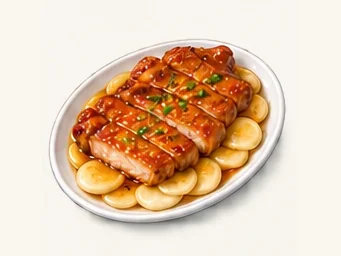
Shanghai’s 排骨年糕 pairs a broad pork chop—usually pounded thin and fried—with soft, springy rice cakes and a savoury-sweet sauce. The chop may arrive crisp and dry, briefly warmed in sauce, or served with sauce on the side; kitchens also vary how they fry or soften the cakes. It is a substantial, distinctly Shanghai-associated snack-shop meal, not a single fixed recipe.
Tap any red Chinese text to hear it in Mandarin.
What is on the plate
The name means “pork chop and rice cake.” In many Shanghai preparations, the pork is a large chop (大排), pounded thinner and marinated before it is coated and fried. A home recipe published by Wenhui specifies pork with some fat and broad, flat rice cakes; its batter is flour-based rather than a breadcrumb crust. Another recipe uses flour, sweet-potato starch and egg. These examples show why a crisp coating is common but its exact ingredients are not universal.
The rice cakes are usually cut into broad, pale pieces rather than served as a sweet New Year cake. They can be fried until their surfaces form a light crust, or softened by heating in sauce. In the mouth, expect a resilient, chewy centre that turns softer and stickier as it warms; the contrast with the chop’s crisp coating is part of the appeal.
Sauce and cooking variations
There is no single sauce recipe to expect everywhere. Wenhui’s home version thickens stock, oyster sauce, sugar and soy sauce with starch. A separate home recipe uses sweet flour paste, spicy soy sauce, light and dark soy, sugar and five-spice. Both are examples of a glossy, savoury-sweet direction, not a required ingredient list for every shop.
A classic plate may put the fried chop over the rice cakes and spoon sauce across both. Wenhui describes one Xian De Lai method in which the fried pieces are briefly heated in sauce before serving, with a little spicy soy sauce added at the end; it also records shops that keep sauce separate. The Huangpu District Government reported in January 2024 that Xian De Lai used a two-stage fry for its battered chop. That dated account describes one restaurant’s procedure, not a rule for the dish or a guarantee about its present operation.
Look for a golden to deep-brown crust, pale rice cakes, and a brown, savoury-sweet sauce. A dry-fried chop keeps its crisp shell longest; a sauce-coated or briefly simmered version trades some crunch for a softer, more integrated bite. Rice cakes that have been fried may have a slightly crisp outside before the sauce softens it. These differences are a useful reason to ask how a shop serves the dish rather than assume one presentation.
Shanghai association and how to order
排骨年糕 is well established as Shanghai food, but the evidence cited here does not establish a single origin story or prove that the dish was invented only in Shanghai. In 2021, the Shanghai Municipal Commission of Commerce reported that it appeared among five Shanghai-characteristic dishes in a Meituan list released under municipal guidance. Longstanding Shanghai snack shops, including Xian De Lai, are also closely associated with the dish.
Show 排骨年糕 páigǔ niángāo when ordering. If you want to know what will arrive, ask 年糕是炸的还是煮软的? (Are the rice cakes fried or softened in sauce?) and 酱汁是另外放还是淋上? (Is the sauce served separately or poured over?). The Chinese name does not guarantee whether the chop is bone-in; ask 排骨带骨吗? (Does the pork chop include a bone?) if that matters to you.
Pork is central. The batter may contain wheat flour and egg, while sauces can contain soy-based seasonings or oyster sauce; recipes vary. Ask the restaurant about the actual ingredients and cross-contact if you have an allergy or dietary restriction.
More dishes to compare
Explore related local specialties and compare their names, preparation notes and ordering guidance.
Shanghai fried pork chop 炸猪排 →
A pork chop is flattened, coated in crumbs and fried until golden, then commonly cut into strips. A tangy Shanghai-style condiment is often offered at the table. The crumb shell is crisp and dry while the pork inside stays tender. The sauce supplies acidity that lightens the fried richness.
Red-braised pork belly 红烧肉 →
Pork belly is cut into chunks and slowly braised with soy sauce, sugar and aromatics until the sauce reduces. Shanghai-style versions often give noticeable weight to sweetness and a glossy finish. The lean meat becomes tender while the fat turns soft and yielding. Sweetness, salt and rich pork flavor should remain in balance.
Sources & reading
Recipes and servings vary between kitchens.