

Discover Chinese food
Local dishes, ingredients and the stories behind them.
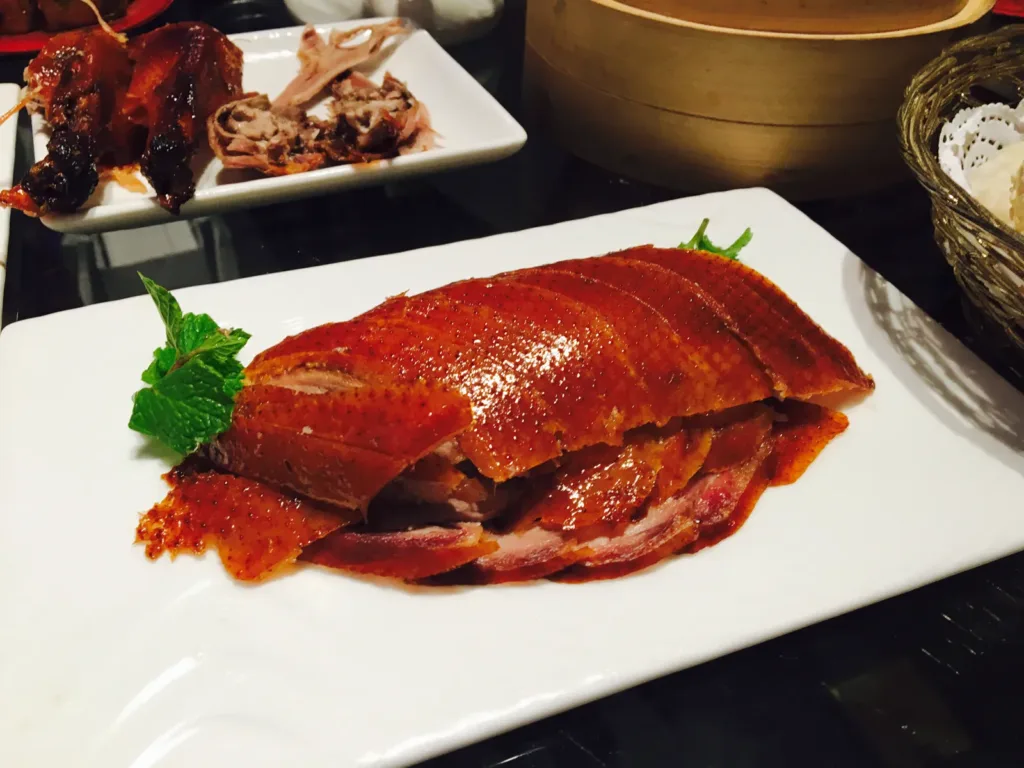
Peking duck 北京烤鸭
Peking duck (北京烤鸭) is Beijing’s signature roast-duck meal: carefully prepared duck is roasted for lacquered, crisp skin and tender meat, then carved and usually eaten with thin wheat pancakes, sweet fermented sauce, scallion and cucumber. Hanging-oven and enclosed-oven traditions create different textures, so the dish is not one fixed recipe.
Read dish guide →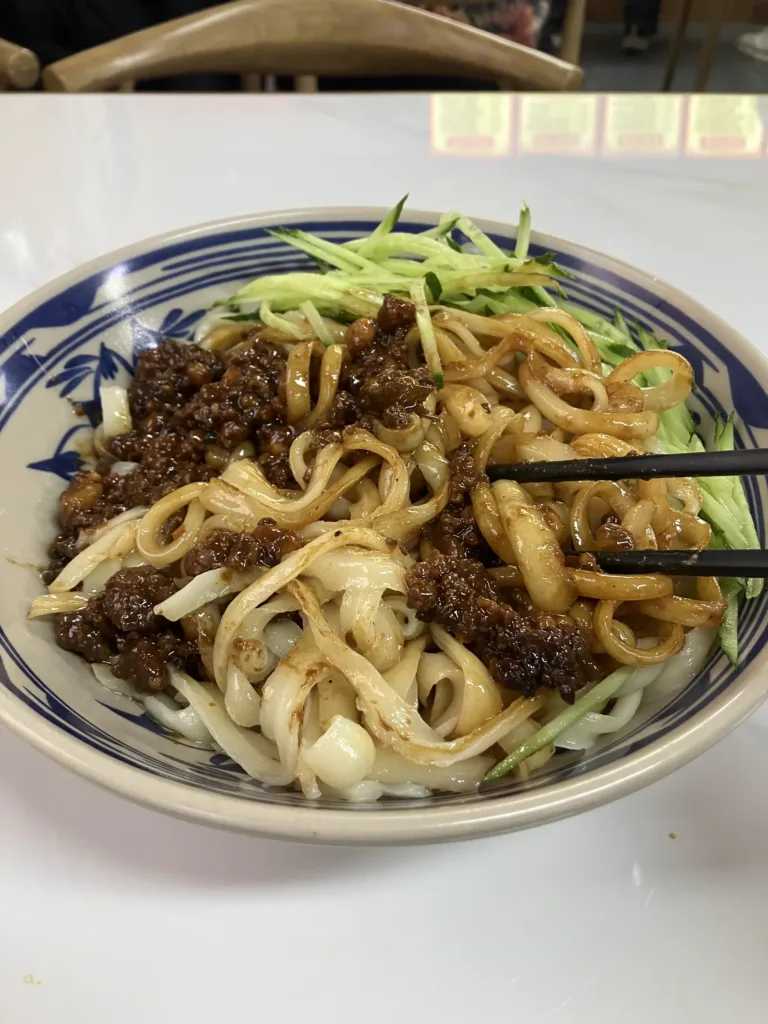
Zhajiangmian 炸酱面
Zhajiangmian (炸酱面) is a Beijing-style bowl of cooked wheat noodles, a spoonful of dark fried sauce, and fresh or blanched vegetable accompaniments. Diners mix the parts themselves, balancing the savoury sauce with crisp cucumber, sprouts or other seasonal càimǎ toppings.
Read dish guide →
Lamb hotpot 涮羊肉
Shuan yangrou (涮羊肉) is Beijing-associated instant-boiled lamb: diners briefly swish very thin slices in a clear, simmering pot, then dip them in a sesame-based sauce. A copper chimney pot is a familiar old-Beijing presentation, but broth, condiments and accompanying vegetables vary by restaurant.
Read dish guide →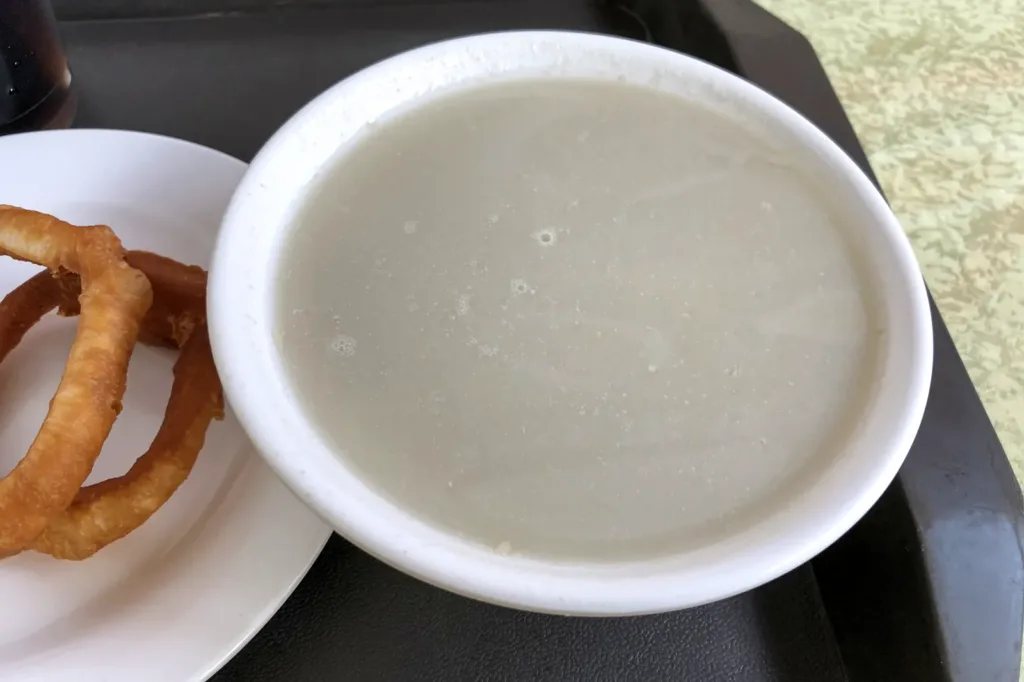
Douzhi 豆汁儿
Beijing douzhi (豆汁儿) is a traditional, tangy fermented mung-bean drink, usually served hot with crisp jiaoquan rings and spicy pickled vegetables. Its cloudy grey-green appearance, pronounced sour aroma and gently thick texture make it unlike sweet soy milk; fermentation and serving styles vary between makers.
Read dish guide →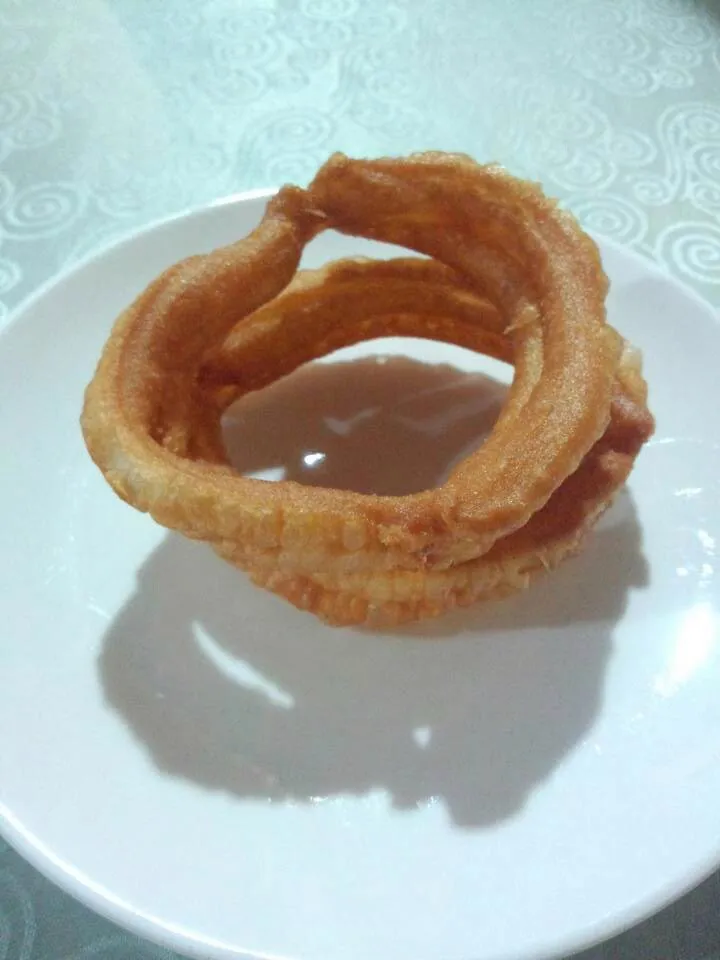
Jiaoquan 焦圈
Jiaoquan (焦圈) is a thin, deeply fried wheat-dough ring associated with Beijing breakfast stalls. Its dark-golden, open shape is made for a brittle crunch; people eat it with fermented mung-bean drink (douzhi), tuck it into a sesame flatbread, or simply snack on it.
Read dish guide →
Chaogan 炒肝
Chaogan (炒肝) is a thick, glossy Beijing stew of pork intestine and liver in a garlic-forward, starch-thickened broth. Despite its name, it is served as a bowl of gravy and tender offal, not as a dry stir-fry; kitchens vary the seasoning and stock.
Read dish guide →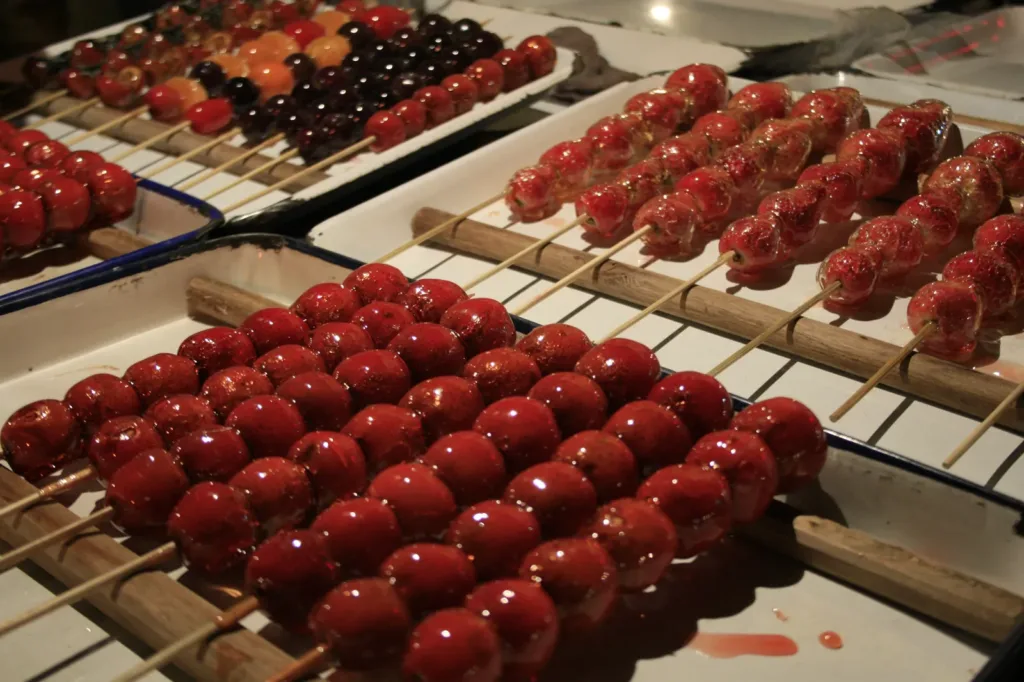
Tanghulu 冰糖葫芦
Tanghulu (冰糖葫芦) is a Beijing-associated street sweet, most recognizably made by threading tart hawthorn fruits onto a stick and coating them with a thin, clear shell of cooked sugar. The shell cracks sharply against the fruit’s lively sourness; other fruits and filled hawthorn versions offer different textures, so the classic hawthorn skewer is a useful first taste.
Read dish guide →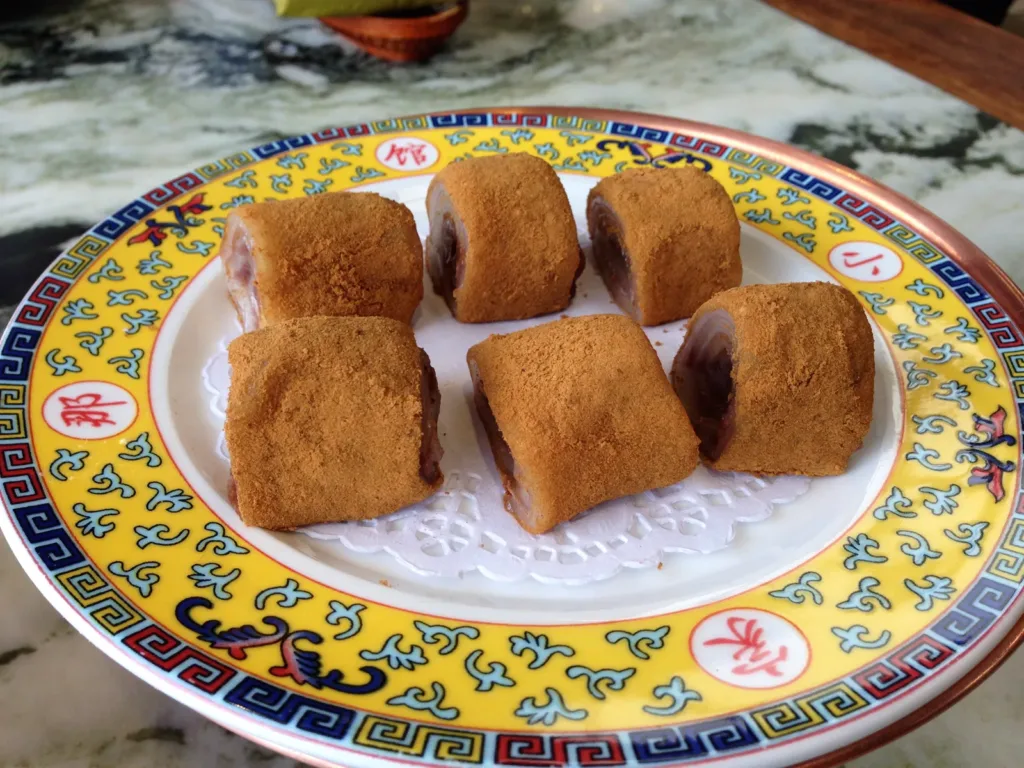
Soybean-dusted rice rolls 驴打滚
Ludagun (驴打滚) is a Beijing-associated sweet roll made by wrapping red-bean filling in steamed sticky-grain dough, then coating the roll in toasted soybean flour and cutting it into pieces. Its signature contrast is a fragrant, lightly dry soybean coating around a soft, chewy wrapper and smooth, sweet filling.
Read dish guide →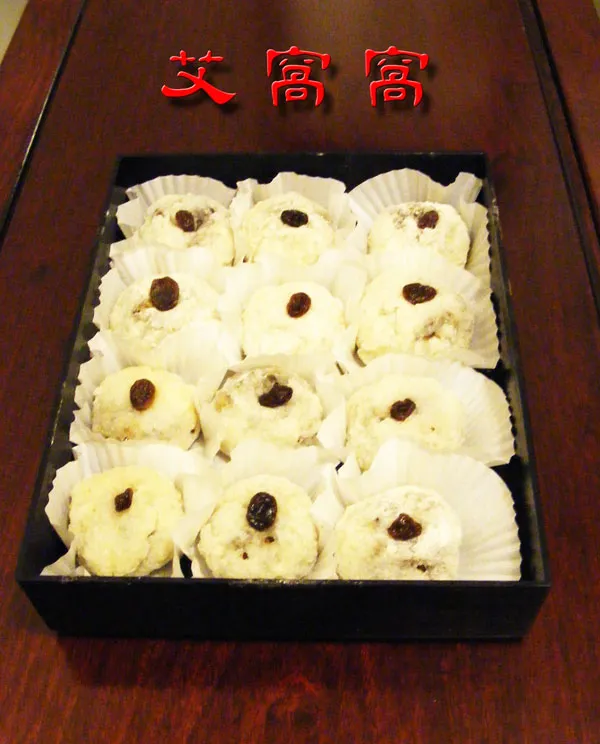
Aiwowo rice balls 艾窝窝
Aiwowo (艾窝窝) is a Beijing traditional sweet made with a tender, chewy glutinous-rice wrapper around a sweet filling. Nuts and seeds, sugar, and fruit or hawthorn cake can make the center fragrant, crunchy, or pleasantly tart; recipes and finishes vary by maker.
Read dish guide →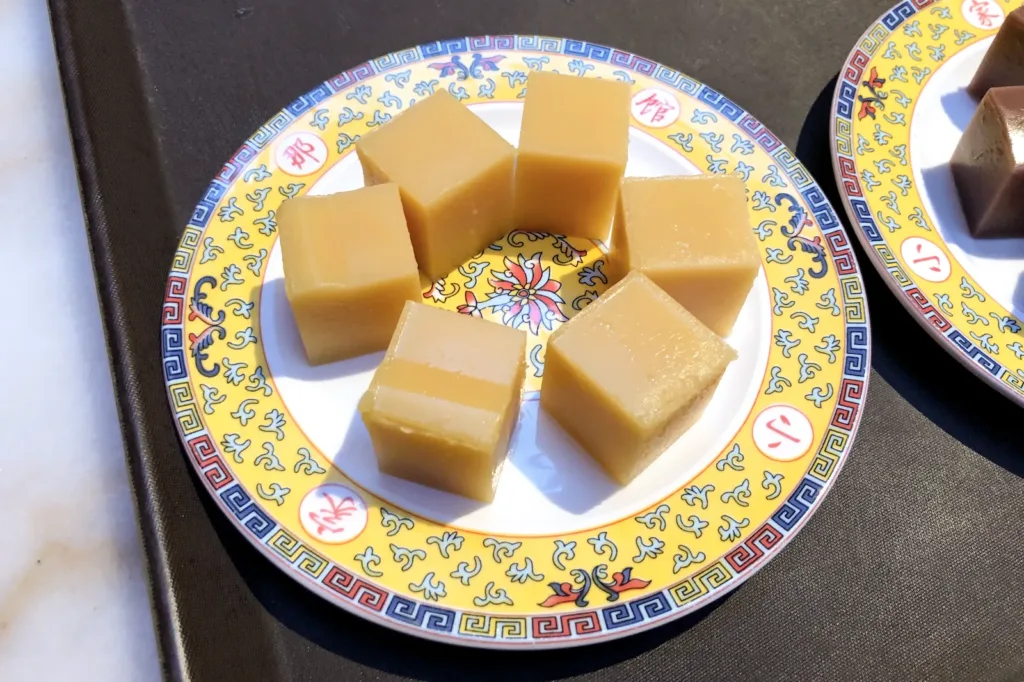
Pea-flour pudding 豌豆黄
Wandouhuang (豌豆黄) is a pale-yellow Beijing snack made by cooking peas until soft, working them into a fine paste, sweetening and setting the mixture, then cutting it into small pieces. It is known for a gentle sweetness and a cool, smooth, delicate texture; folk and refined court-style versions differ in finish and additions.
Read dish guide →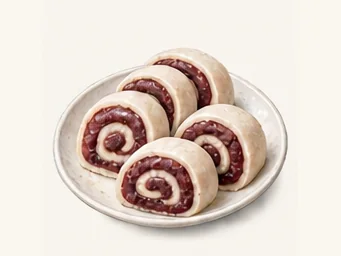
White-bean rolls 芸豆卷
Yundou juan (芸豆卷) is a Beijing-associated sweet made by shaping a soft, pale paste of cooked white kidney beans around a sweeter filling, then slicing it into small rolls. Red-bean paste is a common center; the delicate bean layer and the darker, sweeter swirl make each bite mild outside and richer in the middle.
AI illustration · AI 示意图
Read dish guide →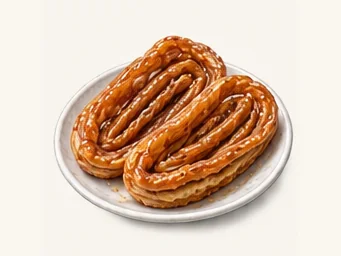
Honey-dipped ear pastries 糖耳朵
Sugar-ear pastry (糖耳朵), also called 蜜麻花, is a Beijing-associated, ear-shaped fried pastry made from layered fermented wheat dough and a brown-sugar layer, then soaked in warm malt syrup until glossy, soft and sweet. Its name means “sugar ear”; the shape, rather than a crisp shell or a honey-only glaze, is the defining cue.
AI illustration · AI 示意图
Read dish guide →
Sweet sesame flatbread 糖火烧
Tanghuoshao (糖火烧) is a Beijing-associated baked wheat pastry layered with brown sugar and sesame paste. A documented local method uses risen dough, a rolled-in filling and oven baking; recipes and textures differ, from soft, moist layers to a firmer, flakier style. It is eaten as a traditional breakfast or snack, and is also described as a tea-time sweet.
AI illustration · AI 示意图
Read dish guide →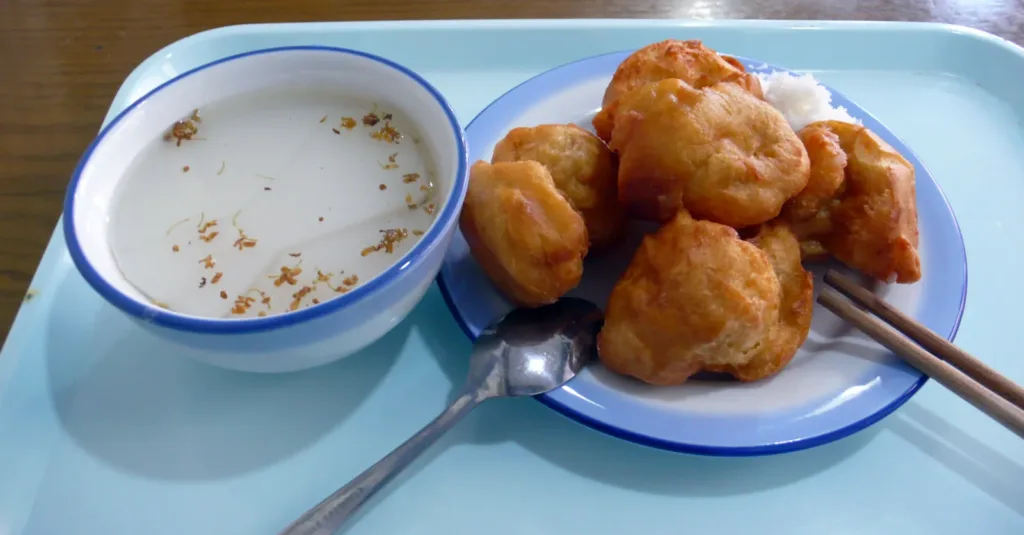
Cream-fried cakes 奶油炸糕
Nǎiyóu zhágāo (奶油炸糕), or Beijing cream-fried cakes, are small, golden wheat-flour pastries fried in portions and often finished with sugar. The hot-water dough is mixed with eggs; some documented versions also add cream or other dairy. Expect a crisp exterior and a soft, lightly chewy, mildly sweet centre. Recipes differ, and “cream” does not guarantee a cream-filled centre.
Read dish guide →
Fried starch sausage slices 炸灌肠
Beijing fried guanchang (炸灌肠) is a hot snack of firm, starch-based slices fried until their surfaces brown, then served with pungent, salty garlic water. Expect a crisp edge and a softer, springy middle; starch blends and frying fat vary by shop.
AI illustration · AI 示意图
Read dish guide →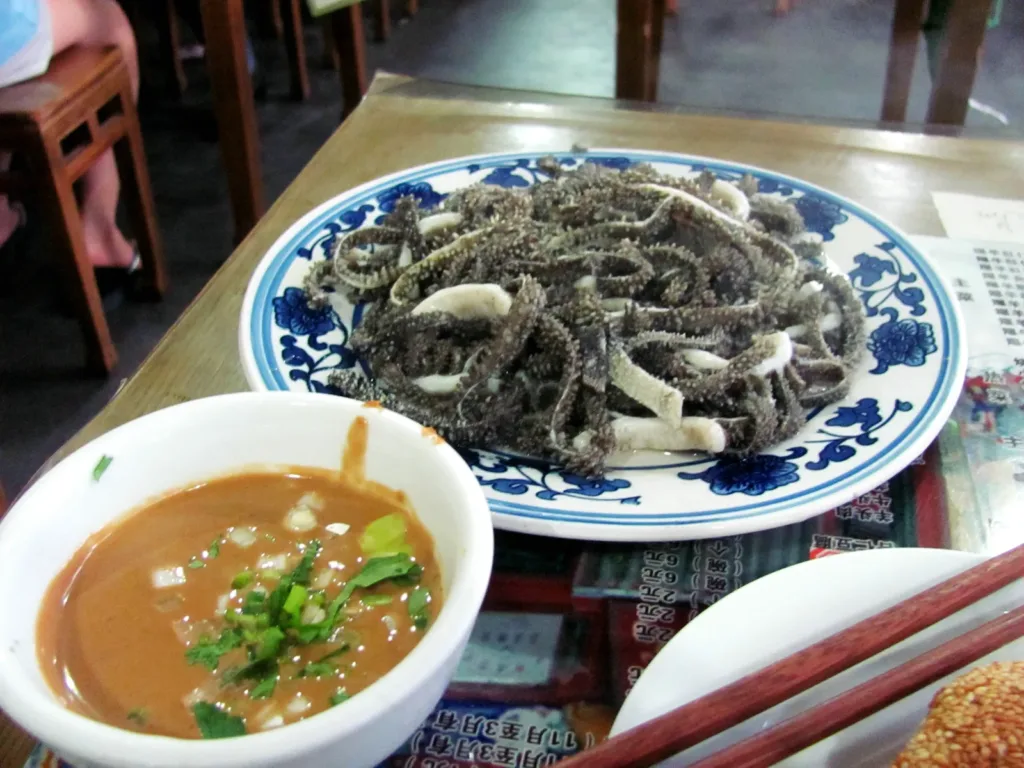
Flash-boiled tripe 爆肚
Baodu (爆肚) is a Beijing-associated dish of beef or lamb tripe, sliced by cut and briefly scalded in hot water until tender-crisp. It is served hot with a savory sesame-based dip; the cuts vary in chew and tenderness, so ask what is available and enjoy each piece soon after it arrives.
Read dish guide →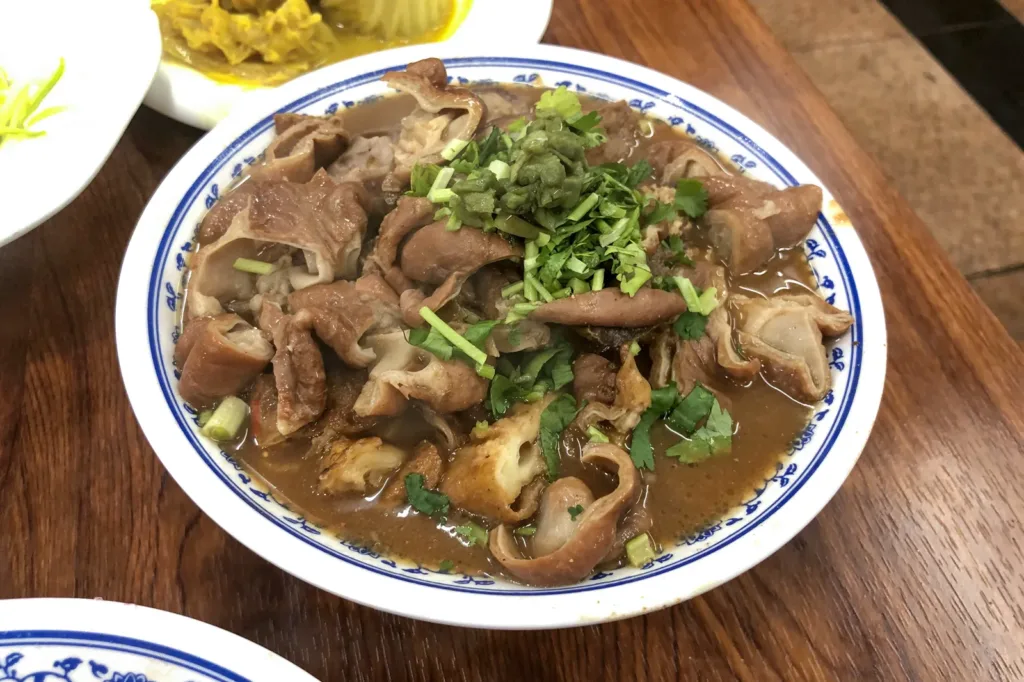
Luzhu bread-and-offal stew 卤煮火烧
Luzhu huoshao (卤煮火烧) is a traditional Beijing bowl of pork offal and fried tofu simmered with pieces of firm wheat cake in seasoned broth. The cake absorbs the soup while holding its shape; garlic, vinegar, chili oil, fermented tofu or chive-flower sauce may be added to taste. Ingredients and toppings vary by shop.
Read dish guide →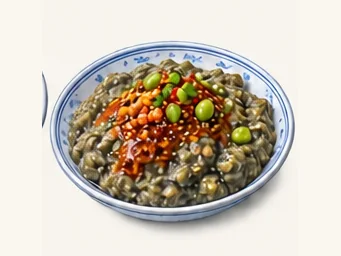
Fried fermented mung-bean pulp 麻豆腐
Ma doufu (麻豆腐) is a Beijing-associated mung-bean dish made from a protein- and dextrin-rich fraction separated during mung-bean starch processing. It is slowly stir-cooked until thick and softly cohesive, often with pickled mustard greens, fermented soybean paste and lamb fat, then served with chili oil, green soybeans and chives. The name says “bean curd,” but this is not tofu made by coagulating soy milk.
AI illustration · AI 示意图
Read dish guide →
Sour-plum drink 酸梅汤
Suanmeitang (酸梅汤) is a sweet-tart Chinese drink with a particularly strong summer association in Beijing. Its deep fruit color and brisk acidity come chiefly from smoked, dried plums and hawthorn; sugar balances the sourness, while recipes may add licorice, dried citrus peel or fragrant osmanthus. Served chilled, it can be light and clean or concentrated and richly sweet, depending on the maker.
AI illustration · AI 示意图
Read dish guide →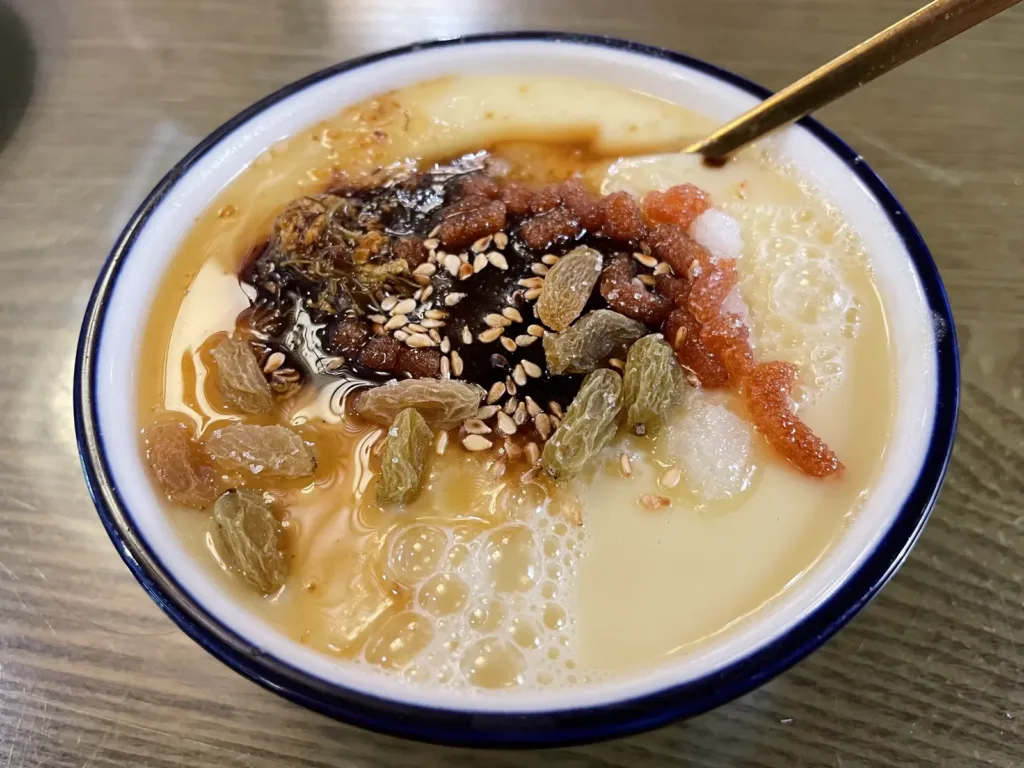
Sweet grain-flour pudding 茶汤
Cha tang (茶汤) is a warm, sweet Beijing snack made by scalding fine millet flour with boiling water, then serving the thick, pale-golden mush with toppings such as sugar, osmanthus syrup, sesame or dried fruit. Despite its name—literally “tea soup”—it is a grain dish, not a tea drink.
Read dish guide →
Walnut cream dessert 核桃酪
核桃酪 (hétao lào) is a traditional Beijing-associated sweet, usually a thick, spoonable blend of ground walnuts, glutinous rice and dates, sweetened to taste. Its pale grey-beige to faintly reddish colour, smooth body and nutty, gently fruity flavour make it a warming dessert rather than a crunchy walnut dish. Recipes and thickness vary; ask whether a serving contains milk.
AI illustration · AI 示意图
Read dish guide →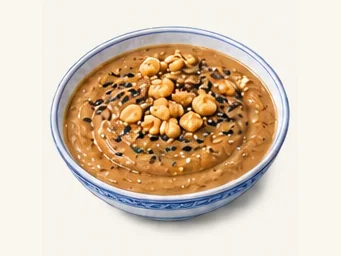
Toasted-flour cereal 油炒面
Youchaomian (油炒面) is a Beijing-associated warm snack made by slowly toasting flour, blending it with fat and often sesame or chopped nuts, then whisking a portion with boiling water into a thick, spoonable paste. Sweetened with sugar and sometimes scented with osmanthus, it tastes of roasted flour and toasted seeds; recipes differ in their fat, garnishes and degree of sweetness.
AI illustration · AI 示意图
Read dish guide →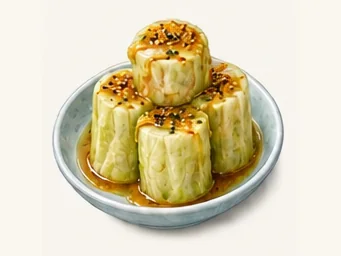
Mustard-dressed cabbage rolls 芥末墩
芥末墩 (jièmo dūn) is a Beijing-associated cold cabbage dish built around compact pieces of Chinese cabbage and a nose-tingling mustard dressing. Vinegar, salt and often sugar balance the pungency; recipes differ in whether the cabbage is lightly blanched or salted and rested, and in how long it sits before serving.
AI illustration · AI 示意图
Read dish guide →
Sweet yam-and-date rolls 糖卷果
Tang juan guo (糖卷果) is a Beijing-associated sweet made by steaming a yam-and-jujube mixture into a roll, slicing and frying it, then coating the pieces in osmanthus sugar syrup. Expect a browned outside, a soft, dense centre and a sticky, fragrant finish; sesame and tart fruit pieces may add contrast. Recipes vary by kitchen.
AI illustration · AI 示意图
Read dish guide →Food stories
 Travel guide
Dianping for Foreigners: Find Restaurants, Buy Deals & Use Vouchers
Learn to use Dianping in English, find restaurants, compare it with Meituan, buy group-buy deals and redeem the right voucher at the correct branch.
 Travel guide
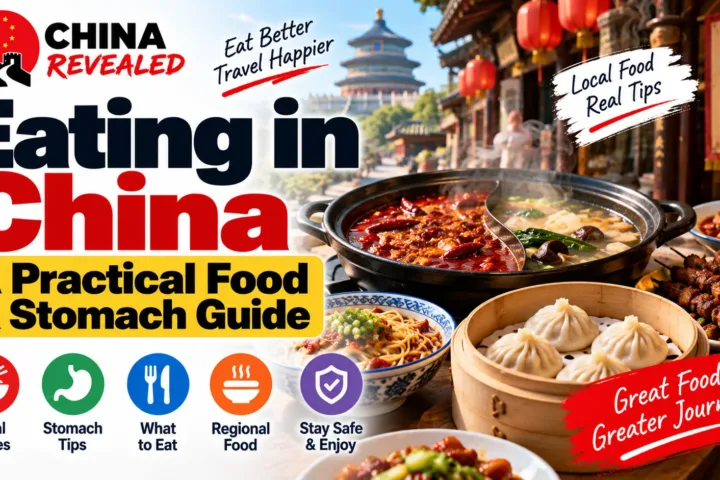
Eating in China for the First Time: A Practical Food & Stomach Guide
Explore China’s regional food cultures, order less chili, enjoy hot pot, manage dietary needs and prepare for stomach trouble on your first trip.
 Travel guide
How to Use Meituan in China: A Foreigner’s Guide to Food, Deals and Local Fun
Meituan for foreigners: order food delivery, buy restaurant deals and find activities in China. Set English, pay by foreign card and redeem vouchers.