

Shanghai sweet-soy fish 上海熏鱼
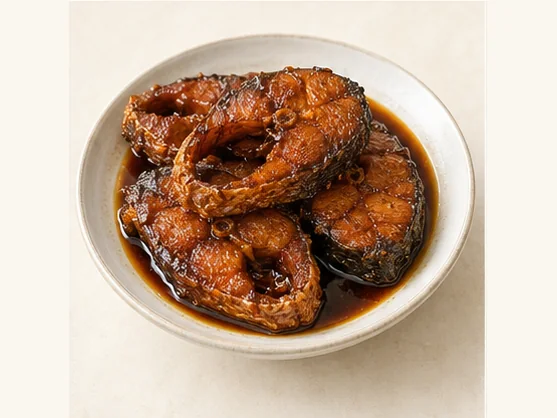
Shanghai xunyu is a familiar cold appetizer of fish fried until browned, then coated or soaked in a sweet-savoury, aromatic soy sauce. The name is often translated as “smoked fish,” but the usual Shanghai-style preparation is not smoked; recipes and fish vary from kitchen to kitchen.
Tap any red Chinese text to hear it in Mandarin.
What you are ordering
Show 上海熏鱼 (Shànghǎi xūnyú) on a menu. You may also hear 爆鱼 (bàoyú), a name that points to the frying step. “Smoked fish” is the established English rendering of 熏鱼, but it can mislead: accounts of the familiar Shanghai dish describe cut fish fried in oil and then dipped in or steeped in a seasoned sauce, not cured over smoke. It is a Shanghai-associated Jiangnan dish and a common cold-starter choice, not a claim of exclusive Shanghai invention.
From fish to sauce
The fish is usually cut into crosswise portions. Grass carp and other freshwater carp are common choices in market and home versions; black carp is another documented option. Some restaurants choose a different fish. One Shanghai restaurant account, for example, describes a chef selecting fresh pomfret for its finer bones and availability, while recipes elsewhere also use pomfret. These are examples, not a fixed ingredient rule.
A recurring method is to fry the fish until the outside is deeply browned, then let it take up a reduced or seasoned sauce. Soy sauce and sugar form a familiar sweet-savoury base. Ginger, scallion and spices such as star anise or cassia appear in some recipes; black vinegar and Shaoxing cooking wine are also used. One restaurant’s sauce adds preserved plum and hawthorn, while family recipes may use a different blend. Some cooks soak the fish for hours or overnight; others coat it soon after frying. A Shanghai chef’s double-fried, two-hour-sauce method is that restaurant’s recipe, not a required standard.
Colour, aroma and texture
Expect pieces that range from chestnut-brown to a glossy, darker reddish brown, depending on the fry and sauce. The seasoning can smell of soy, cooked sugar, ginger and warm spices. Its taste commonly balances salt and savoury depth with sweetness; some sauces bring a gentle tang from vinegar or fruit. The exterior is firmer and more concentrated than steamed fish, while the centre remains fish rather than a crisp shell. How crisp or moist it is depends on the cut, frying and time in the sauce.
Cross-cut pieces can contain bones, so take small bites and check as you eat. Some makers choose fish with finer bones, but do not assume the dish is boneless.
How it is served
Xunyu commonly appears as a cold appetizer, including on family festive tables, though a kitchen may serve it warm or freshly made. Restaurant recipes vary in sweetness, sauce intensity and fish choice. Begin with one piece before deciding whether you want more; the seasoning is often concentrated. If you are ordering several dishes, a small shared plate lets you compare its sweet, soy-rich flavour with lighter dishes. Ask the server whether that day’s version is served cold or warm and whether extra sauce comes with it.
Useful questions:
- 请问这个熏鱼是哪种鱼? Qǐngwèn zhège xūnyú shì nǎ zhǒng yú? — Which fish is used for this xunyu?
- 这个是冷的还是热的? Zhège shì lěng de háishi rè de? — Is it served cold or warm?
- 酱汁里有花生、蚝油或料酒吗? Jiàngzhī lǐ yǒu huāshēng, háoyóu huò liàojiǔ ma? — Does the sauce contain peanuts, oyster sauce or cooking wine?
Soy is common, and some soy sauces or cooking wines contain wheat. Some recipes use oyster sauce, but it is not universal. Because the fish, sauce and kitchen methods differ, ask about the actual batch if you have an allergy or avoid alcohol; do not treat a menu label as an allergen or dietary guarantee.
More dishes to compare
Explore related local specialties and compare their names, preparation notes and ordering guidance.
Pork chop with rice cakes 排骨年糕 →
A seasoned pork chop is cooked, often with a fried coating, and served with soft rice cakes and a savory-sweet sauce. Both elements are prepared to retain their distinct textures. The meat offers browned edges and a firm bite, while the rice cakes are sticky, elastic and good at holding sauce.
Sizzling shredded eel 响油鳝糊 →
Eel is cooked and cut into fine strips, then combined with a seasoned sauce. Hot oil is poured over aromatics near serving time, producing the characteristic sizzling finish. The eel is tender and slippery, with a rich savory coating. Garlic, scallion and white pepper often give the final aroma its lift.
Sources & reading
Recipes and servings vary between kitchens.