

Sweet Taro in Syrup 糖芋头
Sweet Taro in Syrup is featured among the local specialties of Jiangsu.
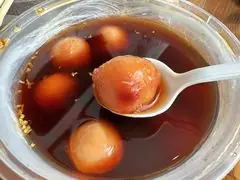
Image notes
Resized for the web; the photo itself has not been edited.
Sweet Taro in Syrup (糖芋头) is medium-sized taro cooked with brown sugar and finished with sugared osmanthus, the dish Wuxi (无锡) households make for the Mid-Autumn Festival, which older people in the city call "Bayueban" (八月半, "the middle of the eighth month"). An article on the Wuxi Party History and Local Chronicles Office site lists eating sweet taro alongside admiring osmanthus, making offerings to the moon and "walking three bridges" (走三桥) among the old festival customs, many of which are still kept.
How it is made
The taro should be neither large nor small, and it has to be the xianggeng variety (香梗芋), which cooks soft and glutinous. The traditional way to skin it is to put the taro in a big sack and dash it against the ground until every skin loosens, then scrape and wash each one.
Alkali is added, and the amount matters: too much leaves a bitter, astringent taste, while too little leaves the taro a poor colour and hard to cook until tender. The dish needs good-quality brown sugar (赤砂糖), and osmanthus is added just before it leaves the pot. Families used to pick osmanthus flowers in season, carry them home wrapped in a handkerchief and preserve them in sugar, so a spoonful was ready for the taro; the same sugared osmanthus keeps for a long time and also goes into fermented-rice balls.
Where it comes from
New-season taro reaches the market in autumn. Because "yu" (芋, taro) sounds like "yu" (余, surplus), eating taro stands for "having plenty" (有余), which gives the dish its festive meaning. Raw taro makes some people's skin itch, so some households simply bought it ready cooked. The best-known sweet-taro shop in the city stood at the foot of Waihuangni Bridge (外黄坭桥) outside the north gate, and its taro was famous across Wuxi.
Sources & reading
Written from the linked sources and fact-checked against them on 2026-09-24. Recipes and servings vary between kitchens.