

Siyang Biaoji Dish 泗阳膘鸡
Siyang Biaoji Dish is featured among the local specialties of Jiangsu.
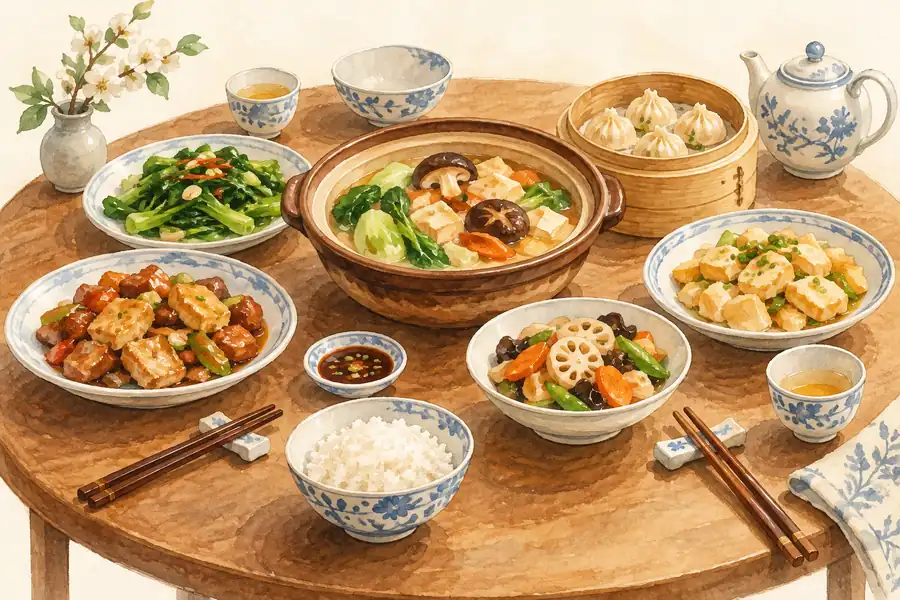
Siyang Biaoji Dish (泗阳膘鸡) is a steamed loaf of minced pork and Chinese yam from Siyang County (泗阳县) in Suqian (宿迁). The name contains the word for chicken (鸡), but the dish uses no chicken. In Siyang it is the first dish on the family table at New Year and other festivals, and in 2008 it entered the first list of Suqian municipal intangible cultural heritage.
How it is made
Two pastes go into it. Lean pork from the hind leg is chopped by hand into a mince and mixed with egg yolk, scallion and ginger juice, salt and sweet-potato starch into a red-brown paste. Pork fat is mixed with mashed, peeled and cooked Chinese yam, egg white, white pepper and sweet-potato starch into a white yam paste. The layering is done by the cook's feel, and the loaf is steamed layer by layer until it sets.
A Siyang maker counts more than ten steps, ending with steaming and resting in the steamer, and names pure sweet-potato starch as the key ingredient. Cooks use peeled ginger, only the white stems of scallion and garlic, and white pepper, to keep the colour pure.
Flavour and texture
Sliced, the loaf shows a red-brown lower layer and a white upper layer, so on the table it looks like a piece of streaky pork. It is described as fragrant, fresh and tender, and once simmered with vegetables as light and not greasy.
How it is eaten
There are two ways to serve it. For the covered bowl (扣碗), slices are built into a dome the size of a bowl's mouth and dressed with broth and seasonings; it looks like one large steamed bun until chopsticks part the slices. For the loose braise (散烧), squares or slices are brought to the boil with spinach or other greens, ginger, scallion and green garlic. A Siyang resident describes another way: the steamed loaf goes straight into cold water, is brought to the boil with seasonal vegetables and is eaten from the pot.
At rural weddings and funerals it opens the banquet, and guests judge the cook by how well it turns out. Siyang also makes a sister dish, suji (酥鸡), from the same mixture pressed into an unlayered cake and fried.
Where it comes from
The People's Daily Overseas Edition essay traces the dish to the 1960s and 1970s, when poor households in northern Jiangsu could not afford lavish fish and meat for guests and invented dishes of their own. A story recounted in a Tide News column links the name to Shi Kefa (史可法), Minister of War of the Southern Ming: on his birthday his cook, told not to make mutton, made a dish of pork and eggs instead, and the pork fat (膘) and egg (鸡蛋) gave it its name.
Sources & reading
Written from the linked sources and checked sentence by sentence against quoted extracts by a separate reviewer on 2026-09-24. Recipes and servings vary between kitchens.