

Qiandao Lake Clay Pot Fish Head 千岛湖砂锅鱼头
Qiandao Lake Clay Pot Fish Head is featured among the local specialties of Zhejiang.
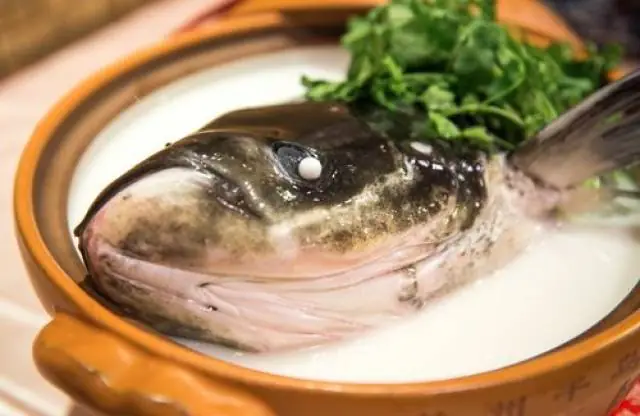
Photo adjustments
EXIF orientation normalized; resized without changing aspect ratio; converted to WebP. No subject edits.
Qiandao Lake Clay Pot Fish Head (千岛湖砂锅鱼头) is a clay-pot fish-head specialty listed for Zhejiang; 千岛湖 is the lake place element, 砂锅 the pot, and 鱼头 the cut.
Cooking a head in a pot
The head is split or cut into large pieces, rinsed and often briefly fried or blanched first to firm the surface and remove any muddy edge. It then goes into a clay pot with water or stock, ginger, scallion and usually a little rice wine, and simmers gently for a long time. Gentle heat matters: a hard boil clouds the broth and breaks the flesh apart, while a slow simmer lets the collagen in the head dissolve and thicken the liquid. Seasoning is added late, and the pot is carried to the table with the lid on so that it keeps cooking as it is served.
What the dish is like
The broth is the point. Cooking a head rather than a fillet releases gelatin, so the liquid ends up fuller and slightly sticky on the lips, with a clean freshwater flavour rather than a strong fishy one. The meat comes away in small pieces around the cheek, jaw and the cavity, and there are soft gelatinous parts that some diners prize most. Because the head is cooked slowly, the seasoning stays in the background and the texture does the work.
Reading the name
The label contains three separate instructions: which water the fish comes from, which pot it is cooked in, and which part of the fish is used. That is a lot of specificity for a dish name, and it tells you the identity is bound up with the lake rather than with a technique. The dish is recorded at province level rather than being tied to a city, so the place association here is 浙江 only.
Ingredients and dietary checks
Freshwater fish, water or stock, ginger, scallion and usually rice wine are the core, with bean curd, tomato or pickled greens appearing in some versions. Because a head is cooked whole or in large pieces, small bones are unavoidable and some are hard to see in the darker gelatinous sections. The pot is often finished with coriander, chilli or a splash of soy sauce, and soy sauce generally contains wheat. Ask 是什么鱼 (which fish), 有刺吗 (are there bones), 辣不辣 (how spicy) and 有香菜吗 (is there coriander).
How to order it
Show the characters 千岛湖砂锅鱼头 and ask 多大的 (how big is the head), 适合几个人吃 (how many people is it for), and 是什么鱼 (which fish). Because heads are sold by size, 按重量算吗 (is it priced by weight) is the question that avoids surprises. For the pot, 辣不辣 and 要不要加豆腐 (would you like bean curd added) cover most variations, and 可以少放盐吗 (less salt) is worth asking if the broth is seasoned late.
Eating it
Let the pot settle for a moment before serving, then take the broth first while it is at its clearest. Work through the meaty sections around the cheeks and jaw, set bones aside on a plate, and treat the gelatinous pieces as a delicacy rather than a leftover. One large head generally feeds three or four people alongside rice and a vegetable, and the broth is worth finishing even after the fish is gone.
More dishes to compare
Explore related local specialties and compare their names, preparation notes and ordering guidance.
Braised Fish Heads 鱼头 →
Braised Fish Heads (鱼头) is the plain version of the same idea: fish head as a category rather than a named dish, cooked according to the kitchen. 千岛湖砂锅鱼头 adds a place and a vessel to that category, which is what turns a general cut into a recognisable dish with its own expectations.
Questions before you order
Is there a lot of bone?
Yes. A head is full of small bones, and some sit in the soft gelatinous sections where they are hard to see. Eat slowly, keep a plate for discards, and ask 有刺吗 (are there bones) if you are ordering for someone who struggles with them.
Why is the broth thicker than a normal fish soup?
Because a head releases collagen into the liquid as it simmers. That is what gives the broth its fuller body and slightly gelatinous feel, and it is also why the dish needs gentle, slow cooking rather than a hard boil.

Sources & reading
The supplied food list supports this name and regional association. The culinary terms below are explained as menu vocabulary; a local recipe, origin story and venue availability have not been independently verified.