

Pinghu Wine-Lees Preserved Eggs 平湖糟蛋
Pinghu Wine-Lees Preserved Eggs is featured among the local specialties of Zhejiang.
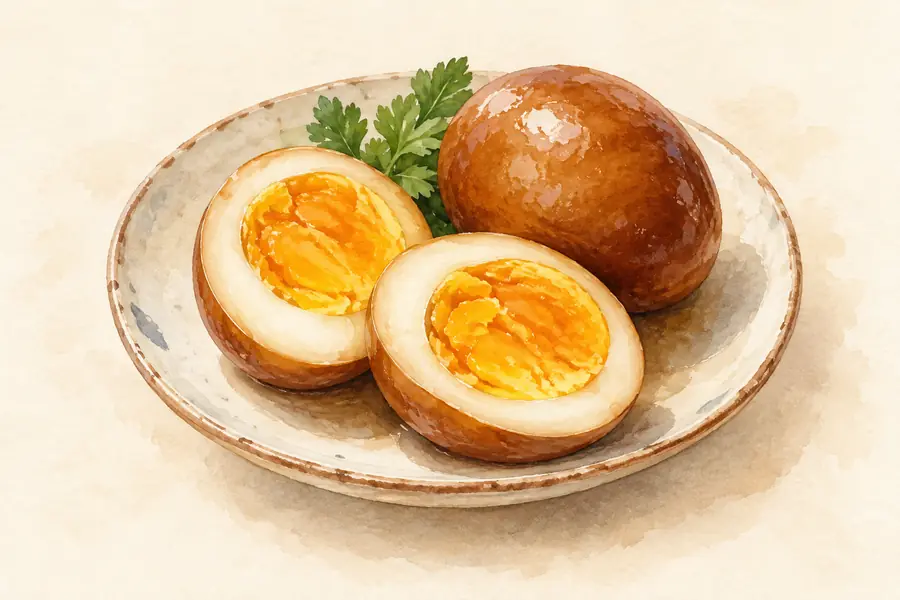
Pinghu Wine-Lees Preserved Eggs (平湖糟蛋) are duck eggs cured in fermented wine lees, a speciality of Pinghu (平湖), a county-level city of Jiaxing (嘉兴) in northern Zhejiang. Chinese Wikipedia names the eggs, together with watermelons, as the local products Pinghu is known for.
How it is made
The old method wraps each duck egg in a paste of lees (糟泥) and leaves it to ferment until the egg takes on a strong lees aroma. In August 2026 the local paper Today's Pinghu (今日平湖报) reported that a lees-egg museum was being built in Shantang village (山塘村), Guangchen town (广陈镇), where visitors are to wrap eggs in lees paste themselves and follow how an ordinary duck egg changes as it ferments.
Flavour and texture
Writing in Xinmin (新民) in June 2026, Lu Xiaolu (陆小鹿), a Shanghai office worker, described the eggs served at the Old Pinghu Restaurant (老平湖饭店) in the Nanhetou (南河头) historic quarter on a spring visit to Pinghu. Each was a pale yellow egg coated in lees liquor and soft like set fat. The wine aroma did not sting the nose, the yolk was dense and sandy, and the salty taste carried a trace of the sweetness of fermented rice.
Where it comes from
Lu also notes that the eggs rank with du gua seeds (杜瓜子) and watermelon as the 'three treasures of Pinghu' (平湖三宝). The eggs appear as a breakfast dish in Mu Xin's (木心) poem 'Young Man's Breakfast' (少年朝食), one of four small plates set out with warm rice congee. In March 2026 Pinghu's Party secretary, visiting Linbai town (林埭镇), named the eggs among the town's featured intangible-heritage items.
Sources & reading
Written from the linked sources and fact-checked against them on 2026-09-25. Recipes and servings vary between kitchens.