

Dexing Wulao Dumplings 德兴乌佬果
Dexing Wulao Dumplings is featured among the local specialties of Jiangxi.
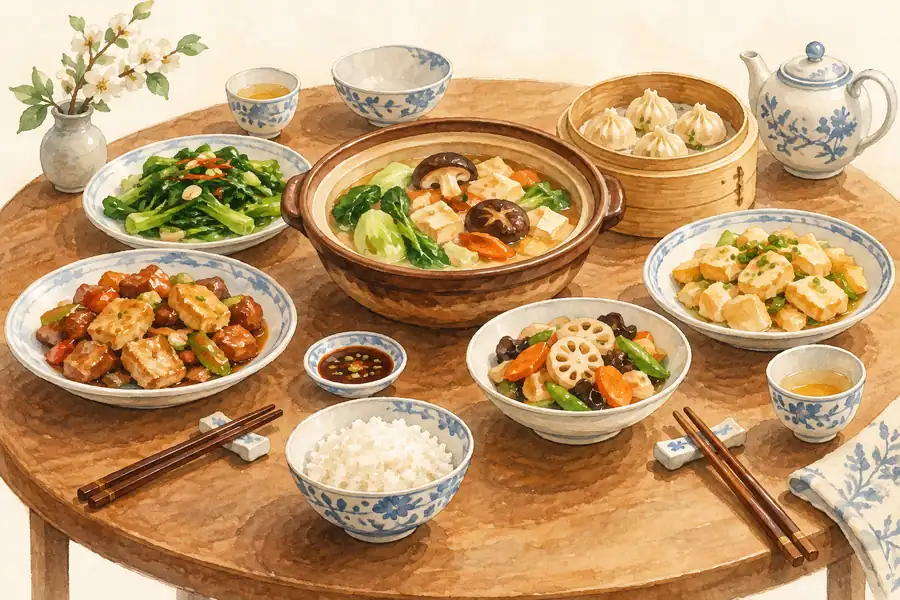
Dexing Wulao Dumplings (德兴乌佬果) are filled, steamed parcels from Dexing (德兴) in Shangrao (上饶), Jiangxi, whose translucent wrapper was traditionally made from the starch of wild fern roots. According to CCTV (央视网), they were entered on the Shangrao municipal intangible cultural heritage list in 2016.
Ingredients
The traditional wrapper is wild fern-root starch (蕨根粉). After the sweet potato reached China in the Wanli reign of the Ming dynasty, people in Dexing often made Dexing Wulao Dumplings with sweet-potato starch instead. The filling is open-ended: shiitake mushrooms, spring bamboo shoots, water bamboo (茭白) and lotus root, all plentiful locally, can be combined with fresh vegetables from other regions, and the filling can be meat or meatless to suit each eater.
Where it comes from
CCTV's series Chinese Chorography on Film (中国影像方志) traces the dish to hunger food: early Dexing people wrapped wild greens in fern-root starch to get through famine years. A local legend explains the name. At the end of the Yuan dynasty Zhu Yuanzhang (朱元璋), beaten at Poyang Lake (鄱阳湖), fled alone into Mount Damao (大茅山) in Dexing, where an old farmer fed him wild greens wrapped in fern-root starch and gave his name as Wulao (乌佬). In the local dialect wulao sounds like wunuo (乌糯), so the dumplings are also called wunuoguo (乌糯果).
How it is eaten
Fresh from the steamer, the wrapper is translucent enough to show the colour of the filling. The dumplings can be eaten on their own as a staple or served as one dish in a banquet. People's Daily Online (人民网), which calls them a local speciality snack, reported that on 1 May 2020 medical staff who had worked on COVID-19 control in Dexing tried making the dumplings in a wrapping contest at Chenfang village (陈坊村) in Longtoushan township (龙头山乡).
Sources & reading
Written from the linked sources and fact-checked against them on 2026-09-24. Recipes and servings vary between kitchens.