

Sweet and Sour Pork Tenderloin 糖醋里脊
Sweet and Sour Pork Tenderloin is featured among the local specialties of Shandong.
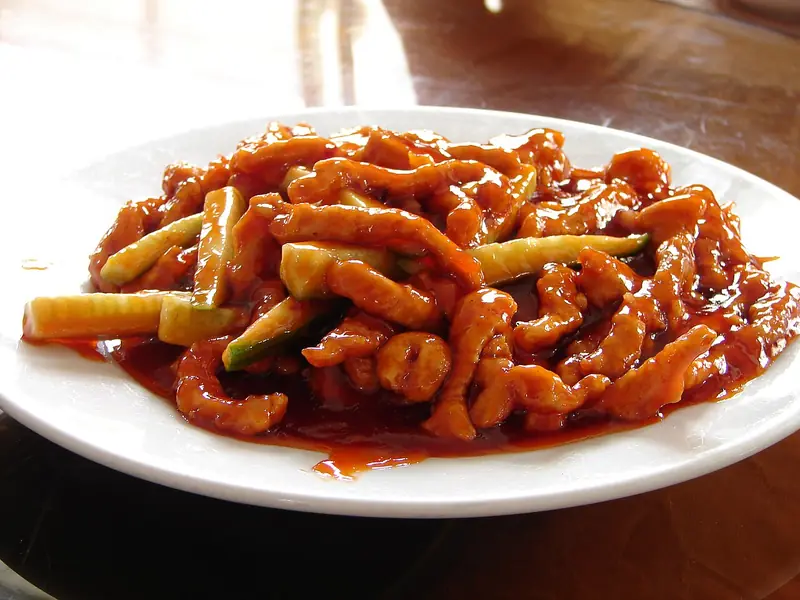
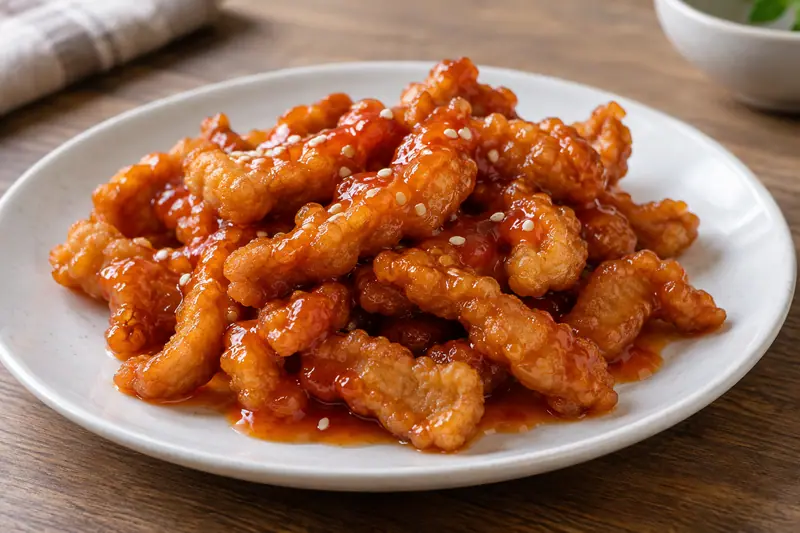
Sweet and Sour Pork Tenderloin (糖醋里脊) is strips of pork loin coated in a light batter, fried twice and tossed in a thickened sugar-and-vinegar sauce. The dish appears in several regional cuisines, but a cookery lesson published on the Yantai (烟台) city government portal calls the Lu cuisine (鲁菜) version of Shandong the best known.
How it is made
In the lesson, written by Wenquan School in Zhaoyuan (招远), the pork is cut into strips about the size of a little finger, mixed with an egg and a little salt, then coated with a thin batter of starch slurry and some flour. While the meat rests, sugar and vinegar are mixed with water and a pinch of salt; the lesson suggests a little more sugar than vinegar.
The strips go into oil heated to 50 to 60 percent until they set, and then go back into hotter oil, at 70 to 80 percent, until golden. A little oil is left in the wok, the sauce is brought to the boil and thickened with starch until sticky, and the fried pork is tossed through it.
Flavour and texture
The second frying is there to make the outside crisp while the inside stays tender. The finished dish tastes sour-sweet. Chinese Wikipedia notes that the Shandong dish contains no vegetables or fruit, unlike Korean tangsuyuk (糖醋肉), which it describes as derived from it and whose sauce is cooked with carrot, cucumber, onion, wood-ear fungus, apple and pineapple.
Sources & reading
Written from the linked sources and fact-checked against them on 2026-09-24. Recipes and servings vary between kitchens.
