

Seaweed Steamed Buns 海菜包子
Seaweed Steamed Buns is featured among the local specialties of Shandong.
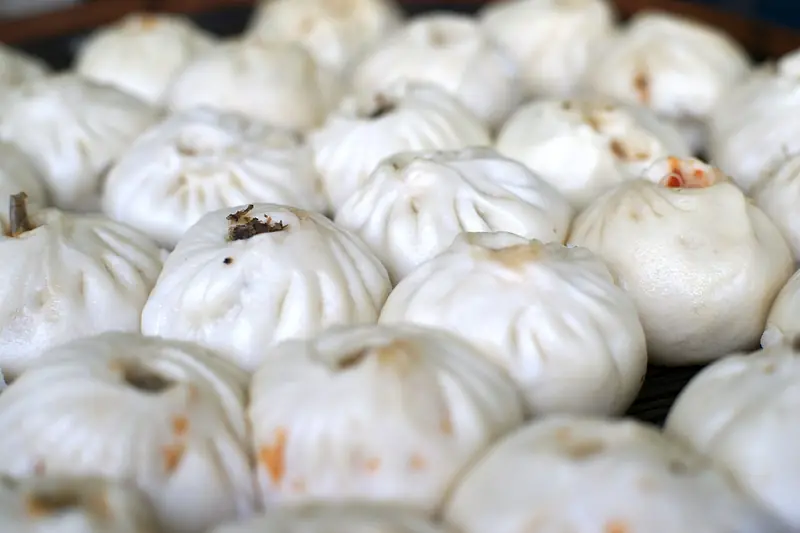

Photo adjustments
EXIF orientation normalized; resized without changing aspect ratio; converted to WebP. No subject edits.
Seaweed Steamed Buns (海菜包子) are steamed buns filled with seaweed and pork, a dish of Yantai (烟台) and above all of Changdao (长岛). A Yantai host quoted in a 2024 Yantai Evening News (烟台晚报) column called them long established there and a favourite with diners from all over. They are round, pleated and about the size of a fist.
Ingredients
Several kinds of seaweed are used. The commonest, according to the same column, are deer-horn seaweed (鹿角菜), laver (紫菜), a seaweed called heicai (黑菜), wakame (裙带菜), and a fine, soft, smooth, earth-brown seaweed known as "骆驼毛" (camel hair). The seaweed is mixed with pork belly, chopped scallion, shredded ginger, minced garlic, peanut oil and fine salt.
How it is made
The filling is wrapped in hot-water dough and the buns are steamed. On Changdao cooks choose this scalded dough over leavened dough: it is less fluffy but chewier, whereas raised dough tends to burst at the pleats in the steamer and let the filling and juices leak.
Flavour and texture
The first taste is the faint sea smell of the seaweed, followed by the pork and oil and the herbal notes of scallion, ginger and garlic.
How it is eaten
According to the host and a restaurant chef who spoke to the columnist, serving Seaweed Steamed Buns is a fairly formal way for Changdao people to treat guests: not a custom as such, but a practice kept up for many years.
Sources & reading
Written from the linked sources and checked sentence by sentence against quoted extracts by a separate reviewer on 2026-09-24. Recipes and servings vary between kitchens.