

Ningyang Siba Banquet 宁阳四八席
Ningyang Siba Banquet is featured among the local specialties of Shandong.
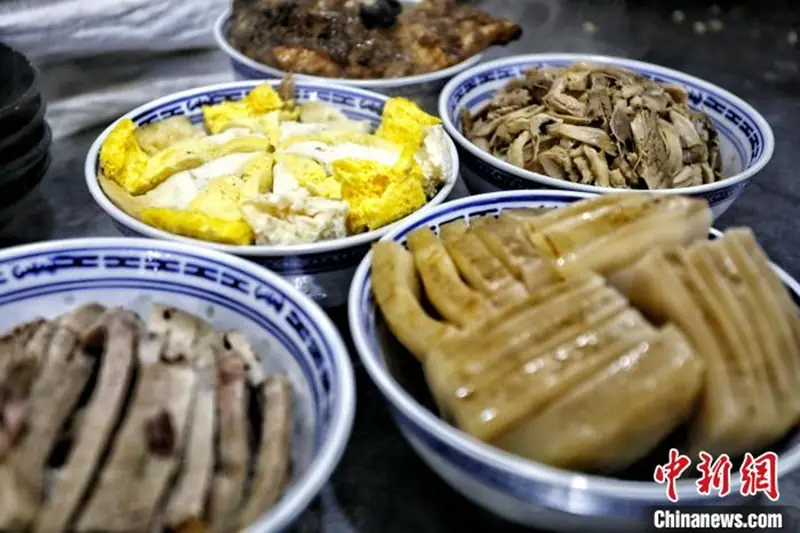
Image notes
Resized for the web; the photo itself has not been edited.
Ningyang Siba Banquet (宁阳四八席) is the formal guest banquet of Ningyang County (宁阳县) in Tai'an (泰安), Shandong, served round a square eight-seat table. "Siba" means "four-eight": China News Service explains the name by the four plates and eight bowls, the limit of eight diners per table and the 32 pieces of tableware. The Ningyang Siba banquet and drinking rites (宁阳四八宴席与酒礼) were entered in Shandong's fifth provincial list of intangible cultural heritage in November 2021.
The 24 courses
A full table has 24 dishes: four fruit dishes, four cold dishes, two large whole pieces, eight big bowls, four small bowls and two pastries. The Tai'an government's big bowls hold shredded chicken, tile-shaped fish pieces, crystal meatballs, "red" pork, "white" pork, shredded pork, white fungus and cabbage with dried shrimp; the small bowls are candied Chinese yam, fish sticks and two seasonal greens with pork. The saying "one chicken, two fish, three meatballs" (一鸡二鱼三丸子) sums up a menu built on chicken, fish and meat with very few greens.
Service runs in eight stages. China News Service describes fruit and cold dishes first, then four big bowls, the steamed whole chicken and sweet-and-sour whole fish, the small bowls, two pastries as a mid-meal course, fruit, a second round of four big bowls ending with cabbage, and finally noodles and a fresh soup. The last dish is cabbage (白菜), whose name sounds like "a hundred fortunes" (百财). For the grandest occasions the eight big bowls are served twice.
How it is made
Frying is rare; every big bowl except the slippery meatballs is steamed. Dishes are prepared ahead as half-finished pieces and steamed for two to three hours. Cooked chicken is torn into shreds, packed into a bowl with stock, steamed for about an hour and turned out whole into a big bowl. Before serving, a master stock is poured over each dish. The Tai'an government describes it as hen simmered with seasonings for two or three hours, then finished with soy sauce, vinegar, wood-ear fungus, coriander and egg, with the seasoning varied for each dish.
Where it comes from
Ningyang's Xiangyin Township (乡饮乡) lies between Mount Tai and Qufu (曲阜) and is named after the ancient village drinking rite (乡饮酒礼); China News Service calls the banquet an outgrowth of that rite of honouring elders and the worthy. The Ningyang culture and tourism bureau dates the banquet and its drinking rites to more than a thousand years ago and says the drinking rites have been popular among both ordinary people and the upper classes since the Tang dynasty. Seating follows rank: the most honoured guest takes the head seat, and hosts set out warm water, soap and towels for guests to wash their hands before the meal.
Sources & reading
Written from the linked sources and fact-checked against them on 2026-09-24. Recipes and servings vary between kitchens.