

Ruzhou Mung Bean Starch Sheets 汝州粉皮
Ruzhou Mung Bean Starch Sheets is featured among the local specialties of Henan.
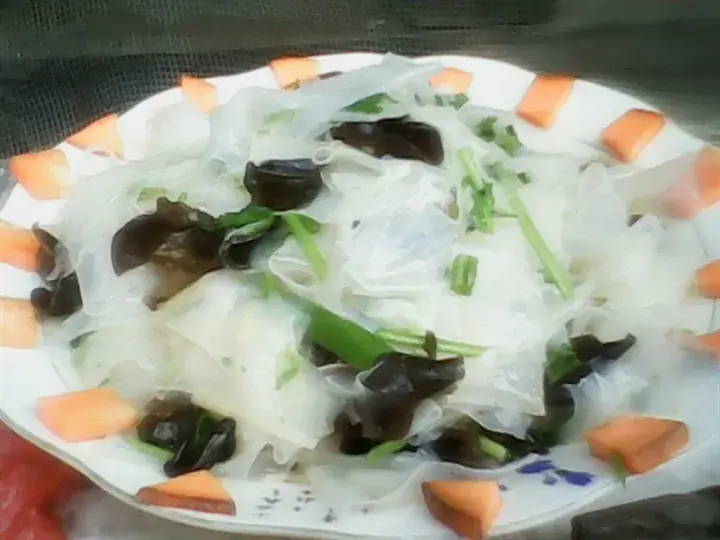
Photo adjustments
EXIF orientation normalized; resized without changing aspect ratio; converted to WebP. No subject edits.
Ruzhou Mung Bean Starch Sheets (汝州粉皮) are thin, translucent sheets of hand-made mung bean starch from Ruzhou (汝州) in Henan, a representative item of Ruzhou's intangible cultural heritage.
How it is made
The sheets are made from good mung beans, wet-milled by hand into starch. The Ruzhou local-history office sums up the craft in a four-step rhyme, "七分旋,八分揭,九分摊,十分搬", roughly swirl, peel, spread, carry. A second verse gives the working rules: judge how fast to spin the copper pan by the heat of the water, lift the sheet from the edge so it comes off whole, patch the holes and keep it round, then brush with water and oil and dry it according to the weather. Each sheet is about 30 centimetres across, and a bundle of thirty sheets weighs about half a jin.
Flavour and texture
The office describes Ruzhou Mung Bean Starch Sheets as white and transparent, thin as paper and tough yet fresh-tasting, and compares them to a cicada's wing, window gauze and white jade. It contrasts them with starch sheets made elsewhere in China, which it calls mostly thicker and opaque. The sheets do not stick in the pot and can be eaten hot or cold.
How it is eaten
The dried sheets keep for a long time. Before use they are soaked in warm water for two to three minutes until soft, then torn into pieces and mixed with shredded or sliced beef, mutton, pork, chicken, duck or goose for a cold meat dish, or with cucumber, tomato and celery, seasoned with mustard, sesame paste and sesame oil. For a cold sour-and-hot plate the soaked sheets are cut into strips and dressed with vinegar, chilli oil and salt; the office calls it a dish to go with wine.
Where it comes from
The craft is traced to the Tian (田) family at Shuikengyan (水坑沿) on the west street of the old town, where it began in 1840, the twentieth year of the Daoguang reign. The sheets head Ruzhou's "new three treasures" (新三宝) of starch sheets, starch noodles and vermicelli. In 1985 a Japanese delegation and an American ceramics study group bought Ruzhou starch sheets along with Ru ware (汝瓷) to take home, as did overseas scholars at a Ru ware conference held in the city in 2001.
More dishes to compare
Explore related local specialties and compare their names, preparation notes and ordering guidance.
Gaocun Mung Bean Starch Sheets 高村粉皮 →
Another named Henan starch sheet; Ruzhou's is defined by pure mung bean starch swirled by hand into sheets thin enough to see through.
Sources & reading
Written from the linked sources and checked sentence by sentence against quoted extracts by a separate reviewer on 2026-09-24. Recipes and servings vary between kitchens.