

Pebble-Baked Flatbread 石子馍
Pebble-Baked Flatbread is featured among the local specialties of Henan.

Image notes
Resized for the web; the photo itself has not been edited.
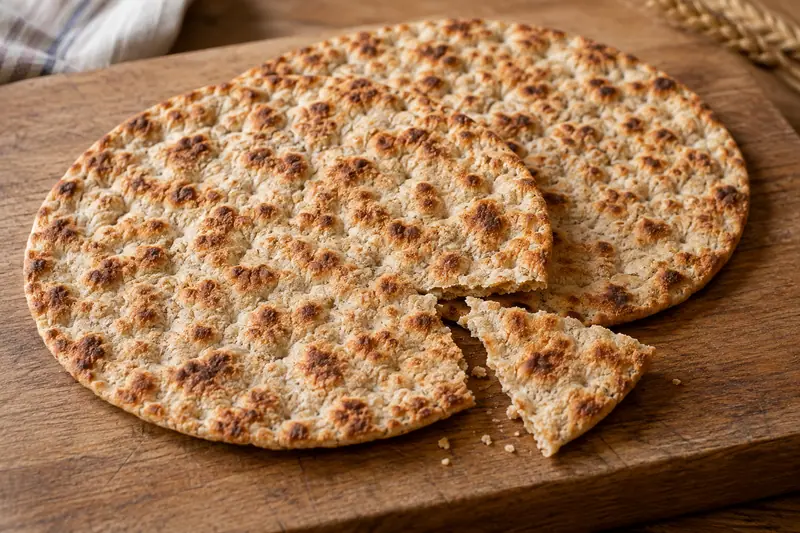
Pebble-Baked Flatbread (石子馍), known locally as zimo (子馍), comes from Xun County (浚县) in Hebi (鹤壁), Henan, and Taiwan's United Daily News names it Hebi's most characteristic snack. It takes its name from the heated pebbles it is baked on: a filled flatbread that looks like a round shaobing from outside but carries pork, scallion and egg inside.
How it is made
The cook fills an iron pot with pebbles of mixed sizes and heats them. Dough made from good flour with oil, salt, scallion and seasonings is made into a flat cake, a meat filling goes into the middle, and the bread is laid on the hot stones. When it is about seventy per cent cooked, egg is added inside and the bread stays on the stones until the egg is done.
Henan TV's Daxiang News describes the method of a Xun County zimo maker named Wang, who has made zimo for nearly forty years and is the seventh-generation practitioner of the Wang family's zimo. He prefers rough pebbles to smooth bluestone, which cracks easily when heated, because the rough stones stand high heat and warm evenly. The filling is pork hind leg and pork belly in a three-to-seven mix, not seasoned in advance: salt is spread on the rolled dough first and the meat and scallion scattered over it, which is said to keep the scallion from weeping water. The dough strip is rolled up around the filling and pinched shut at both ends, part-cooked on a griddle, then slit so beaten egg can be poured in. It finishes in the covered stone pot for about ten minutes, turned and brushed with oil that the stones soak up.
Flavour and texture
The finished bread is golden, with a crisp, browned shell and a soft centre. Cut open while hot, it lets out a burst of fragrant steam, and each bite mixes the pork, the smooth egg and the scallion with the crunch of the crust.
Where it comes from
A folk legend places its origin in the late Sui or early Tang dynasty, when floods struck the lower Yellow River and a garrison raided the Liyang Granary (黎阳仓) by night to hand out grain. Grateful villagers brought meat and eggs to the camp; the cooks had marched without utensils, so one gathered pebbles from the Yellow River bank, heated them over the fire and baked the food on them. The United Daily News adds that the method reached Jinling (金陵), an old name for Nanjing, in the Qing dynasty, where the bread was called "天然饼" ("natural cake").
In 2013 Hebi Daily listed zimo among the snacks at the Xun County Lunar New Year Temple Fair (浚县正月古庙会), a provincial intangible heritage item, alongside pear-syrup candy and tofu skin.
Sources & reading
Written from the linked sources and fact-checked against them on 2026-09-24. Recipes and servings vary between kitchens.