

Tongshankou Beef Rice Noodles 铜山口牛肉粉
Tongshankou Beef Rice Noodles is featured among the local specialties of Hubei.
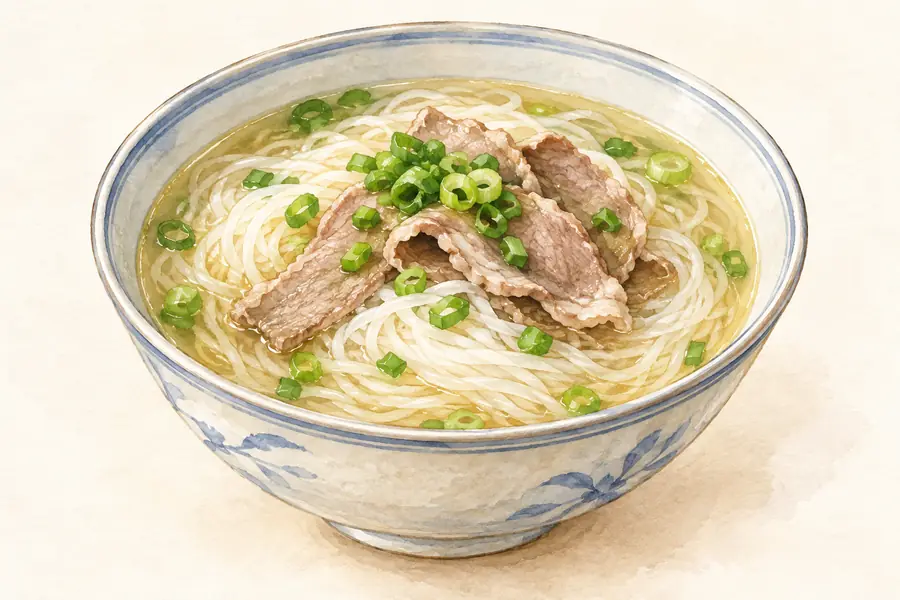
Tongshankou Beef Rice Noodles (铜山口牛肉粉) is a beef rice-noodle bowl listed for Huangshi in Hubei, and its name splits cleanly into a place, a meat and a noodle.
How beef rice-noodle bowls are made
A bowl of this kind is assembled rather than cooked all at once. Rice noodles are soaked and then blanched briefly in boiling water, so they stay springy instead of turning soft. The broth is simmered separately, usually with beef and aromatics, and the meat is either sliced from a braised cut or spooned over from the pot. Everything meets in a bowl at the last moment: noodles, hot broth, the beef, then the garnishes the kitchen keeps on the counter. Because the noodles are rice, they do not need the longer cooking a wheat noodle would take.
Flavour and texture
Expect a savoury, slightly oily broth over slippery noodles that need little chewing, with the beef adding a deeper, slow-cooked note. Rice noodles carry aroma better than wheat noodles but lose their bite if they sit too long, which is why the bowl is best eaten as soon as it arrives. Chilli, pickled vegetables and a squeeze of vinegar are common table additions in Hubei; add them gradually, because the broth is often already seasoned and a heavy hand buries the beef flavour.
The place name in front
The supplied record places this bowl in Huangshi and gives no history, so no origin story is repeated here. The useful pattern is the naming habit: Hubei lists beef noodles under the town or district that made them famous, and the province keeps several of those names side by side. That means the place label is the local signature, and the ingredient words tell you only that the bowl will contain beef and rice noodles.
Ingredients and dietary checks
The core is rice noodles and beef in a seasoned broth, usually with ginger, star anise, soy and chilli. Rice noodles themselves contain no wheat, but the sauce or a garnish can, so ask if you are cooking for coeliac needs. The broth is meat-based by definition here, so vegetarian eaters should look for a different bowl rather than asking for an alteration. Peanuts, sesame and chilli oil are common on the counter, so mention allergies before the bowl is assembled.
How to order it
Ask for one bowl and let the kitchen know how hot you want it. Useful questions are whether the broth is spicy, whether the beef comes sliced or in chunks, and whether you can have the chilli on the side. If you want it milder, asking for less chilli is simpler than asking the kitchen to change the broth, which is already cooked. Ask for the pickles and vinegar on the side if you want to season the bowl yourself.
How to eat it and plan a meal
Lift the noodles with chopsticks and drink the broth with a spoon, and eat straight away while the noodles still have spring. A bowl is a complete breakfast or light lunch on its own; for a bigger meal add a boiled egg, a plate of greens or a flatbread on the side. If you are sharing a table, one bowl each plus one vegetable plate is usually the right amount.
More dishes to compare
Explore related local specialties and compare their names, preparation notes and ordering guidance.
Xiangyang beef noodles 襄阳牛肉面 →
Xiangyang beef noodles (襄阳牛肉面) are built on wheat noodles in a rich, often chilli-red beef broth, which makes the bowl chewy and heavy. The Tongshankou bowl in this page uses rice noodles instead, so the same idea of beef and broth arrives lighter and more slippery. If you are comparing the two on a trip, the noodle type is the clearest difference to look for.
Questions before you order
Is this bowl wheat-free?
The noodles are made from rice, so the base is wheat-free, but soy sauce, a thickened broth or fried garnishes can contain wheat. Ask about the sauce if you need to be certain.
Is it very spicy?
Chilli is common in Hubei beef-noodle bowls but the level varies by shop and is often added at the counter. Ask for the chilli on the side, or for less chilli, and taste the broth before adding more.

Sources & reading
The supplied food list supports this name and regional association. The culinary terms below are explained as menu vocabulary; a local recipe, origin story and venue availability have not been independently verified.