

Jingshan Qiaomi Rice Steamed Pork 京山桥米蒸肉
Jingshan Qiaomi Rice Steamed Pork is featured among the local specialties of Hubei.
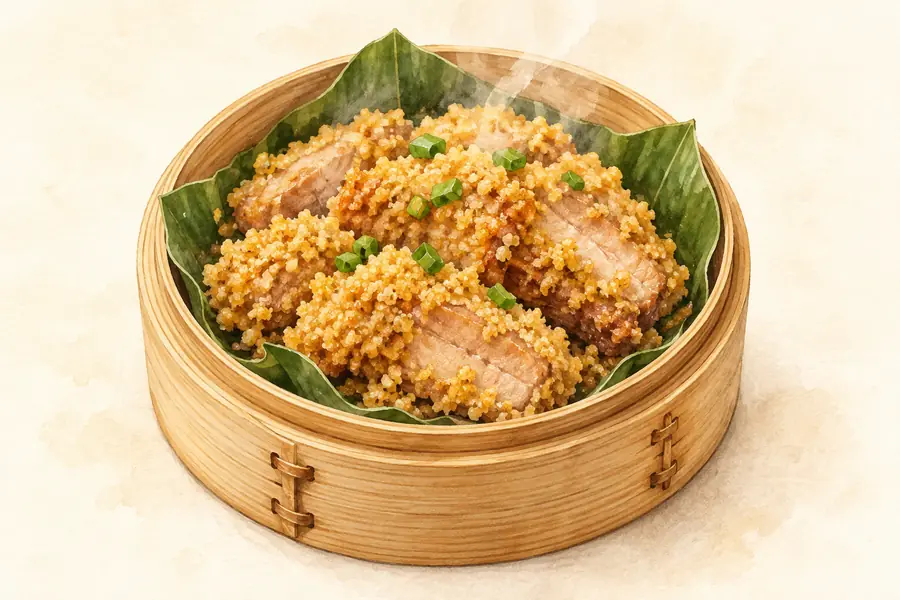
京山桥米蒸肉 (Jīngshān qiáomǐ zhēngròu) is Jingshan's version of 粉蒸肉, the Hubei steamed pork dish in which pork belly is coated with rice meal – here the rice is 桥米, Jingshan's geographical-indication rice.
How the dish is made
蒸肉 belongs to the family Chinese kitchens call 粉蒸肉, also written 米粉肉: pork is coated with a seasoned rice meal and then steamed through. The reference material describes the dish's main material as pork belly, supported by spices and the rice meal, with steam doing all the cooking.
Because the meat is steamed rather than braised or fried, the crust of rice meal stays distinct instead of dissolving into a sauce. Seasoning changes from place to place, and the reference material notes that Sichuan versions marinate the pork with chilli bean paste before the meal is added.
How it tastes
The dish is soft, rich and aromatic at the same time: the pork belly steams until it is tender enough to break with a spoon, while the rice meal on the outside keeps a slightly grainy texture and carries the spice mix. Fat from the pork is absorbed by the meal rather than pooling in the bowl.
The local rice matters to that balance. A rice that holds its shape when ground and steamed gives the coating a nuttier, more defined texture than a very soft grain would, which is why the name of the rice is worth keeping in mind when ordering.
Jingshan and 桥米
Jingshan is a county-level city in central Hubei administered by Jingmen, set at the southern foot of the Dahong Mountains and the northern edge of the Jianghan Plain. The city's own profile describes it as the 'green gem of central Hubei' and records that 京山桥米 is listed as a national geographical-indication product protection demonstration area.
Pairing a local rice with steamed pork is a natural fit for Hubei cooking, which the reference material identifies as the origin of 粉蒸肉 and where steamed dishes form a recognised tradition – the same tradition that includes the better-known 沔阳三蒸.
Ingredients and dietary questions
Pork belly, spices and rice meal are the core; the rice is ground into a coarse meal rather than served as grains. Chilli bean paste appears in the Sichuan branch of the family rather than necessarily in the Jingshan version.
Pork belly is fatty by definition, and the coating usually contains salt and spices, so this is a rich shared dish rather than a light one. If you are avoiding pork or want the heat reduced, ask before ordering. If you need to know whether the rice meal was toasted with any meat fat, that is a kitchen question.
Ordering it
Ask for 蒸肉 or 粉蒸肉 to be understood anywhere in Hubei, or use the full name 京山桥米蒸肉 when you want the Jingshan version specifically. The characters 蒸 and 粉 describe the technique – steaming and a powdered coating.
Useful questions are whether the meat is pork belly, whether the rice meal is made with local 桥米, and how much chilli the household spice mix carries. A portion is normally shared.
How it is served
The pork is typically steamed in a bowl and brought to the table hot, either in the bowl or turned out so the coating sits on top. It is served as one dish among several, with rice and a plainly cooked vegetable alongside to cut the richness.
In Hubei it also fits the wider pattern of steamed selections, where meat, fish and vegetables are steamed in one coordinated service. Ordering more than one steamed dish at a table is normal, and 蒸肉 is the meat leg of that arrangement.
More dishes to compare
Explore related local specialties and compare their names, preparation notes and ordering guidance.
Rice-Powder Steamed Pork 蒸肉 →
蒸肉 (Rice-Powder Steamed Pork) is the general Hubei name for steamed meat, and 京山桥米蒸肉 is that dish made with a named local rice. The technique is shared: meat is coated in a seasoned rice meal and steamed until tender. The difference is the rice, and it is not a cosmetic one. Jingshan's 桥米 carries geographical-indication status, and its grain shapes the texture of the coating, so the Jingshan version is best understood as a specific local expression of a province-wide dish rather than a separate recipe. Ordering a plain 蒸肉 elsewhere and the Jingshan version side by side is the clearest way to taste what the local rice contributes.
Questions before you order
What is 京山桥米蒸肉?
It is the Jingshan form of 粉蒸肉: pork belly coated with a spiced rice meal and steamed. The rice used is 桥米, the local rice that the Jingshan authorities list as a geographical-indication product.
Is the rice served as grains?
No. The rice is ground into a coarse meal and used as the coating on the pork, then steamed with it, so it forms the crust rather than a side of rice.
Source introduction: Wikipedia contributors: 粉蒸肉 · CC BY-SA 4.0. English guide adapted from the cited material, with additional preparation and ordering guidance.
Source introduction: Wikipedia contributors: 京山市 · CC BY-SA 4.0. English guide adapted from the cited material, with additional preparation and ordering guidance.
Sources & reading
The supplied food list supports this name and regional association. The culinary terms below are explained as menu vocabulary; a local recipe, origin story and venue availability have not been independently verified.