

Mianyang Lotus Root Starch 沔阳藕粉
Mianyang Lotus Root Starch is featured among the local specialties of Hubei.

Mianyang Lotus Root Starch (沔阳藕粉) is lotus-root starch from the Miancheng district of Xiantao, Hubei, where the local lotus root is a certified and geographically registered crop.
From root to powder
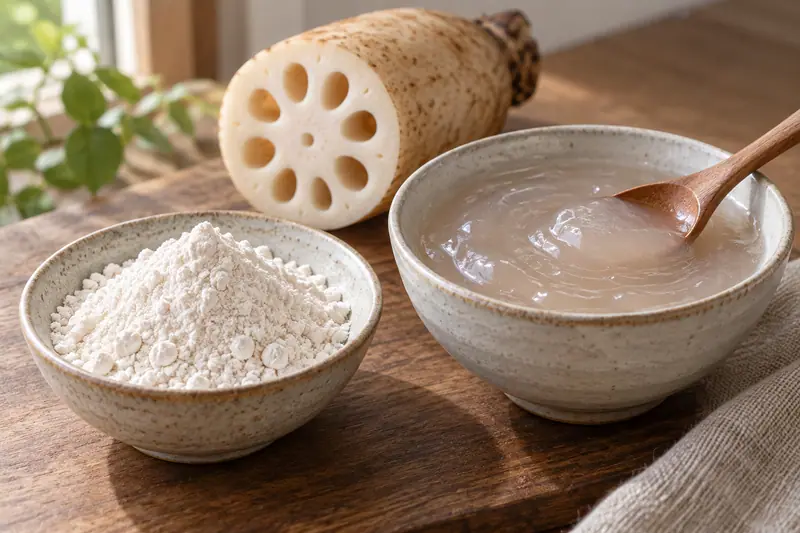
Lotus-root powder is a starch, not a flour blend. The roots are washed and ground, the pulp is rinsed out repeatedly, and the starch that settles is dried into the pale powder sold in packets and tins. Because everything depends on the root, the growing side matters: the Xiantao municipal report describes Miancheng Hui township as a lotus-growing area with thousands of mu under cultivation, and the local root carries both a green-product certificate and a geographical-indication mark.
Smooth and faintly sweet
Mixed with hot water the powder turns translucent and glossy, with a texture closer to a light pudding than to a drink. Plain, it tastes mildly of lotus root with a clean, slightly starchy finish, and the texture is the point rather than a strong flavour. Sweetened versions with sugar or osmanthus, or topped with nuts and dried fruit, are common in teahouses and are a different experience from the plain paste.
Miancheng, Xiantao
沔阳藕粉 is named for the old Mianyang district, which today forms much of Xiantao. The Xiantao municipal government's report on local produce describes Miancheng Hui township's lotus cooperative receiving a green-product certificate from the China Green Food Development Centre, and lists Miancheng lotus root among the city's six registered geographical-indication marks. That is the strongest current evidence that this particular stretch of the Jianghan plain is recognised for its lotus root.
What is in the packet
A plain product is lotus-root starch and nothing else; read the label, because blends that cut the starch with cassava or corn starch are sold under similar names and behave differently in the bowl. Sweetened instant versions add sugar, and some add osmanthus or powdered nuts. If you are avoiding added sugar, buy the plain powder and sweeten it yourself, which also lets you control how thick the paste becomes.
Buying and mixing
When you buy 藕粉, ask whether it is pure lotus-root starch and where the root came from. To make it, put the powder in a dry cup first, add a little cold water to break up the lumps, then pour in boiling water while stirring until it turns clear and thickens. Skipping the cold-water step is the usual reason a cup comes out lumpy.
How it is eaten
It is served as a warm paste in a small bowl or cup, often between meals or as a light evening snack rather than as part of a main course. Some teahouses serve the plain version to be eaten with a spoon, while others bring a sweetened bowl with nuts on top. If you want to taste the lotus root itself, ask for it without sugar.
More dishes to compare
Explore related local specialties and compare their names, preparation notes and ordering guidance.
Xishui Nine-Hole Lotus Root Starch 浠水九孔藕粉 →
Xishui Nine-Hole Lotus Root Starch (浠水九孔藕粉) is the Xishui version of the same starch, named for the nine-hole lotus root grown there. The two are a useful pair because the difference lies in the local root and its starch content rather than in the method.
Questions before you order
Is lotus-root powder a drink or a food?
It is a warm paste: the starch is mixed with hot water until it thickens, then eaten with a spoon. Plain versions taste lightly of lotus root.
Why is Miancheng named on the label?
Miancheng Hui township in Xiantao is the local lotus-growing area, and the municipal government records its lotus root as both a certified green product and a geographical-indication mark.
Sources & reading
The supplied food list supports this name and regional association. The culinary terms below are explained as menu vocabulary; a local recipe, origin story and venue availability have not been independently verified.