

Tianmen Steamed Dishes 天门蒸菜
Tianmen Steamed Dishes is featured among the local specialties of Hubei.
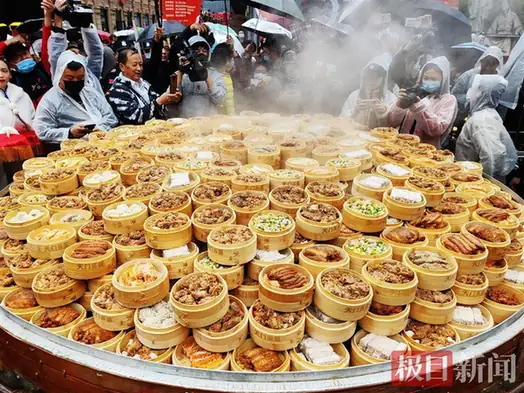
Image notes
Resized for the web; the photo itself has not been edited.
Tianmen Steamed Dishes (天门蒸菜) are the steamed dishes of Tianmen (天门), a city in Hubei that its government calls the home of steamed dishes ("蒸菜之乡"). The name covers a family of techniques, led by the "Tianmen three steamings" (天门三蒸), rather than a single plate.
How it is made
In an essay on the Tianmen government website, Lu Yongliang (卢永良), vice-president of the China Cuisine Association, names the three main techniques. Fen zheng (粉蒸) mixes the ingredient with ground rice or another ground grain before steaming; the rice meal takes away greasiness and adds a rice aroma, and it suits meat and vegetables alike. Qing zheng (清蒸) puts the food in a seasoned broth or sauce and then steams it. Pao zheng (炮蒸), he writes, is now made only by cooks in Tianmen; it is said that when scaleless fish are steamed in rice meal, the skin is treated with very hot oil so that it blisters.
A later page from the Tianmen commerce bureau lists nine methods, starting with rice-meal and clear steaming. Its version of pao zheng is different: the food is steamed in a bowl, turned out onto a plate, scattered with garlic and spices and finished with hot oil, mostly for fish. The other six are kou zheng (扣蒸, steamed in a bowl, inverted and sauced), bao zheng (包蒸, wrapped in egg skin, lotus leaf or vegetable leaf), niang zheng (酿蒸, one ingredient stuffed onto another), feng zheng (封蒸, steamed in a sealed vessel), gan zheng (干蒸, cut pieces steamed as they are) and zaoxing zheng (造型蒸, shaped before steaming).
The traditional steamer is the zeng (甑). Its character contains the element for pottery, which Lu reads as a sign that early zeng were earthenware; today most are wooden.
Dishes and textures
Lu describes rice-meal steamed crown daisy (粉蒸茼蒿) as bright green, fragrant and soft, and rice-meal steamed pork as reddish-brown and rich without being greasy. Whole clear-steamed chicken and clear-steamed crucian carp keep their shape and colour, with meat soft enough to come off the bone. Pao zheng eel (炮蒸鳝鱼) is the most representative blistered dish, and he says it is made best around Ganyi (干驿). A well-known local dish, "bamboo pole beats the tiger" (竹篙打老虎), mixes lotus root and pork with rice meal and seasoning and steams them together; it is also called the table-anchor dish (压桌菜).
Where it comes from
Tianmen was anciently called Jingling (竟陵). The origin story on the city site places the start of Tianmen steaming in the time of Wang Mang (王莽). Rebels led by Wang Kuang (王匡) and Wang Feng (王凤) had run short of food; local farmers gave them what grain they had saved against famine, and the rebels ground it into meal and steamed it with wild greens, and people called the result Kuangfeng dishes (匡凤菜) or Lülin dishes (绿林菜).
Steamed dishes and steamed rice were offered to elders at festivals, to ancestors on birthdays and to the dead at funerals, and served to guests at weddings and funerals. Lu writes that on these occasions the family was expected to keep the peace and not quarrel, so the word for stir-frying (炒) was thought unlucky, and that zheng (蒸) sounds like the words for true, striving and respect. Steamed dishes are now the centrepiece of local banquets, hence the saying "no feast without steamed dishes" ("无蒸不成席"). Lu adds that the rice-meal and clear-steamed techniques are made at home in almost every Tianmen family, while the labels "steamed meat, steamed fish, steamed vegetables" or "meat, vegetable and mixed steaming" promoted by some sanzheng restaurants describe only the ingredients or finished dishes of rice-meal steaming, not the whole of the three techniques.
More dishes to compare
Explore related local specialties and compare their names, preparation notes and ordering guidance.
Mianyang three steamed dishes 沔阳三蒸 →
The neighbouring Hubei tradition of three steamed dishes; Tianmen's own pages define its three steamings as three techniques (rice-meal, clear and blistered) rather than three plates.