

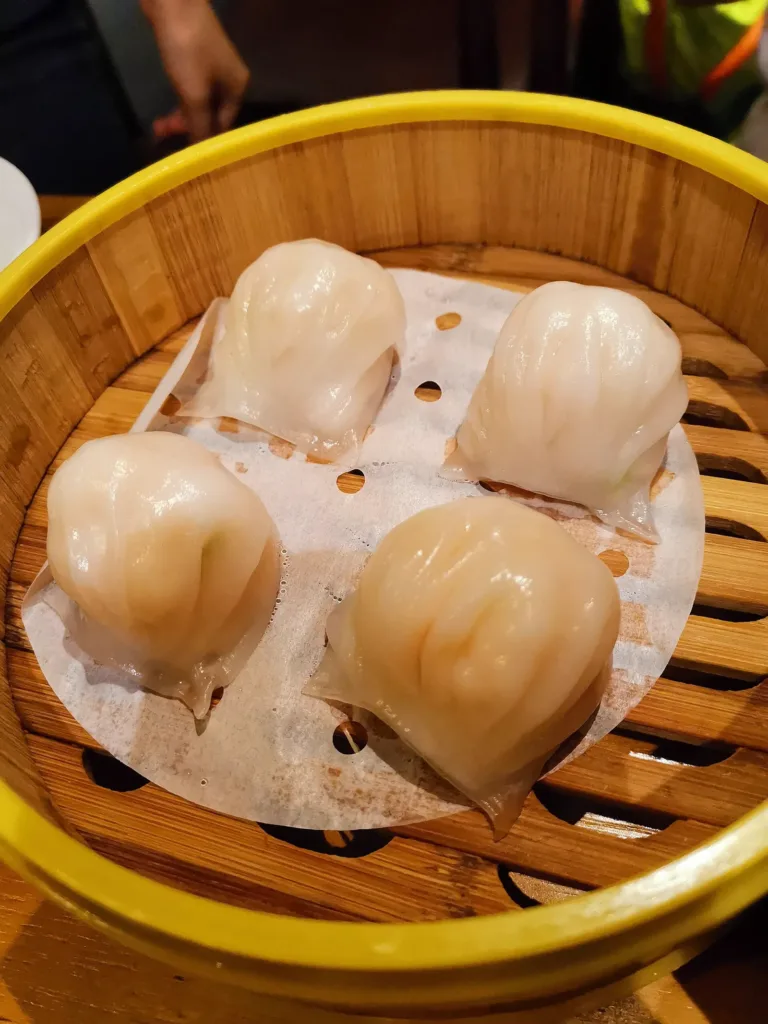
Har gow shrimp dumplings 虾饺
A steamed Cantonese dim sum dumpling with a translucent starch wrapper and a shrimp-centred filling; in Guangzhou, it is one of the familiar choices at a yum cha table.
Tap any red Chinese text to hear it in Mandarin.
A steamed Cantonese dim sum dumpling with a translucent starch wrapper and a shrimp-centred filling; in Guangzhou, it is one of the familiar choices at a yum cha table.
Har gow belongs to the Cantonese dim sum tradition. In Guangzhou, yum cha is commonly enjoyed with small dishes, and local coverage names shrimp dumplings among the familiar tea-house choices. It is a Cantonese dish found beyond Guangzhou too, rather than a food unique to one city or restaurant.
What gives it its texture
The wrapper is made from starch rather than ordinary wheat-flour dumpling dough. Specialist recipes use wheat starch with tapioca or cornstarch and boiling water; when steamed, this dough turns translucent and stays slightly chewy. Through the thin shell you can see the shrimp, and a careful bite gives way to the tender filling.
Shrimp is the defining ingredient, but recipes differ. Some combine chopped shrimp with small pieces of pork fat and bamboo shoot; seasonings and proportions vary by kitchen. Steaming cooks the filling inside the sealed wrapper, keeping the bite moist while leaving the shrimp’s texture perceptible. Do not assume every version contains only shrimp.
Ordering and eating
At a dim sum restaurant, show the name 虾饺 Xiājiǎo or ask for “har gow.” It is often served in a small steamer basket and works well as one item among several shared dim sum dishes. Let the dumpling cool briefly, then lift it gently with chopsticks or a spoon: the thin wrapper can split, and the filling is hot. Menus, basket sizes and added ingredients differ from place to place, so check the menu or ask staff rather than relying on a photograph.
Har gow contains shrimp. The wrapper commonly includes wheat starch, and some fillings include pork fat, bamboo shoot or seasonings. If you have a seafood, wheat or other food allergy, ask the restaurant about its exact ingredients and cross-contact practices; the wrapper’s clear appearance does not establish that it is wheat-free or suitable for any dietary restriction.
More dishes to compare
Explore related local specialties and compare their names, preparation notes and ordering guidance.
Cantonese siu mai 干蒸烧卖 →
Thin wrappers are cupped around a pork-based filling, often with shrimp, leaving the tops exposed. The dumplings are steamed in small baskets until the filling sets but stays juicy. The bite is firm and springy, with a thin wrapper and savory meat juices; shrimp can add a sweeter, more elastic texture.
Shrimp wonton noodles 鲜虾云吞面 →
Thin egg noodles are cooked briefly and served with shrimp-filled wontons in a savory broth. Pork can be part of the wonton filling, and the stock may contain additional seafood ingredients. The noodles should have a fine, springy bite, while the wontons are tender and juicy. The broth adds concentrated savory depth in a small volume.
Sources & reading
Recipes and servings vary between kitchens.
Image credits & notes (1)
- Har gow shrimp dumplings in a bamboo steamer at Rong She, Wuxi (photographed 22 June 2019); illustrative of the Cantonese dish, not a Guangzhou restaurant photograph. Photo: Walter GrassrootPhoto: CC BY-SA 3.0