

Cantonese siu mai 干蒸烧卖
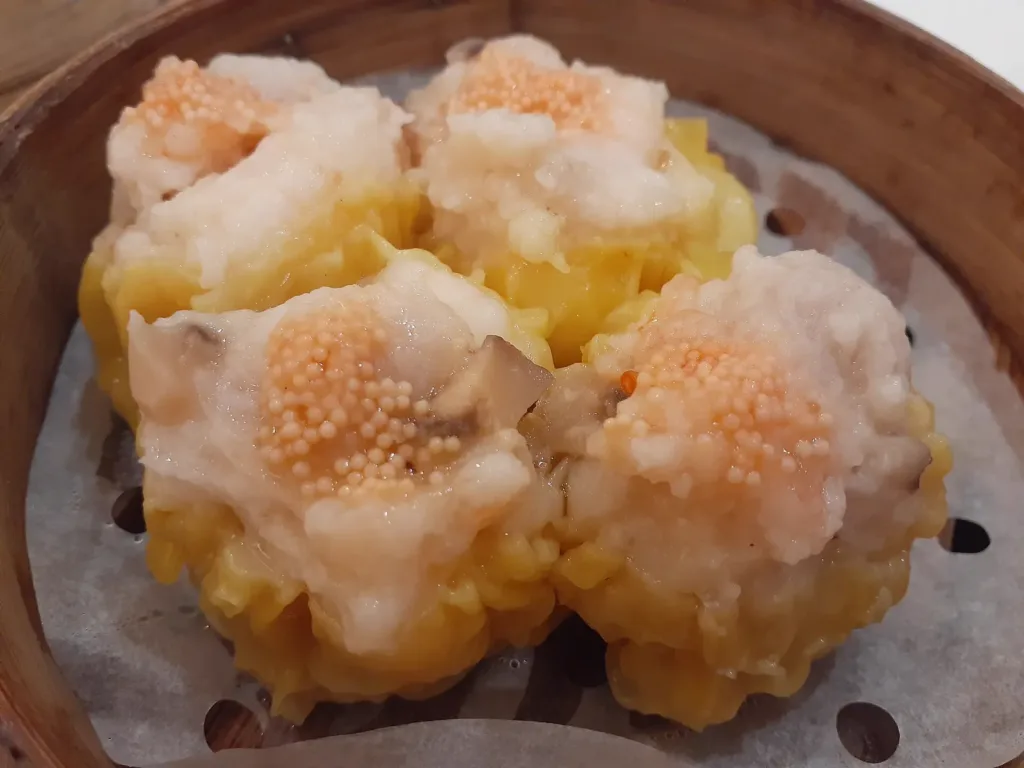
An open-topped Cantonese dim-sum dumpling: a thin wrapper holds a savory meat filling that is steamed until tender, with pork, beef and shrimp combinations varying by kitchen.
Tap any red Chinese text to hear it in Mandarin.
What is in the dumpling
Siu mai is easy to recognize by its thin wrapper gathered around the sides of the filling, leaving the top open. In Guangzhou, the city government describes both pork and beef versions. Its account of beef siu mai is especially useful for understanding texture: chopped beef is mixed with pieces of fatty pork, ginger juice and cooking wine, then worked until sticky before steaming. Some kitchens add diced water chestnut or bamboo shoot for a crisp contrast. The result is a compact, savory filling with a springy bite rather than a smooth, uniform paste.
Pork-and-shrimp siu mai is another familiar dim-sum version, but it is not a fixed formula. In one documented recipe, vigorous mixing turns the pork into a sticky, cohesive filling; shrimp contributes a sweeter, lightly marine note, while the open wrapper lets steam cook the filling without enclosing it in a sealed pouch. That method helps explain the characteristic firm-yet-juicy bite, but individual teahouses may use different proportions, seasonings or garnishes.
The wrapper is thin enough to yield easily, while steaming cooks the meat gently and leaves it moist. “干蒸” names this steamed style; it does not mean the dumpling is dried. A steamed siu mai is usually served hot in a small basket as one item in a larger dim-sum meal.
A Cantonese tea-house classic, not a single fixed recipe
Siu mai belongs to a wider family of dumplings found beyond Guangzhou. A Guangzhou Daily account traces the Cantonese form to earlier northern-style shaomai and describes its later place among tea-house dim sum. It also identifies dry-steamed siu mai as one of the best-known representatives of Cantonese dim sum. That makes it a useful dish to try in Guangzhou, without implying that every filling or technique is unique to the city.
Order by showing the name 干蒸烧卖 Gānzhēng Shāomài or saying “siu mai.” Ask whether that kitchen’s version contains pork, beef, shrimp or other ingredients before ordering. The name and appearance cannot establish that a serving is vegetarian, halal, wheat-free or free of cross-contact; ask staff directly about ingredients and preparation if you have a dietary restriction or allergy.
More dishes to compare
Explore related local specialties and compare their names, preparation notes and ordering guidance.
Shrimp dumplings 虾饺 →
Shrimp filling is enclosed in a thin starch-based wrapper and pleated before steaming. The wrapper becomes translucent, revealing the pinkish shrimp inside. The dumpling has a delicate, slightly elastic skin and a crisp-tender shrimp bite. A well-balanced filling tastes savory and marine without overwhelming the shrimp's own sweetness.
Shrimp wonton noodles 鲜虾云吞面 →
Thin egg noodles are cooked briefly and served with shrimp-filled wontons in a savory broth. Pork can be part of the wonton filling, and the stock may contain additional seafood ingredients. The noodles should have a fine, springy bite, while the wontons are tender and juicy. The broth adds concentrated savory depth in a small volume.
Sources & reading
Recipes and servings vary between kitchens.
Image credits & notes (1)
- Steamed shrimp siu mai served in a bamboo basket at Sky Cuisine Restaurant in Sheung Wan, Hong Kong (April 2021); shown as a Cantonese dim-sum example, not as a photograph taken in Guangzhou. Photo: TAMHWUA YAUMI MAAPhoto: CC BY-SA 4.0